Foundation Waterproofing in Toronto: Interior vs Exterior Methods and How to Choose
By Serhiy Marunchuk, Master Plumber · Licence T95-4969603 · Updated August 17, 2026
Interior waterproofing (interior weeping tile, sealing): $5,500–$12,000, less disruption. Exterior (excavation, membrane, exterior weeping tile): $15,000–$35,000+, comprehensive solution. Both can tie into the City's $6,650 subsidy via the weeping-tile disconnect ($400) and paired sump-pump ($2,250) components.
Published February 26, 2026 · Last updated August 17, 2026
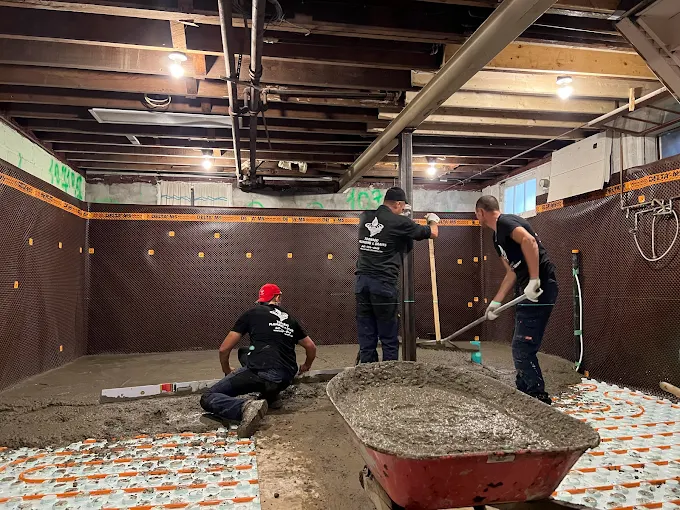
Introduction
The interior-vs-exterior waterproofing decision for a Toronto home isn't dogma — it's about what the basement is currently used for, how much budget exists, what the lot access looks like, and what the actual water-entry path is. This guide explains how each method works, when each is the right call, real 2026 Toronto pricing, and how the work ties into the City's $6,650 Basement Flooding Protection Subsidy through the weeping-tile disconnect component. If you need the work handled rather than researched, see foundation waterproofing Toronto for pricing, process, and booking. Interior systems typically drain to a pit, so budget for a sump pump installation — and on combined-sewer streets, a backwater valve closes the remaining entry path.
Related services for this guide
If this article matches what you are dealing with, use one of these links to move into the service or broader category that makes the most sense.
Project photos related to this guide
These real project photos help show what this kind of work looks like in the field, not just on the page.
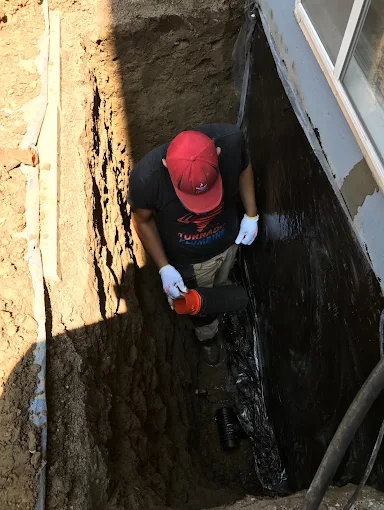
Exterior foundation trench opened for waterproofing work
This trench-stage image gives the waterproofing pages another real project view that shows excavation depth and wall exposure before the waterproofing system is closed back in.
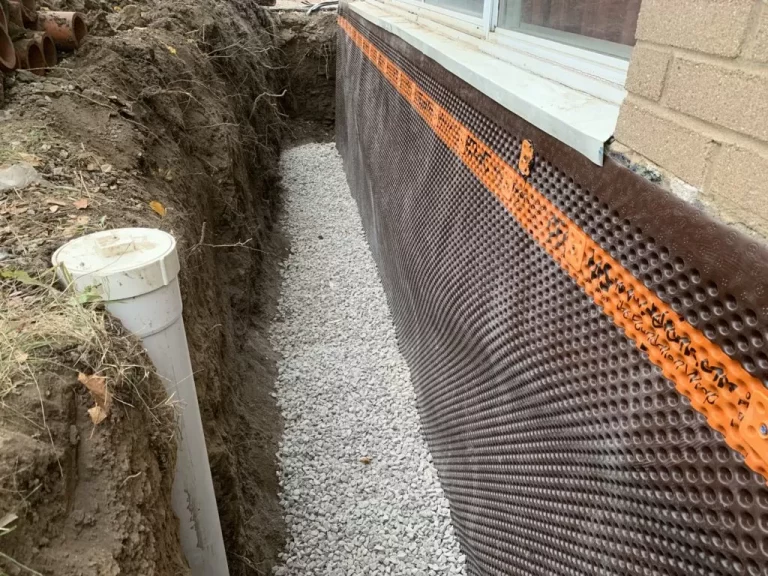
Exterior waterproofing trench with membrane and gravel
This shows the trench stage of foundation waterproofing, where the wall is protected and the drainage layer is ready before the excavation is closed.
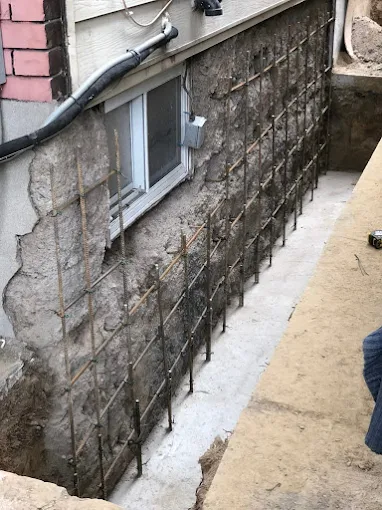
Foundation wall opened for crack repair and waterproofing
The exterior wall is fully opened so damaged areas can be repaired and the waterproofing build-up can be completed before backfill.
Customer stories related to this topic
These customer stories pair real review quotes with the service pages most closely related to this guide.
Claudia Lang
May 2019“Serhij and his team did a great job on waterproofing our basement and placing a french drain, as well as hooking up a new sump pump. They dug down to the bottom of the house foundation, drained a pond that we wanted to get rid of and left the place completely tidy. All for a very fair and reasonable price. Highly recommended.”
Most relevant to Sump Pump Installation in Toronto & the GTA.
Google place photo: Tornado Plumbing & DrainsMichael Slapsys
May 2024“Fast, competent, reliable, clean and reasonably priced. Can’t say enough good things about our experience with Serhiy and his team. We had our entire waste water lines, from stack to city hook-up replaced, and some plumbing redone (basement toilet was given a much needed vent and backwater valve was installed). They spent three nine hour days (non-stop) and got the job done with minimal disruption (start at 7:30 am end at 4:30 pm each and every day). Serhiy took care of permits and coordinated inspection of waste water valve by Toronto inspectors, and the City rebate cheque for waste water valve came in a week (City of TO says processing may take ten weeks). I completed the online application in ten minutes. Highly recommend Tornado Plumbing. I’ve dealt with at least two other plumbing and drain contractors (we have several properties to manage (big family)) they’re the only ones we’ll call in the future when and if the need arises. I wish them good health and much success!”
Most relevant to Backwater Valve Installation in Toronto & the GTA.
Google place photo: Tornado Plumbing & Drains
“My driveway has a negative slope towards the house, which lacked proper drainage and caused minor flooding in my garage during heavy rainfalls. I hired Serjiy and his team to install a trench drain and I could not be happier with their work. His team showed up early everyday, they always explained everything they we're doing and left the area clean and tidy when they we're finished. Serjiy was also excellent communicating with me, letting me know well in advanced of any weather delays (not their fault) I would highly recommend Tornado plumbing for any plumbing needs!”
Most relevant to Sump Pump Installation in Toronto & the GTA.
Google place photo: Tornado Plumbing & DrainsRead next in this topic
These related guides help you compare cost, scope, and next steps without starting over.
Best local service areas for this topic
Use one of these city pages when you want the same problem explained through local housing, flood risk, access, and neighbourhood-specific plumbing context.
Licensed, insured, reviewed Toronto plumbers
Serving Toronto & the GTA since 2015 — over 1,200 completed jobs.
Master plumber T95-4969603 · Plumbing contractor T94-4992639 · Drain contractor T87-4722944 · Building renovator T85-4728632 · Plumbing license FI6216638.
4.9-star Google rating from 320+ reviews. 400+ HomeStars reviews (Best of 2019–2025). BBB-accredited.
Same-day and after-hours dispatch across Toronto, Etobicoke, North York, Scarborough, York, Mississauga, and Burlington.
25-year workmanship warranty
Every job Tornado Plumbing & Drains completes in Toronto and the GTA — repair, install, replacement, drain work, sewer work, fixture work — is backed by a 25-year workmanship warranty. The written terms are provided with every quote. If our work fails within 25 years of the install date, we come back and make it right.
Quick answer
Interior foundation waterproofing (interior weeping tile, sealing, vapour barrier) is faster, less disruptive, and lower cost — best for finished basements where exterior excavation is impractical. Cost $5,500–$12,000. Exterior waterproofing (excavation, membrane, exterior weeping tile) is the comprehensive solution and the gold standard for new construction or unfinished perimeters. Cost $15,000–$35,000+. Both methods can tie into the City of Toronto's $6,650 subsidy through the weeping-tile disconnect ($400 severance/capping) plus the sump pump it routes to (up to $2,250).
What each method covers
Interior install: $5,500–$12,000 for a single perimeter; doesn't disturb landscape but doesn't address the exterior wall surface itself.
Exterior install: $15,000–$35,000+ typical; comprehensive solution but requires excavation around the foundation.
Hydrostatic pressure from groundwater is the #1 cause of basement seepage in Toronto; both methods address it differently.
Interior systems direct water to a sump pit; exterior systems carry water down to a footing-level weeping tile.
City of Toronto subsidy: up to $6,650 of eligible flood-protection work, including weeping-tile severance/capping ($400) and the sump pump (up to $2,250) — applies to both methods.
Mature street trees in older Toronto neighbourhoods often constrain exterior excavation — interior is the de-facto answer in many central-Toronto homes.
Permits required for both methods; the disconnect component requires Toronto plumbing permit and inspection.
Interior vs exterior — head-to-head for Toronto homes
| Factor | Interior waterproofing | Exterior waterproofing |
|---|---|---|
| Cost (Toronto, 2026) | $5,500 – $12,000 | $15,000 – $35,000+ |
| Disruption | Basement floor opens; no exterior | Full excavation around foundation |
| Landscape impact | None | Significant — trees, hardscape, lawn |
| Time to complete | 1 week typical | 2–4 weeks typical |
| What it addresses | Inside-the-basement water management | Stops water at the foundation wall itself |
| Best for | Finished basements, mature lots, retrofit | New construction, unfinished perimeter, comprehensive solution |
| Service life | 20–30 years (drain system + sump) | 30–50+ years (membrane + drainage) |
| City subsidy applies? | Yes, via weeping-tile disconnect ($400) + sump pump (up to $2,250) | Yes, via weeping-tile disconnect ($400) + sump pump (up to $2,250) |
Picking the right method
Interior is the right call when
Basement is finished and excavation would damage finishes. Mature trees on the lot make exterior excavation impractical. Budget is constrained. Water entry is mainly through floor cracks or wall-floor joint (interior addresses these directly).
Exterior is the right call when
New construction or major renovation where exterior is already exposed. Foundation membrane has failed and water is entering through wall cracks. You want the most comprehensive long-term solution. Basement is unfinished and disruption is acceptable.
What we recommend on the diagnostic
Site visit confirms water entry path (floor crack, wall joint, hydrostatic seepage), assesses excavation feasibility, and quotes both methods when both apply. Most central-Toronto retrofits end up interior; new builds and full renovations more often go exterior.
Why Toronto's older lots favour interior retrofits
Mature Toronto neighbourhoods (Cabbagetown, Roncesvalles, the Annex, Riverdale) are densely-built with mature street trees and finished landscaping that make exterior excavation impractical or prohibitively expensive. Interior waterproofing is the de-facto standard for retrofits in these areas. The trade-off — interior addresses water management once it reaches the basement, exterior stops it before — is real, but for many properties the exterior cost can't be justified. The City's $6,650 subsidy applies to both via the weeping-tile disconnect component, which makes the right scope financially feasible.
Sources cited in this guide
Where to go next
When the situation in this guide already matches what we cover, Foundation Waterproofing is the page where you book the visit and see the full scope, pricing, and warranty.
Interior and exterior waterproofing solve different problems. The Basement Waterproofing & Flood Prevention category lists every adjacent service — crack injection, weeping tile, backwater valve — so you can pick by water-entry pattern, not by who's pushing what.
Companion guide on an adjacent angle — useful when the article you're on doesn't fully match your situation.
Ready to book or compare
If you already know whether the entry pattern points to interior or exterior work, Foundation Waterproofing is the booking page. If you're not sure, the inspection visit confirms which method is correct — we don't push exterior excavation when interior crack injection is the right call.
Common questions about foundation waterproofing
Is interior or exterior foundation waterproofing better for a Toronto home?
Neither is universally better — it depends on the water-entry path, the basement finish, and lot access. Interior waterproofing (interior weeping tile, crack sealing, a sump system) manages water once it reaches the basement and suits finished basements and mature, tree-filled lots where excavation is impractical. Exterior waterproofing stops water at the foundation wall itself and is the more complete fix when the membrane has failed or during new construction.
How much does foundation waterproofing cost in Toronto in 2026?
Interior waterproofing typically runs $5,500–$12,000 for a single perimeter; exterior waterproofing with full excavation and a new membrane runs $15,000–$35,000+ depending on depth and access. Both can tie into the City of Toronto $6,650 Basement Flooding Protection Subsidy through the weeping-tile disconnect component, which lowers the net cost for eligible properties.
Will exterior waterproofing tear up my yard and landscaping?
Exterior waterproofing requires excavating down to the footing around the affected walls, so lawn, walkways, decks, and plantings in the dig zone are disturbed and then restored. That disruption, combined with mature street trees on many Toronto lots, is the main reason interior retrofits are the more common choice for existing homes rather than new builds.
Can I get a City of Toronto rebate toward waterproofing?
The waterproofing membrane work itself is not directly rebated, but the weeping-tile disconnect that is often part of the scope is eligible for $400 under the City Basement Flooding Protection Subsidy, and a paired sump pump ($2,250), battery backup ($300), and backwater valve ($1,600 per device, up to two) add several thousand more toward the $6,650 maximum. We document the eligible portions in the format the City application needs.
Is waterproofing work warrantied, and are you licensed in Toronto?
Yes — every waterproofing job carries our 25-year workmanship warranty with written terms on the quote, and Tornado is fully licensed in Toronto (Master plumber T95-4969603), serving the GTA since 2015 with over 1,200 completed jobs.
Explore more