Toronto Basement Flooding Protection Subsidy (2026): The $6,650 Guide
By Serhiy Marunchuk, Master Plumber · Licence T95-4969603 · Updated September 15, 2026
The City of Toronto's expanded subsidy program covers up to $6,650 per property for backwater valve, sump pump, and weeping-tile disconnect work — eligible since November 12, 2025. Here's what's actually covered, what you need to document, and how to apply.
Published March 28, 2026 · Last updated September 15, 2026
Introduction
Toronto's Basement Flooding Protection Subsidy is the most generous municipal flood-prevention program in Canada — and most homeowners we talk to don't know it nearly doubled in May 2026. This guide is the definitive walkthrough: what's covered (down to the dollar), what isn't, who's eligible, what your contractor must document, and how to actually file the application without it bouncing back. We've submitted hundreds of these packages on behalf of Toronto homeowners; the rules below are what the program actually accepts in practice — not just what the website says. If repeated flooding traces to a damaged lateral, a drain camera inspection will confirm whether sewer line repair should come before any subsidy-funded prevention work.
Related services for this guide
If this article matches what you are dealing with, use one of these links to move into the service or broader category that makes the most sense.
Project photos related to this guide
These real project photos help show what this kind of work looks like in the field, not just on the page.
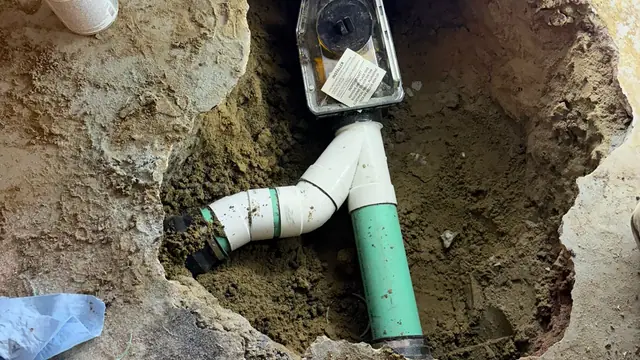
Mainline backwater valve set below the basement floor
Backwater valve installation, August 2026. The building drain was cut below the slab, the mainline valve set with its clear inspection lid facing up, and a cleanout branch added so the line can be serviced without disturbing the valve.
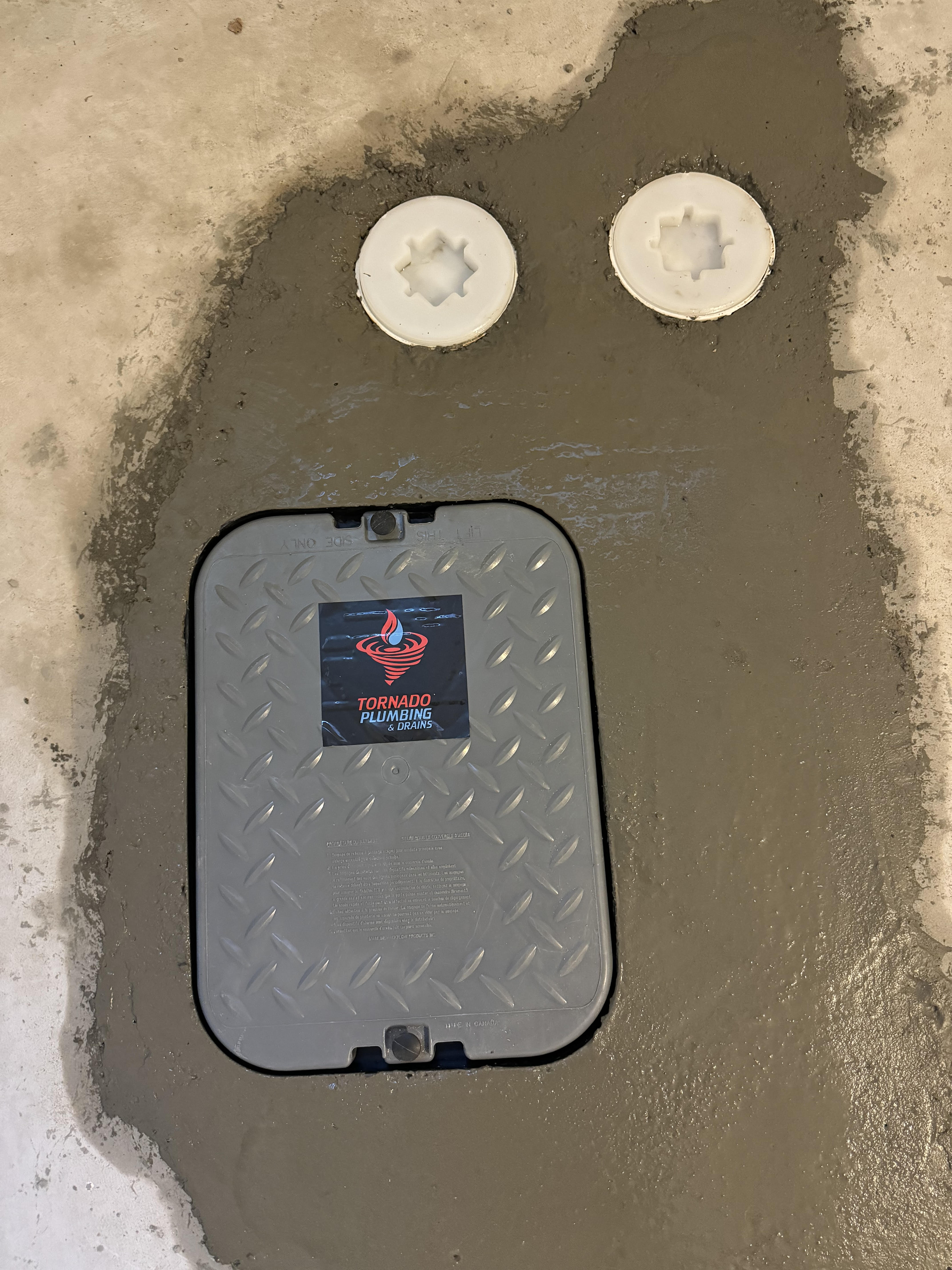
Backwater-valve access finished after concrete patch
This result photo shows the finished access point after basement flood-protection plumbing was installed and the floor was restored.
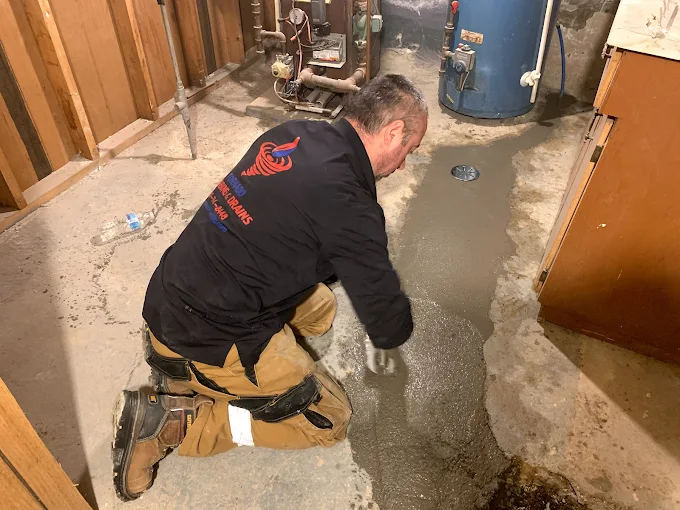
Basement floor patched back after flood-prevention plumbing work
Finished concrete patch after below-floor flood-prevention work, showing the restored surface homeowners see after the plumbing is installed.
Customer stories related to this topic
These customer stories pair real review quotes with the service pages most closely related to this guide.
James Maingot
June 2024“Serhiy at Tornado Plumbing & Drains replaced my house's building trap and installed a backwater valve. Serhiy is a great communicator and his crew worked efficiently, politely, and their post-job clean up was impeccable.”
Most relevant to Backwater Valve Installation in Toronto & the GTA.
Google place photo: Tornado Plumbing & DrainsMR Verxcy
April 2019“We were happy with Tornado plumbing from start and finish. Sergey came on the time to give us a quotation,he found the cracks in our foundation wall also our sump pump didn't work also. We are 100% satisfied with the crew ,they keep job site clean even weather wasn't great, the power flash the driveway and my basement is dry we are so happy!!! Highly recommend”
Most relevant to Sump Pump Installation in Toronto & the GTA.
Google place photo: Tornado Plumbing & DrainsChristina Wilkinson
April 2026“Serhiy and his team did an excellent job! They were very knowledgeable and kind in their explanations on what the best solution for my sump pump discharge issue would be. Also kept a very clean work area and even left me a bunch of the existing materials at my request. I would recommend their services.”
Most relevant to Sump Pump Installation in Toronto & the GTA.
Google place photo: Tornado Plumbing & DrainsRead next in this topic
These related guides help you compare cost, scope, and next steps without starting over.
Best local service areas for this topic
Use one of these city pages when you want the same problem explained through local housing, flood risk, access, and neighbourhood-specific plumbing context.
Licensed, insured, reviewed Toronto plumbers
Serving Toronto & the GTA since 2015 — over 1,200 completed jobs.
Master plumber T95-4969603 · Plumbing contractor T94-4992639 · Drain contractor T87-4722944 · Building renovator T85-4728632 · Plumbing license FI6216638.
4.9-star Google rating from 320+ reviews. 400+ HomeStars reviews (Best of 2019–2025). BBB-accredited.
Same-day and after-hours dispatch across Toronto, Etobicoke, North York, Scarborough, York, Mississauga, and Burlington.
25-year workmanship warranty
Every job Tornado Plumbing & Drains completes in Toronto and the GTA — repair, install, replacement, drain work, sewer work, fixture work — is backed by a 25-year workmanship warranty. The written terms are provided with every quote. If our work fails within 25 years of the install date, we come back and make it right.
Quick answer
The Toronto Basement Flooding Protection Subsidy provides up to $6,650 per property for flood-protection plumbing work completed on or after November 12, 2025. The maximum breaks down as $1,600 per backwater valve (up to two devices), $2,250 toward a sump pump, $300 toward a sump-pump battery backup, $400 toward weeping-tile severance/capping, and a one-time $500 plumbing assessment — each covered at up to 80% of invoiced cost. Eligibility requires a single-family or multi-residential property in the City of Toronto, a licensed plumbing contractor, a permit, and a passed inspection. The homeowner applies after the work; the contractor provides the documentation package.
The numbers, the dates, and the limits
Maximum subsidy as of May 1, 2026: $6,650 per property (nearly double the previous $400 (severance/capping) cap).
Backwater valve component: up to $1,600 per device (maximum two devices), covering up to 80% of installation cost by a licensed contractor.
Sump pump component: up to $2,250 covering pump, basin, alarm, and connection, plus up to $300 for a battery backup.
Pipe severance / weeping-tile capping: up to $400 for properties with foundation drains tied to the sanitary sewer.
Eligible work must be completed on or after November 12, 2025 — work completed before that date does not qualify.
City of Toronto has paid out approximately $60M+ under the program since its 2009 launch (City data).
Permits and post-install inspections are mandatory for all three program components.
Application is filed by the homeowner after the work is complete; reimbursement timeline is typically 6–12 weeks from a complete submission.
What each component covers (2026)
| Component | Maximum subsidy | What it does | Typical homeowner net |
|---|---|---|---|
| Backwater valve installation | $1,600 per device (max two) | Stops sanitary sewer back-flow into the basement during combined-sewer surcharge. | $1,200 – $3,200 (after rebate, on a $2,800–$4,800 install) |
| Sump pump system | $2,250 (+ $300 battery backup) | Removes groundwater from a basin under the basement floor before it can rise above the slab. | $280 – $480 (basic, at the 80% coverage rate), $560 – $4,350 (with battery backup or upgraded pump) |
| Weeping-tile disconnect | $400 (severance/capping) | Severs the foundation drain from the sanitary sewer and re-routes to a sump pit. | $3,000 – $7,100 (the severance/capping subsidy item caps at $400) |
| All three combined | $6,650 | Comprehensive flood protection — the City's recommended scope for older Toronto homes on combined sewer. | $2,300 – $8,400 typical net out-of-pocket |
What this guide does — and doesn't — cover
Use this guide when
Choose a different page when
Best next step
Who's eligible — and what disqualifies an application
Eligible: any single-family detached, semi-detached, row, or townhouse property within the City of Toronto, plus multi-residential buildings up to a defined unit cap (the program differentiates between single-family and multi-residential limits — confirm via the City application). Owner must be the property owner of record; tenants apply through the landlord.
Disqualified: work completed before November 12, 2025; work performed by an unlicensed contractor or homeowner DIY; work without a Toronto plumbing permit and passed inspection; properties outside the City of Toronto boundary (Mississauga, Vaughan, etc. have their own separate municipal programs); incomplete documentation packages (missing invoice, photos, permit number, or model/serial information).
Common rejection reasons we see: receipts that don't itemize the eligible work clearly; backwater valves that aren't normally-open mainline type; sump pump discharge routed to the sanitary sewer (which violates the Sewer Use Bylaw and disqualifies the install); missing inspection sign-off.
What the program doesn't pay for (and what to plan separately)
Not covered: drain cleaning or sewer cleaning even if related to the flooding event; sewer line repair or replacement; basement waterproofing membrane or interior weeping tile (separate from the disconnect work); restoration after a flood (drywall, flooring, contents); plumber emergency-call fees from the original flood; insurance deductibles. The subsidy is specifically for prevention infrastructure, not damage repair.
Planning around the gap: most homeowners coming out of a flood do all four scopes — emergency repair, restoration through insurance, prevention installation under the subsidy, and any sewer-line repair the camera inspection reveals. The subsidy is one of those four, not the whole project. Budget the prevention scope at $5,500–$15,000 gross, expect $4,750–$6,650 back from the City, and plan the remainder as a property-improvement spend that materially reduces future risk.
What your contractor must provide for the application
Itemized written invoice separating each subsidy-eligible scope from any non-eligible work.
Toronto plumbing permit number on the invoice.
Photos of the install before, during, and after — annotated with location in the home.
Manufacturer model and serial number for the backwater valve, sump pump, and any battery backup.
Signed inspection card from the City inspector.
Confirmation that sump pump discharge is routed to grade or an approved storm location, not the sanitary sewer.
Contractor's licensing and WSIB clearance numbers.
Cause-of-loss letter if the work follows a basement flooding insurance claim.
Three Toronto subsidy applications from the past 90 days
East York, post-flood prevention — Customer flooded during a heavy summer storm. Insurance paid restoration. Tornado installed backwater valve + sump pump with battery backup + weeping-tile disconnect. Total install: $11,400. City subsidy approved: $6,650 (max under the program). Net out-of-pocket: $4,750. Insurer subsequently reduced water-damage premium by ~$140/year.
Etobicoke, proactive install — No prior flood, but homeowner concerned about climate trend and wanted to install before the next storm season. Backwater valve + sump pump (existing pit). Total install: $4,200. Subsidy approved: $3,360 ($1,600 valve + $1,760 pump portion at 80%). Net out-of-pocket: $840.
The Junction, century home, full disconnect — Pre-1955 home with weeping tile tied to the sanitary sewer. Full disconnect required exterior excavation plus interior re-route to new sump pit. Total install: $14,800. Subsidy approved: $6,650 (full max). Net out-of-pocket: $8,150 — meaningfully reduced by the program.
Why Toronto created and expanded this program
Toronto launched the basement flooding subsidy in 2009 after the August 2005 storm that flooded thousands of basements across the city — a single-event insurance loss exceeding $500M. The May 2026 expansion to $6,650 reflects the City's recognition that climate trends are increasing the frequency of high-intensity rain events, and that property-level prevention is materially cheaper for the City than the storm-water infrastructure upgrades that would otherwise be required. About 25% of Toronto's sewer system is combined (sanitary and stormwater share the same pipe), which is the structural reason backups happen during major rain. The subsidy is the City's mechanism to incentivize property-level disconnection from that combined system, faster than infrastructure can be re-built.
Where to go next
The $1,600-per-valve component — service page with scope, pricing, and the install warranty.
The $2,250 component — service page covering primary pump, basin, alarm, and discharge.
The backup pump that runs during the power outage that usually accompanies major storms.
The full waterproofing category, including weeping-tile work that ties into the disconnect scope.
The implementation walkthrough that pairs with this rebate guide.
Sources cited in this guide
Get the install scoped — and the rebate filed
Book the install scope with Backwater Valve Installation, Sump Pump Installation, or the full Basement Waterproofing & Flood Prevention category. Tornado pulls the permit, performs the install with the documentation package the City needs, coordinates the inspection, and emails you the complete application kit. Calls go through 647-784-8448 with same-day and after-hours dispatch across Toronto.
Common questions about the Toronto basement flooding subsidy
Is the $6,650 paid up front, or after the work?
After. The homeowner pays the contractor for the full install, then submits the application to the City for reimbursement. Typical processing time is 6–12 weeks from a complete submission. There's no advance, no City-paid contractor option — it's a reimbursement program.
Can I do the work myself and apply?
No. The program requires a licensed plumbing contractor for the work to qualify. DIY installs do not qualify, even if the homeowner is a licensed trade in another field. Backwater valves, sump pumps, and weeping-tile disconnect work also require Toronto plumbing permits, which only licensed contractors can pull.
What if my work was completed before November 12, 2025?
It does not qualify under the expanded program. Work completed before November 12, 2025 may still qualify under the previous version of the program (lower caps), but the expanded $6,650 maximum only applies to work after that date.
Can I get the backwater valve component without doing the other two?
Yes. Each component is separately eligible up to its individual cap. Many homeowners do the backwater valve first ($1,600 per device, up to two), the sump pump second when budget allows ($2,250, plus $300 for a battery backup), and the weeping-tile severance/capping later as part of basement waterproofing ($400). Total subsidy is $6,650 per property at most.
Does the subsidy cover the full cost of the install?
No — each item is reimbursed at up to 80% of invoiced cost, so at least 20% is always out-of-pocket; the gap is largest on the weeping-tile disconnect (which is usually $5,500–$15,000 gross). The subsidy is meant to substantially offset the cost, not necessarily fully cover it. Net out-of-pocket varies by scope.
What documentation do I actually need for the application?
Itemized invoice, contractor's licensing info, Toronto plumbing permit number, photos of the install, model/serial numbers of equipment, signed inspection card, and confirmation that sump discharge isn't routed to the sanitary sewer. Tornado provides this package as standard with every subsidy-eligible install — you don't have to compile it yourself.
Will my insurance company pay for any of this if I don't get the rebate?
Insurance generally does not pay for prevention installs on an existing home (only damage repair after a covered loss). However, most insurers reduce the water-damage portion of the premium when prevention equipment is documented. The combined effect of the City rebate and insurance discount typically pays back the homeowner net cost within 5–8 years on a typical install.
Is the work warrantied beyond the rebate paperwork?
Yes — every Tornado install carries our 25-year workmanship warranty independent of the City program. The rebate is reimbursement; the warranty is what stands behind the install for two and a half decades after.
Explore more