After the Flood: Cleanup, Insurance, and Stopping the Next One (Toronto, 2026)
By Serhiy Marunchuk, Master Plumber · Licence T95-4969603 · Updated September 15, 2026
The first 48 hours after a basement flood decide your insurance outcome and your mould risk. Here's the order of operations — and how to apply for the $6,650 City subsidy that prevents the next one.
Published March 28, 2026 · Last updated September 15, 2026
Introduction
The active flood is over, your plumber has stopped the source, and now you're staring at a wet basement wondering what to do next. The next 48 hours decide three things: whether your insurance claim gets paid in full, whether you avoid mould remediation later, and whether you actually prevent the next flood. This guide walks through the full sequence — cleanup, drying, documentation, claim, prevention — in the order it should actually happen, with real Toronto-specific guidance on what insurers expect. If water is still coming in, start with our emergency plumbing service; once dry, a battery backup sump pump protects you through the next power-outage storm.
Related services for this guide
If this article matches what you are dealing with, use one of these links to move into the service or broader category that makes the most sense.
Project photos related to this guide
These real project photos help show what this kind of work looks like in the field, not just on the page.
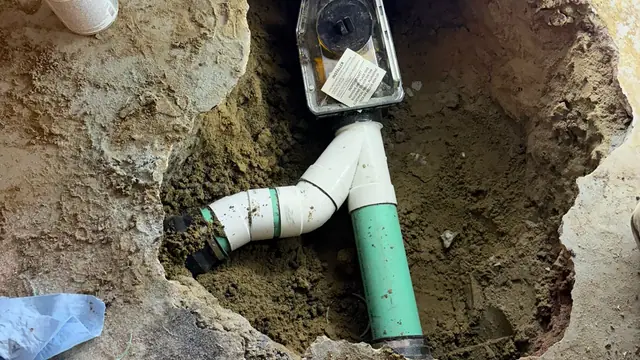
Mainline backwater valve set below the basement floor
Backwater valve installation, August 2026. The building drain was cut below the slab, the mainline valve set with its clear inspection lid facing up, and a cleanout branch added so the line can be serviced without disturbing the valve.
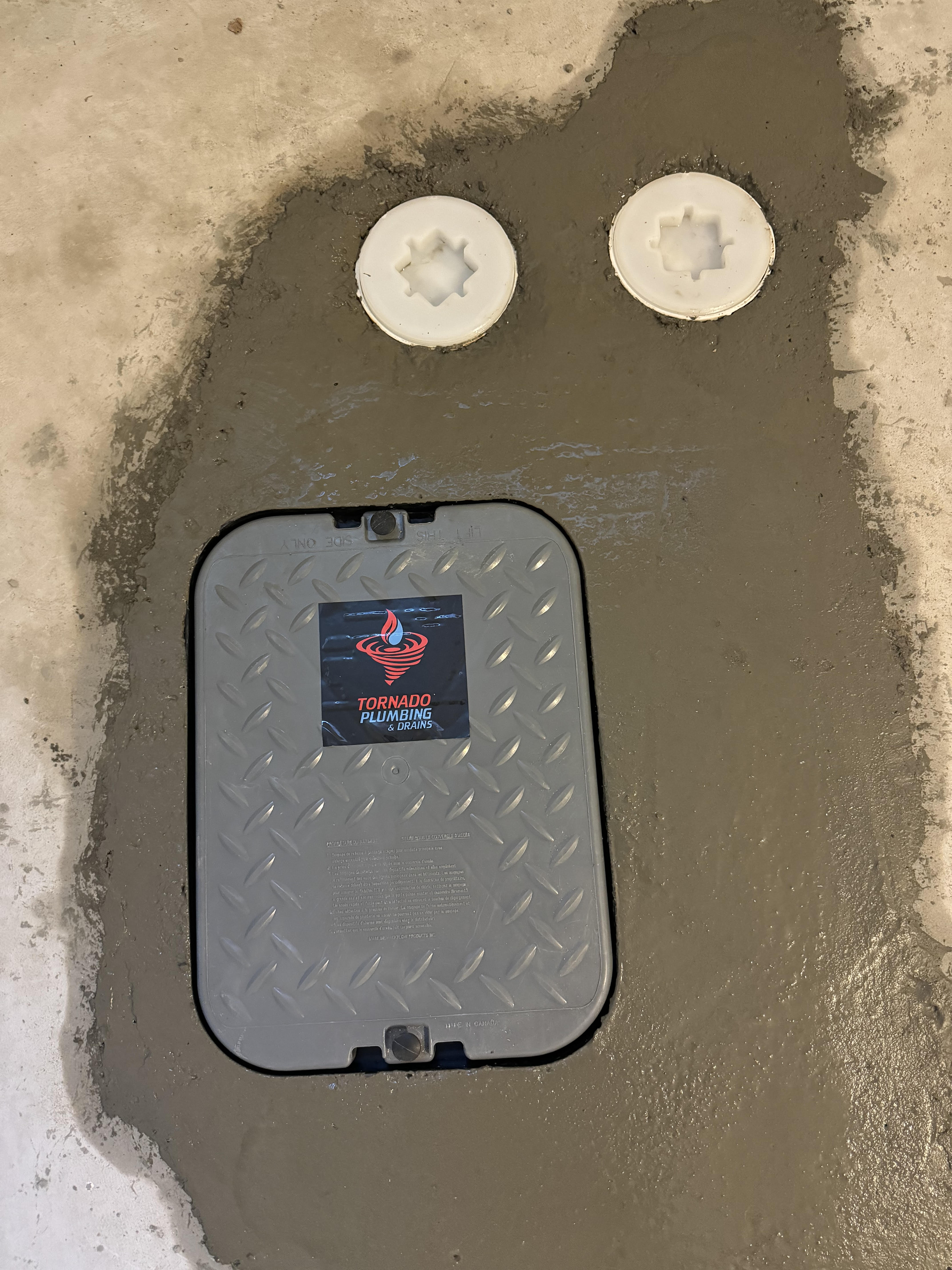
Backwater-valve access finished after concrete patch
This result photo shows the finished access point after basement flood-protection plumbing was installed and the floor was restored.
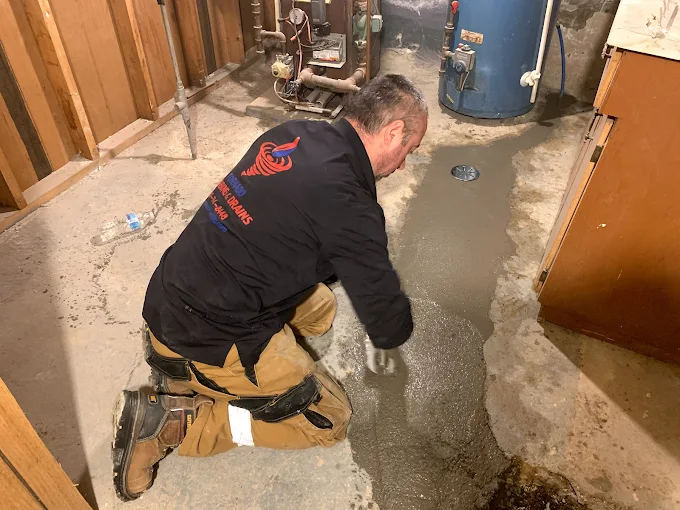
Basement floor patched back after flood-prevention plumbing work
Finished concrete patch after below-floor flood-prevention work, showing the restored surface homeowners see after the plumbing is installed.
Customer stories related to this topic
These customer stories pair real review quotes with the service pages most closely related to this guide.
James Maingot
June 2024“Serhiy at Tornado Plumbing & Drains replaced my house's building trap and installed a backwater valve. Serhiy is a great communicator and his crew worked efficiently, politely, and their post-job clean up was impeccable.”
Most relevant to Backwater Valve Installation in Toronto & the GTA.
Google place photo: Tornado Plumbing & Drains
“My driveway has a negative slope towards the house, which lacked proper drainage and caused minor flooding in my garage during heavy rainfalls. I hired Serjiy and his team to install a trench drain and I could not be happier with their work. His team showed up early everyday, they always explained everything they we're doing and left the area clean and tidy when they we're finished. Serjiy was also excellent communicating with me, letting me know well in advanced of any weather delays (not their fault) I would highly recommend Tornado plumbing for any plumbing needs!”
Most relevant to Sump Pump Installation in Toronto & the GTA.
Google place photo: Tornado Plumbing & DrainsOdette Tracey
February 2021“Very responsive service for my sump pump. Troy was very knowledgeable, very professional and made sure I felt comfortable with the suggestions of service recommendations. Will definitely continue to use Tornado and recommend to others.”
Most relevant to Sump Pump Installation in Toronto & the GTA.
Google place photo: Tornado Plumbing & DrainsRead next in this topic
These related guides help you compare cost, scope, and next steps without starting over.
Best local service areas for this topic
Use one of these city pages when you want the same problem explained through local housing, flood risk, access, and neighbourhood-specific plumbing context.
Licensed, insured, reviewed Toronto plumbers
Serving Toronto & the GTA since 2015 — over 1,200 completed jobs.
Master plumber T95-4969603 · Plumbing contractor T94-4992639 · Drain contractor T87-4722944 · Building renovator T85-4728632 · Plumbing license FI6216638.
4.9-star Google rating from 320+ reviews. 400+ HomeStars reviews (Best of 2019–2025). BBB-accredited.
Same-day and after-hours dispatch across Toronto, Etobicoke, North York, Scarborough, York, Mississauga, and Burlington.
25-year workmanship warranty
Every job Tornado Plumbing & Drains completes in Toronto and the GTA — repair, install, replacement, drain work, sewer work, fixture work — is backed by a 25-year workmanship warranty. The written terms are provided with every quote. If our work fails within 25 years of the install date, we come back and make it right.
Quick answer
After a basement flood in Toronto: photograph everything before moving anything (insurance file), keep damaged contents until your adjuster sees them, contact your insurer within 24–48 hours, hire a licensed plumber for the cause-of-loss letter, use IICRC-certified restoration for water removal and drying, and start planning the prevention scope under the City's $6,650 subsidy. Sewage water (Category-3) must be contained and disinfected within 24–48 hours to prevent mould (per IICRC S500). Most Ontario insurance policies require a licensed plumber's invoice and proof of installed prevention equipment for sewer-backup claims to pay.
What this guide covers — and doesn't
Use this guide when
Choose a different page when
Best next step
What you should know in the first 24 hours
Average Toronto basement flood claim in 2024: approximately $43,000 (Insurance Bureau of Canada). Restoration and finishes typically 70–80% of total claim cost.
IICRC S500 (industry standard) requires Category-3 sewage water be contained, extracted, and disinfected within 24–48 hours to prevent mould growth.
Most Ontario insurers require a backwater valve and/or sump pump for sewer-backup claims to be paid — both as proof and as a condition of continued coverage.
Insurance documentation must include: licensed plumber's invoice, written cause-of-loss letter, photos of source and damage, and inventory of damaged contents.
City of Toronto subsidy: up to $6,650 toward backwater valve, sump pump, and weeping-tile disconnect — directly addressing the prevention work most insurers now require.
Most insurers reduce the water-damage portion of the home insurance premium when prevention equipment is documented and installed — typically $80–$200/yr savings.
What Ontario insurers actually pay (and what they don't)
Burst pipe / fixture failure (sudden and accidental): covered under standard water-damage coverage, including restoration of finishes. Almost always paid in full minus deductible. The plumbing portion is rarely the disputed part — restoration scope is.
Sewer backup: only covered if you carry the sewer-backup endorsement, which most insurers now require (and most require an installed backwater valve and/or sump pump for it to apply). Without the endorsement, sewer backup damage is excluded.
Groundwater seepage: usually excluded under most standard policies as 'gradual seepage,' though some 'enhanced water' or 'overland water' endorsements cover it. Check your specific policy wording.
Gradual leak / hidden leak discovered later: usually excluded as 'gradual deterioration,' though some policies have grace allowances if you couldn't reasonably have known. Cause-of-loss letter from a licensed plumber is what documents this.
Mould remediation: covered if it's a direct result of a covered loss and remediation begins promptly. Mould that develops because drying didn't happen on time may be excluded — which is exactly why the 24–48 hour drying window matters.
Three Toronto post-flood timelines from the past 90 days
Etobicoke, Sunday afternoon sewer backup, full insurance recovery — Customer photographed everything in the first 30 minutes, called insurer at 2:30 PM (claim # in hand by 4 PM), Tornado dispatch + cause-of-loss letter same day ($1,840 plumbing). IICRC restoration partner started Monday morning, dried within 36 hours. Insurance paid $43,200 total ($1,840 plumbing + $41,360 restoration and contents). Customer subsequently installed backwater valve under City subsidy at $2,150 net, insurance discount $145/yr.
The Junction, century home, partial coverage — Customer waited 36 hours before calling insurer (cleaning up first). Mould found in subfloor at adjuster visit. Mould remediation ($8,400) was disputed but ultimately paid as 'consequential damage' rather than excluded. Lesson: the 24–48 hour drying window is the firm timeline.
East York, gradual leak discovered after insurance non-renewal — Slow supply leak in wall cavity for ~6 months, found during renovation. Insurer denied claim as 'gradual deterioration.' Total out-of-pocket: $14,200. Lesson: hidden slow leaks behind walls are often excluded; periodic inspection is the only defence.
Common mistakes that hurt the claim
Don't throw out damaged contents before the adjuster sees them — claim payout is anchored to documented loss.
Don't sign a 'we'll handle the insurance' contract from a door-knocker — Toronto sees a wave of door-to-door restoration sales after major storm events; some are legitimate, many aren't. Use a firm referred by your plumber, your insurer, or someone you know.
Don't pay cash to a contractor without a written scope and invoice — claim reimbursement requires invoiced documentation; cash payments often can't be reimbursed.
Don't try to dry it yourself with household fans for a sewage-water flood — Category-3 water requires antimicrobial treatment, not just drying. Mould developing later because of inadequate first-pass drying is the most common claim dispute.
Don't sign off on the adjuster's scope until it includes finish restoration — many initial scopes underestimate restoration cost; insist on a thorough walk-through with photos.
Don't delay the prevention install — most insurers now condition continued coverage on prevention equipment after a sewer-backup claim. The City subsidy makes the install meaningfully cheaper, and the timing usually overlaps with restoration.
Why Toronto post-flood timelines differ from suburban GTA
Toronto-specific dynamics that affect the post-flood timeline: (1) high concentration of older homes with cast-iron and clay plumbing means more cause-of-loss complexity (was it the burst, the lateral, the surcharge?); (2) combined-sewer system means many sewer-backup claims hinge on whether prevention equipment was already in place; (3) the City's Basement Flooding Protection Subsidy creates a clear path for the prevention scope that insurers now require; (4) IICRC-certified restoration capacity in Toronto is meaningful but stretches thin during major storm events — book early. Tornado coordinates directly with the major Toronto restoration partners and most insurance adjusters.
What to have ready before you call (plumber and insurer)
Have the photos and policy details in hand before the first call — it gets your claim number, cause-of-loss letter, and drying crew moving inside the 24–48 hour window that decides the payout.
Multi-angle photos and video taken before anything was moved — water lines marked on the walls, the suspected source, and a wide shot of the whole room.
Your insurer's name, policy number, and whether you carry a sewer-backup endorsement (it determines if a sewer backup is covered at all).
What the water was: clean (burst pipe, hot water tank) or sewage (Category-3 backup) — this sets the containment and disinfection urgency.
When the flood started and roughly how high it rose, so the cause-of-loss letter and adjuster timeline line up.
Whether a backwater valve and/or sump pump are already installed (most insurers require proof for a sewer-backup claim to pay).
A running inventory of damaged contents — brand, model, age, replacement cost — kept until the adjuster has seen them.
Clear access to the affected area and the floor drain or cleanout so the plumber can confirm the source quickly.
Where to go next
If you're still in active emergency with sewage water — Category-3 containment scope.
The prevention install most insurers now require — $1,600 City rebate.
The companion prevention install — $2,250 separate rebate.
Full category for comprehensive flood-protection work.
If the flood is still happening, this is the immediate-response companion guide.
$6,650 subsidy walkthrough — eligibility, application, documentation.
Sources cited in this guide
Get the documentation right and the prevention installed
Tornado provides the cause-of-loss letter and post-install documentation that insurers and the City both need. Book the prevention scope at Backwater Valve Installation, Sump Pump Installation, or the full Basement Waterproofing & Flood Prevention. Calls go through 647-784-8448 with same-day and after-hours dispatch.
Common questions about Toronto post-flood cleanup and insurance
How fast do I have to call my insurer after a basement flood?
Within 24–48 hours under most Ontario policies. Some policies are stricter (24 hours for prompt notification clauses), some more lenient. The faster you notify, the faster the adjuster engages and the cleaner the claim file. Don't wait for restoration to start — notify first.
Will my insurance pay for the backwater valve install?
Insurance generally doesn't pay for prevention installs (only damage repair). However, the City of Toronto rebate covers $1,600 of the install, and most insurers reduce the water-damage premium by $80–$200/year when the valve is documented. Combined effect typically pays back the homeowner net cost within 5–8 years.
What's the difference between IICRC restoration and a regular cleanup company?
IICRC certification (specifically S500 for water damage) requires documented training in Category 1/2/3 water classification, antimicrobial treatment, and structural drying. Category-3 (sewage) water specifically requires IICRC-trained crews with proper PPE and disinfection — non-certified cleanup carries health risk and often doesn't satisfy insurance requirements.
What if my flood happened before the May 2026 subsidy expansion?
Subsidy eligibility is by completion date of the prevention install, not by flood date. If you flooded in 2023 but install the backwater valve in 2026 (after Nov 12, 2025), the install is eligible for the expanded $6,650 program. The flood event itself doesn't determine eligibility.
Can I do the cleanup myself to save the deductible?
Not for Category-3 (sewage) water. Self-cleanup of sewage water creates a health risk and often disqualifies insurance reimbursement of subsequent mould remediation. For clean-water floods (burst pipe, hot water tank), DIY drying with rented dehumidifiers is feasible if the area is small and the drying happens within 24–48 hours — but insurers prefer documented IICRC work.
How long does the insurance claim take from notification to payout?
Typical Ontario water-damage claim: 4–12 weeks from complete documentation to first payment. Sewer-backup claims tend toward the longer end because adjusters scrutinize the prevention-equipment requirement. Burst-pipe claims tend toward the shorter end. The cleaner your documentation in the first 48 hours, the faster the file moves.
Explore more