How to Prevent Basement Flooding in Heavy Rain (Toronto): 5 Steps That Actually Work
By Serhiy Marunchuk, Master Plumber · Licence T95-4969603 · Updated August 17, 2026
Backwater valve + sump pump + weeping-tile disconnect + grading + downspouts. Done together, they prevent ~95% of Toronto basement floods. The City rebate covers up to $6,650 of the cost.
Published March 16, 2026 · Last updated August 17, 2026
Introduction
Toronto homeowners who do all five steps in this guide effectively eliminate basement flooding risk during heavy rain — at a net cost (after the City's $6,650 subsidy) most homeowners pay back through one avoided $43,000 insurance claim. The five steps aren't a menu of options; they're a system. Each addresses a different water-entry path. This guide walks through each step in priority order, what it costs, what the City pays for, and how to implement them in the right sequence.
Related services for this guide
If this article matches what you are dealing with, use one of these links to move into the service or broader category that makes the most sense.
Project photos related to this guide
These real project photos help show what this kind of work looks like in the field, not just on the page.
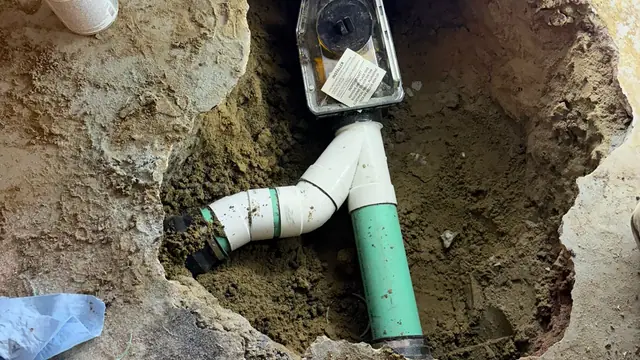
Mainline backwater valve set below the basement floor
Backwater valve installation, August 2026. The building drain was cut below the slab, the mainline valve set with its clear inspection lid facing up, and a cleanout branch added so the line can be serviced without disturbing the valve.
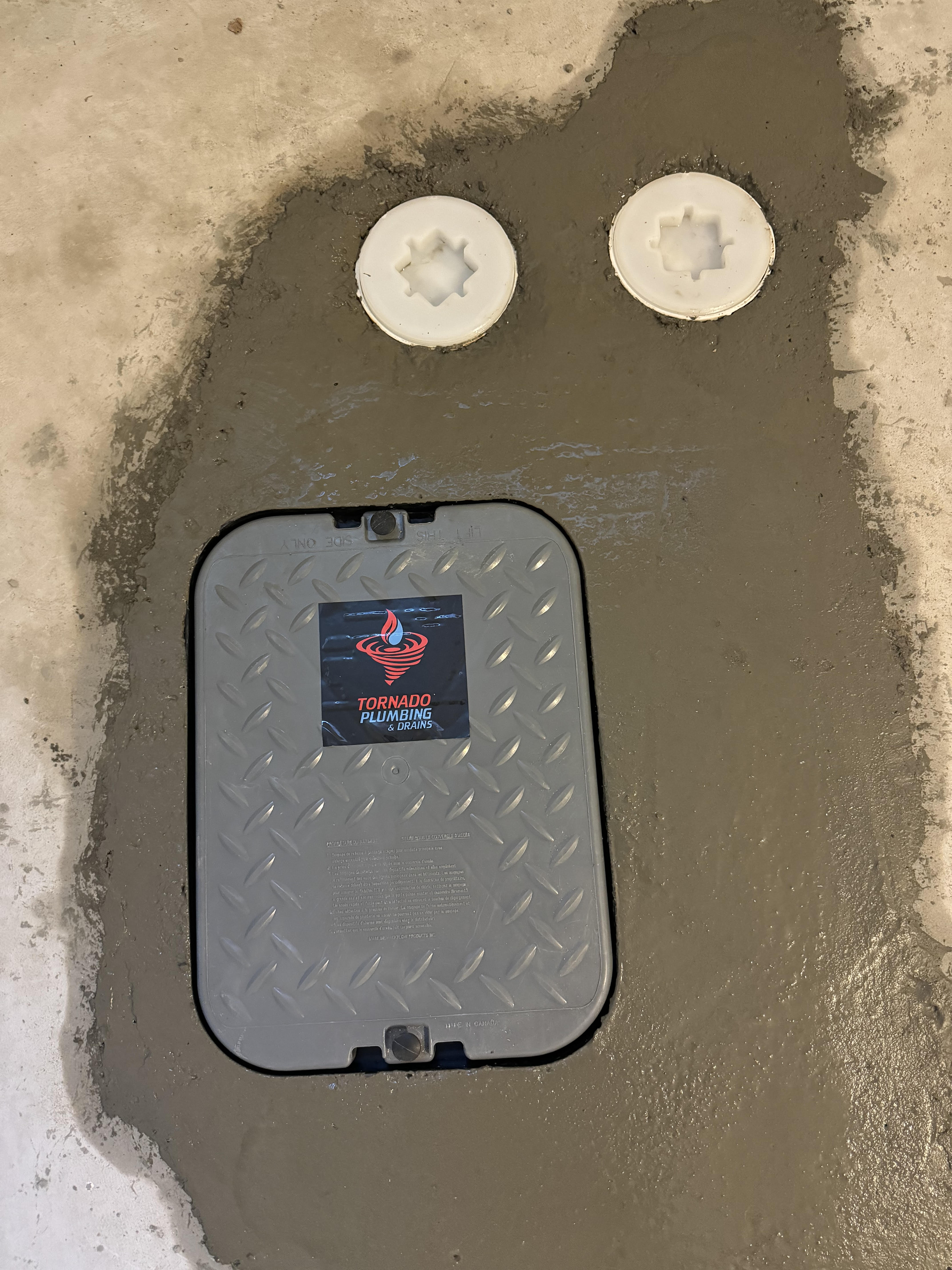
Backwater-valve access finished after concrete patch
This result photo shows the finished access point after basement flood-protection plumbing was installed and the floor was restored.
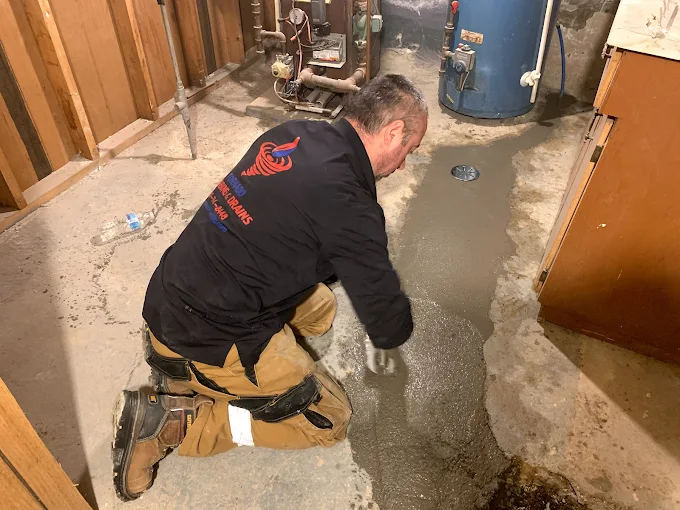
Basement floor patched back after flood-prevention plumbing work
Finished concrete patch after below-floor flood-prevention work, showing the restored surface homeowners see after the plumbing is installed.
Customer stories related to this topic
These customer stories pair real review quotes with the service pages most closely related to this guide.
James Maingot
June 2024“Serhiy at Tornado Plumbing & Drains replaced my house's building trap and installed a backwater valve. Serhiy is a great communicator and his crew worked efficiently, politely, and their post-job clean up was impeccable.”
Most relevant to Backwater Valve Installation in Toronto & the GTA.
Google place photo: Tornado Plumbing & DrainsMR Verxcy
April 2019“We were happy with Tornado plumbing from start and finish. Sergey came on the time to give us a quotation,he found the cracks in our foundation wall also our sump pump didn't work also. We are 100% satisfied with the crew ,they keep job site clean even weather wasn't great, the power flash the driveway and my basement is dry we are so happy!!! Highly recommend”
Most relevant to Sump Pump Installation in Toronto & the GTA.
Google place photo: Tornado Plumbing & DrainsClaudia Lang
May 2019“Serhij and his team did a great job on waterproofing our basement and placing a french drain, as well as hooking up a new sump pump. They dug down to the bottom of the house foundation, drained a pond that we wanted to get rid of and left the place completely tidy. All for a very fair and reasonable price. Highly recommended.”
Most relevant to Sump Pump Installation in Toronto & the GTA.
Google place photo: Tornado Plumbing & DrainsRead next in this topic
These related guides help you compare cost, scope, and next steps without starting over.
Best local service areas for this topic
Use one of these city pages when you want the same problem explained through local housing, flood risk, access, and neighbourhood-specific plumbing context.
Licensed, insured, reviewed Toronto plumbers
Serving Toronto & the GTA since 2015 — over 1,200 completed jobs.
Master plumber T95-4969603 · Plumbing contractor T94-4992639 · Drain contractor T87-4722944 · Building renovator T85-4728632 · Plumbing license FI6216638.
4.9-star Google rating from 320+ reviews. 400+ HomeStars reviews (Best of 2019–2025). BBB-accredited.
Same-day and after-hours dispatch across Toronto, Etobicoke, North York, Scarborough, York, Mississauga, and Burlington.
25-year workmanship warranty
Every job Tornado Plumbing & Drains completes in Toronto and the GTA — repair, install, replacement, drain work, sewer work, fixture work — is backed by a 25-year workmanship warranty. The written terms are provided with every quote. If our work fails within 25 years of the install date, we come back and make it right.
Quick answer
To prevent basement flooding in Toronto heavy rain, do these five things in priority order: (1) install a backwater valve on the sanitary lateral ($1,600 City rebate per device, up to two devices); (2) install or upgrade a sump pump with battery backup ($2,250 City rebate for the pump plus $300 for the battery backup); (3) disconnect the weeping-tile from the sanitary sewer where applicable ($400 City rebate for severance/capping); (4) regrade surface drainage 6 in over the first 10 ft away from the foundation; (5) extend downspouts at least 6 ft from the foundation. Combined, these prevent ~95% of basement flood events. Total City subsidy: up to $6,650 per property.
What each step does
Backwater valve alone prevents ~95% of sanitary back-flow events during combined-sewer surcharge.
Sump pump with battery backup is the only way to keep groundwater out during a power outage — exactly when major storms cause both.
Weeping-tile disconnect from the sanitary sewer eliminates the most common path for groundwater into the basement (common in pre-1955 Toronto homes).
Surface grading should slope away from the foundation at 6 in over the first 10 ft (per Ontario Building Code).
Downspout extension at least 6 ft from the foundation, or to a ground-level drain that carries water away — gutters dumping at the foundation drive ~30% of basement seepage in our service data.
Toronto Basement Flooding Protection Subsidy: up to $6,650 per property for eligible work after Nov 12, 2025, by a licensed contractor with documented install.
Average Toronto basement flood claim 2024: ~$43,000 (Insurance Bureau of Canada). Comprehensive prevention typically pays back through one prevented event.
Doing it all at once vs phasing
Do it all at once when
You're coming out of a flood (insurance is paying restoration anyway, prevention work fits the same schedule). You're renovating the basement (open walls and floor make every install easier). You're refinancing or selling soon (documented prevention adds value and lowers insurance premium). The rebate cap allows you to maximize all three components.
Phase the work when
Cash flow is constrained. You haven't flooded but you're being proactive (start with backwater valve as the highest-impact single install). You're unsure which homes in your area are on combined sewer (verify first via the City sewer map).
What we recommend on the dispatch visit
Free assessment of all five steps. We quote each independently and as a combined package. Homeowners who do all three subsidy-eligible items together typically save 10–15% on combined labour vs doing them separately, plus maximize the $6,650 rebate.
Three Toronto prevention installs from the past 90 days
Cabbagetown, century home, all five steps — Customer flooded in August storm, used insurance restoration to fund prevention. Backwater valve $3,400 + sump+battery $4,200 + weeping-tile disconnect $11,200 + grading + downspouts $1,800 = $20,600 gross. City rebate $5,050 (valve $1,600 + sump $2,250 + battery backup $300 + weeping-tile severance $400 + plumbing assessment $500). Net $15,550. Insurance reduced water-damage premium by $190/yr.
Etobicoke, proactive, three subsidy steps only — Backwater valve $3,200 + sump+backup $3,800 + weeping-tile review (no disconnect needed, modern build) = $7,000. Rebate $4,150 (valve $1,600 + sump $2,250 + battery backup $300). Net $2,850. Project completed in 4 days.
Riverdale, partial — backwater valve only — Customer phased work, backwater valve install first ($2,950, rebate $1,600, net $1,350). Sump pump and weeping-tile review planned for next year. The valve alone caught the next September storm — the next-door neighbour without one flooded.
Why Toronto's combined sewers make this non-optional in older neighbourhoods
About 25% of Toronto's sewer system is combined — sanitary and storm in the same pipe — concentrated in central, east, and west neighbourhoods built before 1960. During heavy rain, the combined system surcharges and pushes back through the path of least resistance, almost always your basement floor drain. The City has been working on infrastructure separation for decades; the Basement Flooding Protection Subsidy was expanded to $6,650 in May 2026 specifically to incentivize property-level prevention faster than infrastructure can be rebuilt. Climate trends (15% more heavy-rain events since 2000, ECCC data) mean the threshold is being crossed more often. Property-level prevention is the working answer for homes in the high-risk footprint.
What to have ready before you call for a flood-prevention assessment
Even rough phone photos and your build year let us give a realistic per-step scope and rebate estimate before the first visit.
Your home's approximate build year and neighbourhood — it tells us whether you're likely on a combined sewer and whether the weeping tile may tie into the sanitary line (common pre-1955).
Whether you've flooded before, when, and how the water came in — through the floor drain, up from the basement bathroom, or seeping at the foundation wall. Each points to a different one of the five steps.
Photos of your floor drain, the lowest plumbing fixture in the basement, and the main sanitary cleanout if you can find it — this helps us scope the backwater valve before we arrive.
A photo of your sump pit (or where one would go) if you have one, plus whether there's a battery backup already installed.
Outside: photos of each downspout where it meets the ground, and the grade/slope of soil along the foundation walls — note any spots where water pools after rain.
Confirmation that we can access the basement floor where the lateral runs (clear roughly a 4x4 ft area near the floor drain) for the valve install and inspection.
Whether you plan to apply for the City's $6,650 Basement Flooding Protection Subsidy — we document the install for the application either way, but it affects how we sequence the work.
Where to go next
Step 1 — the highest-impact single prevention install. $1,600 City rebate per device.
Step 2 — primary pump install. Pair with battery backup.
The backup that runs during the power outage that usually accompanies major storms.
Full category — weeping-tile disconnect, foundation waterproofing, comprehensive scope.
$6,650 program walkthrough — eligibility, application, documentation.
Annual maintenance routine to keep installed prevention systems working.
Sources cited in this guide
Ready to install — and apply for the rebate
Book the prevention scope at Backwater Valve Installation and Sump Pump Installation — done together they qualify for up to $4,150 of the $6,650 City rebate ($1,600 valve + $2,250 sump + $300 battery backup). Full waterproofing scope at Basement Waterproofing & Flood Prevention. Calls go through 647-784-8448.
Common questions about preventing basement flooding in Toronto
Do I need all five steps or is one enough?
Each addresses a different water-entry path, so each closes a different vulnerability. Backwater valve handles sewer back-flow; sump pump handles groundwater under the slab; weeping-tile disconnect handles foundation-drain back-flow during sewer surcharge; grading and downspouts handle surface water at the perimeter. Doing only one leaves the others open. The City's subsidy structure rewards the comprehensive scope precisely because it's the right answer.
How do I know if my home is on combined sewer?
Check the City of Toronto sewer map (Open Data) or call 311. Pre-1960 homes in central, east, and west Toronto are usually combined; post-1960 and most suburban GTA are separated. If you're combined, the backwater valve is non-negotiable.
What's the order of operations if I'm phasing?
Step 1: backwater valve (highest impact, lowest cost, biggest single-install rebate). Step 2: sump pump with battery backup (second-highest impact). Step 3: weeping-tile disconnect (most expensive, biggest rebate). Steps 4 and 5: grading and downspouts (cheapest, can be DIY).
Explore more