Weeping Tile & Basement Waterproofing Systems in Toronto: How They Work, When You Need One, and the City Disconnect Subsidy
By Serhiy Marunchuk, Master Plumber · Licence T95-4969603 · Updated August 17, 2026
Weeping tile collects groundwater from around your foundation and routes it to a sump pit. In pre-1955 Toronto homes, disconnecting it from the sanitary sewer is eligible for a $400 severance/capping subsidy — and pairs with the $2,250 sump-pump component of the City's $6,650 Basement Flooding Protection Subsidy.
Published February 26, 2026 · Last updated August 17, 2026
Introduction
Weeping tile is the unsung hero of basement dryness — and in many pre-1955 Toronto homes, it's also the unsung cause of basement flooding when the original install routed the foundation drain into the sanitary sewer. This guide explains how the system actually works, why disconnecting from the sanitary sewer matters, and how the City's $400 weeping-tile severance/capping subsidy — paired with the $2,250 sump-pump component — fits within the broader $6,650 Basement Flooding Protection Subsidy. If you need the work handled rather than researched, see basement waterproofing system Toronto for pricing, process, and booking. Weeping tile handles groundwater only — pairing it with a backwater valve installation closes the sewer-backflow path the tile can't touch.
Related services for this guide
If this article matches what you are dealing with, use one of these links to move into the service or broader category that makes the most sense.
Project photos related to this guide
These real project photos help show what this kind of work looks like in the field, not just on the page.
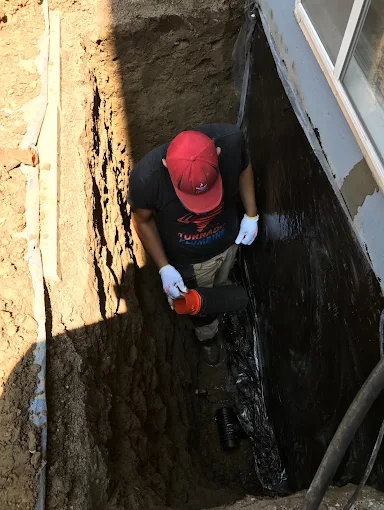
Exterior foundation trench opened for waterproofing work
This trench-stage image gives the waterproofing pages another real project view that shows excavation depth and wall exposure before the waterproofing system is closed back in.
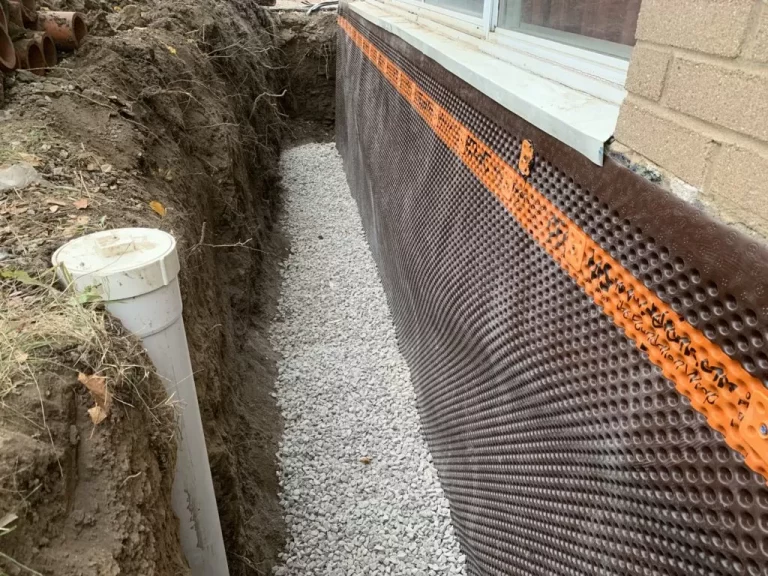
Exterior waterproofing trench with membrane and gravel
This shows the trench stage of foundation waterproofing, where the wall is protected and the drainage layer is ready before the excavation is closed.
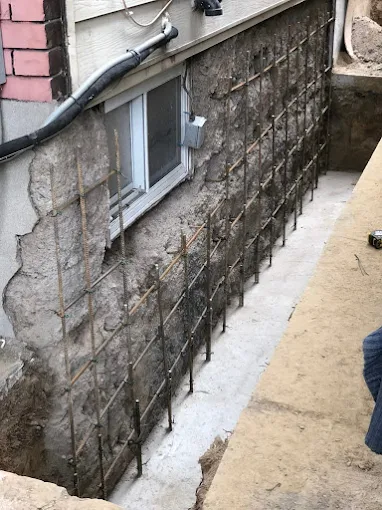
Foundation wall opened for crack repair and waterproofing
The exterior wall is fully opened so damaged areas can be repaired and the waterproofing build-up can be completed before backfill.
Customer stories related to this topic
These customer stories pair real review quotes with the service pages most closely related to this guide.
MR Verxcy
April 2019“We were happy with Tornado plumbing from start and finish. Sergey came on the time to give us a quotation,he found the cracks in our foundation wall also our sump pump didn't work also. We are 100% satisfied with the crew ,they keep job site clean even weather wasn't great, the power flash the driveway and my basement is dry we are so happy!!! Highly recommend”
Most relevant to Sump Pump Installation in Toronto & the GTA.
Google place photo: Tornado Plumbing & DrainsDominic
June 2025“Tornado Plumbing & Drains’ work quality and service is exceptional and the pricing was very fair. My project was the installation of a backwater valve, sump pump and disconnection of weeping tile. Everything about my experience was great. Serhiy (company owner) came to my house to provide an estimate. He was very knowledgeable, professional, patiently answered all my questions and provided good advice. He told me in detail what he would do, when he could start and how long the work would take. The work started on time, the two-man crew was very courteous, efficient and took great care to keep my home clean. They too answered my questions, kept me informed of their progress and made sure I was satisfied with their work. Serhiy kept in touch at all times and when the configuration of my existing sewer drains provided some unforeseen challenges, he recommended a very practical solution and at no extra cost to me. That was greatly appreciated. From start to finish Serhiy and his staff were very courteous, efficient and professional. I recommend Tornado Plumbing & Drains without reservation.”
Most relevant to Backwater Valve Installation in Toronto & the GTA.
Google place photo: Tornado Plumbing & Drains
“My driveway has a negative slope towards the house, which lacked proper drainage and caused minor flooding in my garage during heavy rainfalls. I hired Serjiy and his team to install a trench drain and I could not be happier with their work. His team showed up early everyday, they always explained everything they we're doing and left the area clean and tidy when they we're finished. Serjiy was also excellent communicating with me, letting me know well in advanced of any weather delays (not their fault) I would highly recommend Tornado plumbing for any plumbing needs!”
Most relevant to Sump Pump Installation in Toronto & the GTA.
Google place photo: Tornado Plumbing & DrainsRead next in this topic
These related guides help you compare cost, scope, and next steps without starting over.
Best local service areas for this topic
Use one of these city pages when you want the same problem explained through local housing, flood risk, access, and neighbourhood-specific plumbing context.
Licensed, insured, reviewed Toronto plumbers
Serving Toronto & the GTA since 2015 — over 1,200 completed jobs.
Master plumber T95-4969603 · Plumbing contractor T94-4992639 · Drain contractor T87-4722944 · Building renovator T85-4728632 · Plumbing license FI6216638.
4.9-star Google rating from 320+ reviews. 400+ HomeStars reviews (Best of 2019–2025). BBB-accredited.
Same-day and after-hours dispatch across Toronto, Etobicoke, North York, Scarborough, York, Mississauga, and Burlington.
25-year workmanship warranty
Every job Tornado Plumbing & Drains completes in Toronto and the GTA — repair, install, replacement, drain work, sewer work, fixture work — is backed by a 25-year workmanship warranty. The written terms are provided with every quote. If our work fails within 25 years of the install date, we come back and make it right.
Quick answer
Weeping tile is perforated drain pipe installed at the footing level around the foundation that collects groundwater and routes it away from the basement. Two install types: exterior (at the footing during construction or excavation) and interior retrofit (trenched inside the basement perimeter). In many pre-1955 Toronto homes the original weeping tile drains into the sanitary sewer — disconnecting it and re-routing to a sump pit is eligible under the City's Basement Flooding Protection Subsidy — $400 for the severance/capping plus up to $2,250 for the sump pump it routes to.
What weeping tile does and why disconnect matters
Toronto subsidy: $400 for weeping-tile severance/capping plus up to $2,250 for the sump pump receiving the redirected water (expanded amounts apply to work on/after Nov 12, 2025).
Interior weeping tile retrofit: trench inside the basement perimeter, 6″–10″ deep, perforated pipe routed to the sump pit. Cost $5,500–$15,000 depending on basement size.
Exterior weeping tile (new construction or full excavation): at the footing level around the foundation, paired with foundation membrane.
Pre-1955 Toronto homes commonly have weeping tile tied directly to the sanitary sewer — this becomes a back-flow path during sewer surcharge.
Failed or clogged weeping tile is one of the most common causes of chronic basement seepage in 1950s–80s Toronto homes.
Modern installs use perforated PVC or HDPE wrapped in filter fabric to prevent silt from clogging the drain over time.
Disconnect work typically pairs with sump pump install — combined under City subsidy with backwater valve for full $6,650 max.
How weeping tile works (and why old installs fail)
The system: a perforated drain pipe at the footing level (the bottom edge of your foundation, where the basement floor meets the wall) collects groundwater that builds up against the foundation. The pipe slopes continuously downhill to a discharge point.
Where it discharges (this is the issue): in modern installs, weeping tile drains to a sump pit, where the sump pump moves it to grade. In pre-1955 Toronto homes, it often drains directly to the sanitary sewer — which works fine until the sanitary sewer surcharges during heavy rain. Then the City sewer pushes water back up the weeping tile and into the basement.
Why it fails over time: silt and roots clog the perforations. Filter fabric (added on modern installs) prevents this; older installs without fabric often clog within 30–50 years. Clogged weeping tile means groundwater pressure builds against the foundation and seeps through the wall or slab.
The fix: interior weeping tile retrofit (trench inside the basement perimeter, install new pipe wrapped in filter fabric, route to a sump pit) plus disconnect from the sanitary sewer. The disconnect severance/capping carries a $400 City subsidy, and the sump pump it routes to carries up to $2,250 more.
When weeping-tile work is the right scope
Weeping-tile work is right when
Pre-1955 home with documented sanitary-sewer connection of the foundation drain. Chronic basement seepage during heavy rain. Clogged or failed original weeping tile. Comprehensive flood-protection scope where you're claiming the full $6,650 City subsidy.
Other scope first when
Seepage is from a single foundation crack (crack injection $400–$900). Window-well overflow (clear the well drain). Surface water pooling at the foundation (regrade and downspout extension). Sanitary back-flow only (backwater valve alone may be enough).
Comprehensive scope
For most older central-Toronto homes with pre-1955 plumbing, the comprehensive flood-prevention scope is: backwater valve ($1,600 per device, up to two) + sump pump system ($2,250, plus $300 battery backup) + weeping-tile severance/capping ($400) + one-time plumbing assessment ($500) = up to the full $6,650 City subsidy. We quote the full scope on the diagnostic visit and homeowners can phase it as budget allows.
Why this is a Toronto-specific issue
Pre-1955 Toronto homes were commonly built with weeping tile draining directly into the sanitary sewer — the technique was standard practice at the time, before combined-sewer surcharge during modern intense storms became a recognized issue. Today, that exact connection is one of the most common paths for groundwater to enter a basement during a storm event. The City of Toronto specifically structured the disconnect-related components ($400 severance/capping plus $2,250 sump pump) of the Basement Flooding Protection Subsidy to incentivize homeowners to retrofit the disconnect — recognizing that property-level fixes are faster and cheaper than infrastructure separation. We coordinate the disconnect with sump pump install so the redirected weeping-tile water has somewhere to go.
Interior weeping-tile retrofit vs exterior weeping tile
| Factor | Interior retrofit | Exterior weeping tile |
|---|---|---|
| How it's installed | Trench inside the basement perimeter, 6″–10″ deep, new perforated pipe routed to a sump pit | At the footing level around the foundation, exposed by full excavation and paired with foundation membrane |
| Disruption | Floor slab cut along the walls; landscaping and driveway untouched | Yard, walkways, decks, and plantings dug up to reach the footing |
| Typical cost | $5,500 – $15,000 depending on basement size | Higher — excavation, membrane, and backfill add to the cost |
| Best when | Foundation is sound and you mainly need to capture and redirect groundwater | Foundation waterproofing or wall repair is also needed, or during new construction |
| City subsidy fit | Severance/capping from the sanitary sewer is subsidized at $400; pairs with the $2,250 sump-pump component | Disconnect still applies, but exterior work is driven by foundation condition, not the rebate |
| Clog resistance | New pipe wrapped in filter fabric resists silt and roots | Footing-level pipe in fabric, but re-access means excavating again |
Sources cited in this guide
Where to go next
When the situation in this guide already matches what we cover, Basement Waterproofing System (Weeping Tile) is the page where you book the visit and see the full scope, pricing, and warranty.
Weeping tile is one piece of the basement system. Open the Basement Waterproofing & Flood Prevention category to see the rest — backwater valve, sump install, foundation waterproofing — and decide which combination matches your specific water-entry pattern.
Companion guide on an adjacent angle — useful when the article you're on doesn't fully match your situation.
Turn the diagnosis into a real route
If you've already identified the water-entry point, Basement Waterproofing System and Foundation Waterproofing are the booking pages with scope and pricing. We diagnose interior vs exterior solutions on the inspection visit, not from a phone call.
Common questions about weeping tile
What is weeping tile and how does it keep a basement dry?
Weeping tile is perforated pipe laid at the footing around your foundation. It collects groundwater building up against the foundation wall and routes it away — to a sump pit on modern installs, or, in many pre-1955 Toronto homes, into the sanitary sewer. Keeping that water moving away from the wall is what stops it from seeping through the slab or the wall-floor joint.
How do I know if my weeping tile is failing or clogged?
The usual signs are chronic basement seepage during heavy rain, water pooling at the wall-floor joint, white mineral staining (efflorescence) on the foundation, or a musty smell that returns every wet season. Older clay or non-fabric-wrapped weeping tile silts up over 30–50 years; a camera inspection of the line confirms whether it is blocked, collapsed, or still draining.
Does the City of Toronto rebate cover disconnecting weeping tile from the sewer?
Yes — the weeping-tile disconnect is the largest single component of the City of Toronto Basement Flooding Protection Subsidy, subsidized at $400 for the severance and capping, when you sever the foundation drain from the sanitary sewer and re-route it to a sump pit. It is usually combined with a sump pump (up to $2,250), a battery backup ($300), and a backwater valve ($1,600 per device, up to two) toward the $6,650 program maximum. We document the work in the format the City application requires.
Interior weeping-tile retrofit or exterior — which do I need?
Interior retrofit (trenching inside the basement perimeter to a sump pit) is faster and cheaper, and it is the practical choice when the foundation is sound but exterior excavation is blocked by mature trees, decks, or hardscape — common on older Toronto lots. Exterior weeping tile, paired with a foundation membrane, is the more complete fix when the foundation wall itself needs waterproofing or during new construction. We confirm which on the inspection visit.
Is weeping-tile work warrantied, and are you licensed in Toronto?
Yes to both. Every install carries our 25-year workmanship warranty with written terms on the quote, and Tornado is fully licensed in Toronto (Master plumber T95-4969603), serving the GTA since 2015 with over 1,200 completed jobs.
Explore more