Floor Drain Cleaning in Toronto & the GTA
Toronto & the GTA • Call 647-784-8448
A slow basement floor drain is rarely a clog at the drain itself. It is usually a sign that the main building drain or sewer lateral is restricted. Tornado Plumbing & Drains clears floor drains across Toronto and the GTA, then helps you decide whether the line needs main-line snaking, jetting, camera inspection, or backwater valve protection.
Last updated April 24, 2026
When this service makes sense
Part of Drain & Sewer Services in Toronto & the GTA
Book this service when
A good place to start for repeat clogs, slow drains, basement floor drain backups, or confirmed line damage that needs a real diagnosis.
Common signs
- Grease, lint, and soap scum collecting at the trap from a nearby laundry tub or basement sink.
- Roots intruding into the sewer lateral, narrowing the line so the floor drain is the first to overflow.
- A collapsed or bellied section of clay or cast-iron pipe trapping debris upstream of the drain.
- City sewer surcharge during heavy GTA storms pushing wastewater back through the lowest opening.
If you're not sure, compare these too
- Drain Cleaning in Toronto for Clogged, Slow, and Backing-Up Drains - Drain cleaning & repair in Toronto: clear clogged sinks, tubs & main drains, then camera-find backups. From $145. Call 647-784-8448.
- Drain Repair in Toronto for Cracked, Root-Damaged, and Collapsed Drain Pipes - Drain repair in Toronto: cracked, root-filled & collapsed drains fixed by spot repair, CIPP relining or excavation. From $400. Call 647-784-8448.
- Drain Snaking & Rootering in Toronto & the GTA - Drain snaking and rootering in Toronto & GTA: hair, paper, soft buildup, and root clearing for branch lines, kitchen drains, toilet lines, and main sewer
On this page
Quick guide and key details
When this page makes sense
A good place to start for repeat clogs, slow drains, basement floor drain backups, or confirmed line damage that needs a real diagnosis.
Most common signs
- Grease, lint, and soap scum collecting at the trap from a nearby laundry tub or basement sink.
- Roots intruding into the sewer lateral, narrowing the line so the floor drain is the first to overflow.
- A collapsed or bellied section of clay or cast-iron pipe trapping debris upstream of the drain.
- City sewer surcharge during heavy GTA storms pushing wastewater back through the lowest opening.
What the visit usually includes
- 1. Symptom timing: Confirm whether backup follows rain, laundry, or general use.
- 2. Trap and grate inspection: Check trap water and remove debris from the grate.
- 3. Snake the floor drain or main line: Clear from the floor drain or, more often, from the main cleanout.
What changes price and scope
- Whether the issue is at one fixture, one branch, or the main line.
- Pipe condition, buildup type, and whether jetting or camera diagnostics are required.
- Cleanout access, older piping materials, and whether roots or damage are already present.
How a professional visit usually unfolds
1. Symptom timing
Confirm whether backup follows rain, laundry, or general use. Separates main-line restriction from sewer surcharge.
2. Trap and grate inspection
Check trap water and remove debris from the grate. Eliminates dry-trap odour and surface blockage.
3. Snake the floor drain or main line
Clear from the floor drain or, more often, from the main cleanout. Restores flow.
4. Camera inspection
Inspect the line if backups recur. Documents roots, breaks, or surcharge evidence.
5. Flood-prevention conversation
Discuss backwater valve, sump, or main-line repair if appropriate. Addresses the cause, not just the symptom.
Recent Floor Drain Cleaning in Toronto & the GTA work in Toronto & the GTA
These real project photos show the kind of work this service involves, so you can see examples before you book.
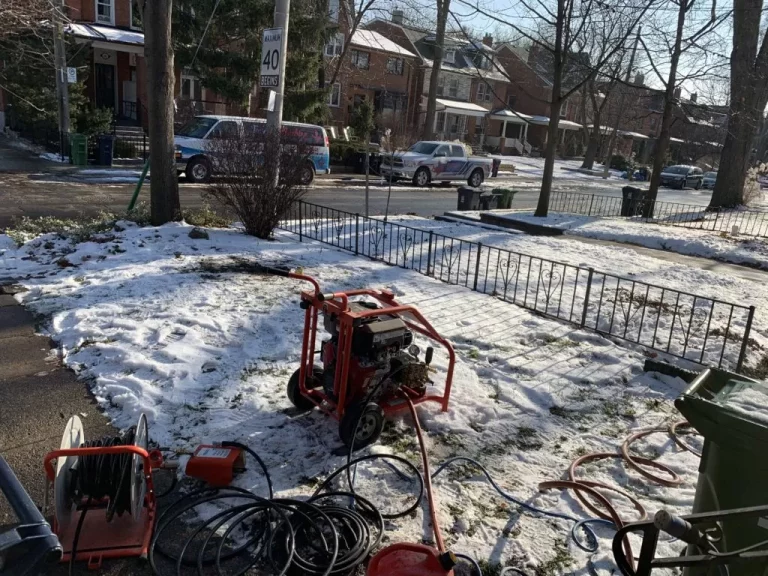
Drain-cleaning equipment set up before line clearing
This image shows the equipment-prep stage of a drain-clearing job, where the line condition still needs to be confirmed before it is obvious whether cleaning alone will solve it.
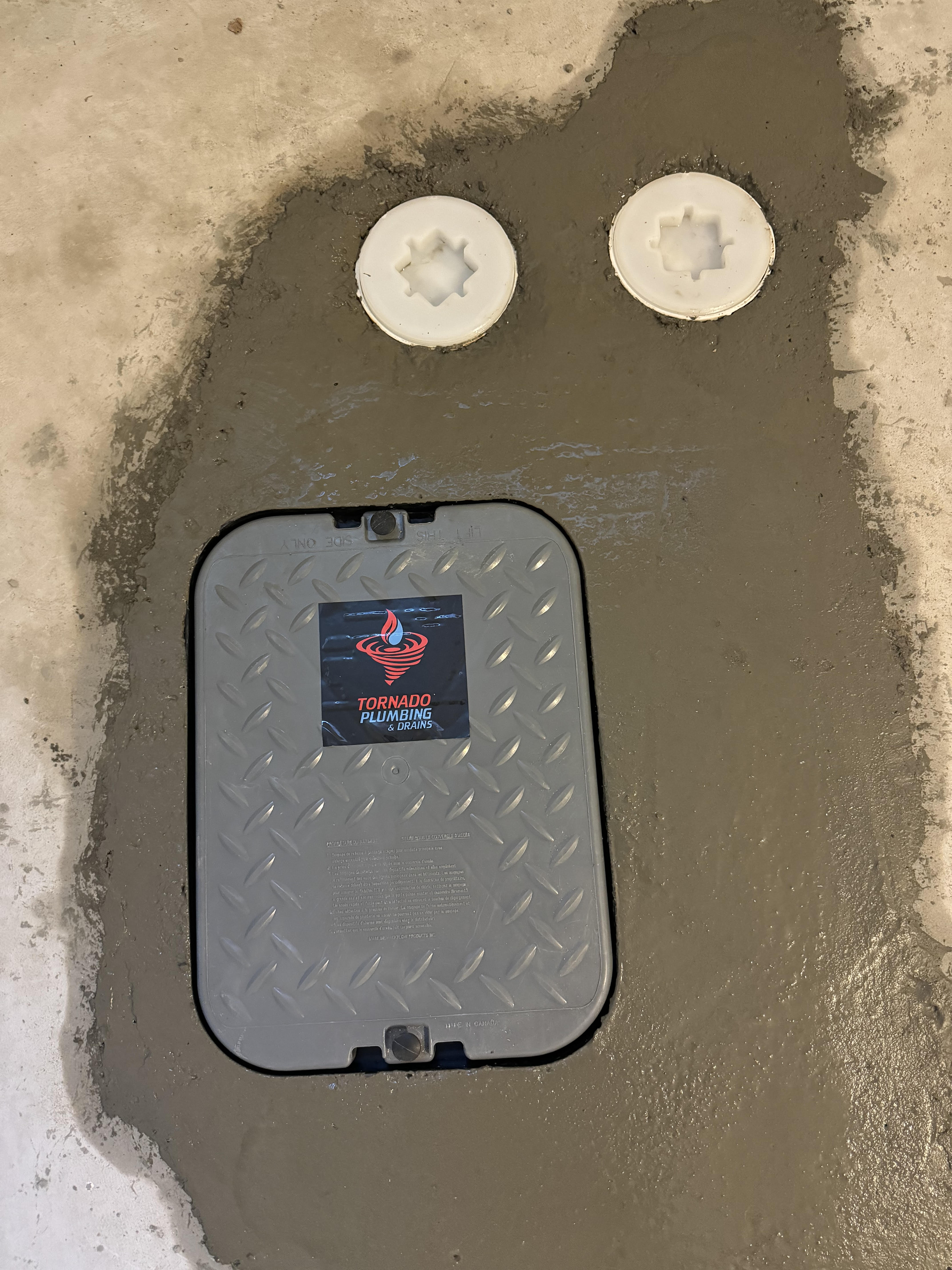
Backwater-valve access finished after concrete patch
This result photo shows the finished access point after basement flood-protection plumbing was installed and the floor was restored.
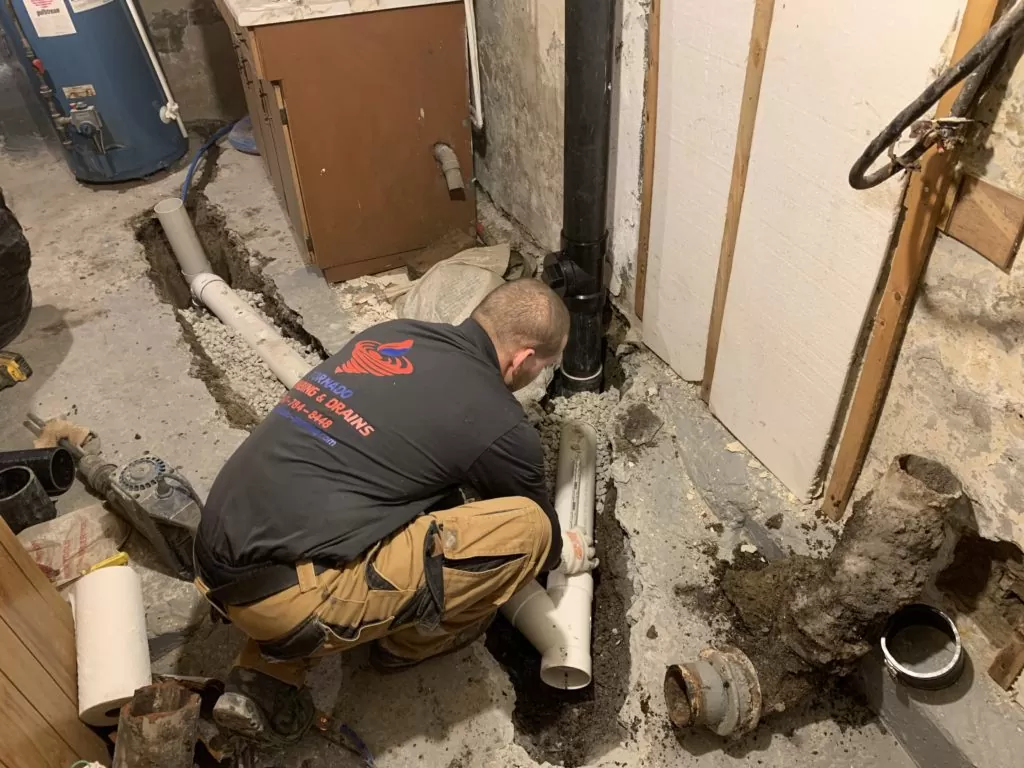
Basement drain tie-in in progress
This project photo shows the below-floor drain installation phase, where route changes, tie-ins, and access all affect the actual scope of the work.
Floor drain pricing (Toronto 2026)
| Service | Starting from | Typical range |
|---|---|---|
| Floor drain clearing | $145 | $145 to $300 |
| Main line snaking from cleanout | $225 | $225 to $450 |
| Camera inspection | $180 | $180 to $400 |
| Hydro jetting | $315 | $315 to $600 |
Ranges are for planning and triage. Final pricing depends on access, urgency, materials, and whether the visit stays isolated once the area is opened.
Cities Where This Service Is a Strong Fit
- Toronto
Century homes, condo towers, and flood-prone basements make Toronto the broadest local plumbing market on the site.
- North York
Strong fit for post-war housing, aging laterals, and supply-side upgrades that need a system view.
- Scarborough
Useful for root intrusion, storm-related drain issues, and homes where terrain changes the drainage risk.
- Mississauga
A good path for mixed-density infrastructure, sump planning, and combining equipment replacement with diagnostics.
Related Services
- Drain Cleaning in Toronto for Clogged, Slow, and Backing-Up Drains
Drain cleaning & repair in Toronto: clear clogged sinks, tubs & main drains, then camera-find backups. From $145. Call 647-784-8448.
- Drain Repair in Toronto for Cracked, Root-Damaged, and Collapsed Drain Pipes
Drain repair in Toronto: cracked, root-filled & collapsed drains fixed by spot repair, CIPP relining or excavation. From $400. Call 647-784-8448.
- Drain Snaking & Rootering in Toronto & the GTA
Drain snaking and rootering in Toronto & GTA: hair, paper, soft buildup, and root clearing for branch lines, kitchen drains, toilet lines, and main sewer
- Kitchen Sink Drain Cleaning in Toronto & the GTA
Kitchen sink drain cleaning in Toronto & GTA: grease buildup, food debris, dishwasher backups, slow draining, and recurring kitchen-line clogs.
- Shower & Tub Drain Cleaning in Toronto & the GTA
Shower and tub drain cleaning in Toronto & GTA: hair clogs, soap buildup, standing water, slow draining, and recurring bathroom drain blockages.
- Hydro Jetting Services in Toronto & the GTA
Hydro jetting in Toronto & GTA for grease, sludge, scale, and root buildup in branch lines, kitchen drains, main sewer laterals, and commercial drains.
- Drain Descaling in Toronto & the GTA
Drain descaling in Toronto & GTA: removing scale, rust, and tuberculation from cast iron and galvanized drain lines to restore flow without full replacement.
- Drain Camera Inspection in Toronto & the GTA
Drain camera inspection in Toronto: see roots, bellies & offsets on video before any repair. From $180. Call 647-784-8448 or book online.
- Drain Inspection & Cleaning in Toronto & the GTA
Drain inspection and cleaning in Toronto: snake the line, then camera it to find roots, bellies or breaks. Book online or call 647-784-8448 - from $300.
- Main Sewer Line Cleaning in Toronto & the GTA
Main sewer line cleaning in Toronto: cleanout snaking, jetting and root cutting for recurring basement backups. Call 647-784-8448; 25-yr warranty.
- Root Intrusion Removal in Toronto & the GTA
Tree root removal from sewer and drain lines in Toronto & GTA: mechanical cutting, jetting, foaming root treatment, and trenchless repair when roots keep
- Sewer Cleanout Installation in Toronto & the GTA
Sewer cleanout installation in Toronto from $650: interior & exterior access for cleaning, camera & inspection. Licensed & insured. Book online.
- Sewer Line Repair in Toronto & the GTA
Sewer line repair in Toronto & GTA: camera-located fixes for offsets, breaks & root joints, not a full dig. From $2,400. Call 647-784-8448.
- Spot Sewer Line Repair in Toronto & the GTA
Spot sewer line repair in Toronto & GTA: targeted excavation to fix one defect — a break, an offset joint, or a root entry — without replacing the whole line.
- Trenchless Sewer Line Repair in Toronto & the GTA
Trenchless sewer line repair in Toronto without the full dig: CIPP lining & point repair for offsets, cracks & root joints. From $2,400. Call 647-784-8448.
- Pipe Lining (CIPP) in Toronto & the GTA
CIPP pipe lining in Toronto & GTA: cured-in-place liner installation for damaged sewer laterals, scaled cast iron, root-intruded clay, and aging drains.
- Pipe Bursting in Toronto & the GTA
Pipe bursting in Toronto & GTA: trenchless replacement of failed clay, cast iron, or lead sewer laterals by pulling new pipe through and breaking the old one
- Trenchless Sewer Line Replacement in Toronto & the GTA
Trenchless sewer line replacement in Toronto & GTA: pipe bursting and full-length CIPP lining as alternatives to open-cut excavation.
- Sewer Line Replacement in Toronto & the GTA
Sewer line replacement in Toronto: collapsed, bellied or root-damaged pipe, camera-diagnosed. Trenchless or open-cut. Call 647-784-8448; 25-yr warranty.
- Sewer Line Rerouting in Toronto & the GTA
Sewer line rerouting in Toronto & GTA: redirecting a damaged or poorly placed lateral around obstacles, additions, or trees instead of repairing in place.
- Drain Basin Services in Toronto & the GTA
Drain basin services in Toronto & GTA: catch basin cleaning, sump and ejector basin work, area drains, yard drains, and basin replacement.
Related Guides
- AC Condensate Drain Line Clog in Toronto: Signs, Causes, and How to Clear It Safely
Why Toronto AC condensate drain lines clog — algae, biofilm, tripped float switches, and water around the furnace — and how to clear the line safely.
- Hydro Jetting Cost in Toronto (2026): Real Prices, Real Pipe Conditions
What hydro jetting actually costs in Toronto in 2026 — $400–$1,400 by line size and condition.
- Drain Camera Inspection Cost in Toronto (2026): What the Price Actually Buys You
What a drain camera inspection costs in Toronto in 2026 — $250–$650 typical, $500–$900 with a sonde locate.
- Plumbing Cost Guide Toronto 2026: Every Service, Real Numbers
Real Toronto plumbing prices in 2026 — repairs $180–$700, fixture installs $400–$1,800, water heater $2,200–$4,500, sewer work $4,500–$25,000+.
Licensed, insured, reviewed Toronto plumbers
- Serving Toronto & the GTA since 2016 — over 1,200 completed jobs.
- Master plumber T95-4969603 · Plumbing contractor T94-4992639 · Drain contractor T87-4722944 · Building renovator T85-4728632 · Plumbing license FI6216638.
- 180+ five-star Google reviews. 400+ HomeStars reviews (Best of 2019–2025). BBB-accredited.
- Same-day and after-hours dispatch across Toronto, Etobicoke, North York, Scarborough, York, Mississauga, and Burlington.
25-year workmanship warranty
Every job Tornado Plumbing & Drains completes in Toronto and the GTA — repair, install, replacement, drain work, sewer work, fixture work — is backed by a 25-year workmanship warranty. The written terms are provided with every quote. If our work fails within 25 years of the install date, we come back and make it right.
Why basement floor drains back up first
The floor drain sits at the lowest point in the house, so it is the first place wastewater shows up when the main building drain or sewer lateral cannot keep up. That makes a slow or backing-up floor drain a diagnostic clue, not just a clog to plunge. We clear the immediate backup, then read the timing and the camera footage to tell surcharge from a real main-line restriction so you are not paying to snake the same line twice. See our Drain Camera Inspection when backups keep returning.
What's actually behind a backing-up floor drain
- Grease, lint, and soap scum collecting at the trap from a nearby laundry tub or basement sink.
- Roots intruding into the sewer lateral, narrowing the line so the floor drain is the first to overflow.
- A collapsed or bellied section of clay or cast-iron pipe trapping debris upstream of the drain.
- City sewer surcharge during heavy GTA storms pushing wastewater back through the lowest opening.
- An offset or sunken cast-iron floor-drain trap that has settled over time and now holds water and sludge back.
- Construction debris, drywall mud, or paint poured down the drain during a basement renovation.
- An undersized or partially blocked main cleanout that hides the real restriction behind the floor drain.
What's included
- Symptom-timing diagnosis to separate a local floor-drain clog from a main-line or surcharge problem.
- Trap and grate inspection — refilling a dry trap and clearing surface debris before powered clearing.
- Mechanical clearing of the floor drain or, more often, the main building drain from the cleanout with the right cutter head.
- Camera inspection of the line when backups recur, with footage you can keep to document roots, breaks, or surcharge.
- Cleanup of the work area and a straight recommendation on backwater valve, sump, or main-line repair only if the line actually needs it.
- The written 25-year workmanship warranty on the work we perform, with terms provided in your quote.
Symptoms of a floor drain problem:
- Wastewater coming up through the basement floor drain.
- Sewer smell from the floor drain (often a dry trap).
- Floor drain backing up during rain.
- Floor drain backing up when laundry runs.
- Standing water around the drain after light use elsewhere in the home.
- Multiple basement fixtures slow at the same time.
Floor drain cleaning cost
Pricing depends on whether the line is cleared from the floor drain or from a proper main cleanout, whether camera inspection is included, and whether the backup turns out to be a main-line issue rather than a floor-drain clog. After-hours response, contaminated water, and recurring backups push pricing up.
When floor drain backup means something bigger
Backups during heavy rain are usually sewer surcharge — the city sewer is full and pushing wastewater back through your lowest fixture. The fix is a backwater valve, often combined with sump and battery backup. Toronto's expanded subsidy program (May 1, 2026) covers up to $6,650 per property for eligible flood-prevention work. Backups during laundry or shower use point to a main-line restriction that needs camera inspection.
What to share when you call
- Whether the backup follows rain, laundry, or general use.
- Whether the floor drain has a sewer smell when dry.
- Whether other basement fixtures are slow.
- Whether the home has a backwater valve.
- Prior history of basement backups.
- Photos of the drain area before cleanup if possible.
Keeping the floor drain healthy
Pour a quart of water down the floor drain every month or two if it does not see regular use. This keeps the trap full and stops sewer odour. If the home has had any backup in the past, schedule camera inspection on the main line rather than waiting for the next event.
Toronto context
Basement floor drains in Toronto pull double duty — they handle laundry, water heater overflow, and HVAC condensate, and they're often the first place sewer surcharge surfaces during a heavy rain. Recurring slow drainage at a basement floor drain is usually about the lateral or the City combined sewer side, not the trap. The camera tells which.
What to confirm before approving floor drain work
- If the backup is rain-driven, the long-term fix is a backwater valve, not repeat snaking.
- Cleaning from a cleanout is usually more thorough than from the floor drain itself.
- Camera evidence should drive any repair recommendation.
Useful info on the call: backup timing (rain, laundry, idle), prior history, and whether a backwater valve is already installed.
Frequently asked questions
Why does my floor drain back up during heavy rain?
Most of older Toronto is on a combined or surcharge-prone sewer. During heavy rain the city sewer fills, then pushes back into homes through the lowest fixture — usually the basement floor drain. A backwater valve helps stop that reversal.
My floor drain smells but is not backing up. What is happening?
Usually a dry trap. The water seal in the trap evaporated. Pour a quart of water down the drain. If the smell returns quickly, the trap may be cracked or improperly vented.
Should I get a backwater valve?
If your home has flooded during heavy rain, or if other homes in your neighbourhood have, a backwater valve usually pays for itself. The City of Toronto subsidy program covers eligible installations.
Why does the floor drain back up when I do laundry?
Because both share the main building drain, and a restriction in that line shows up first at the lowest fixture. Time to snake the main and consider camera inspection.
Related services
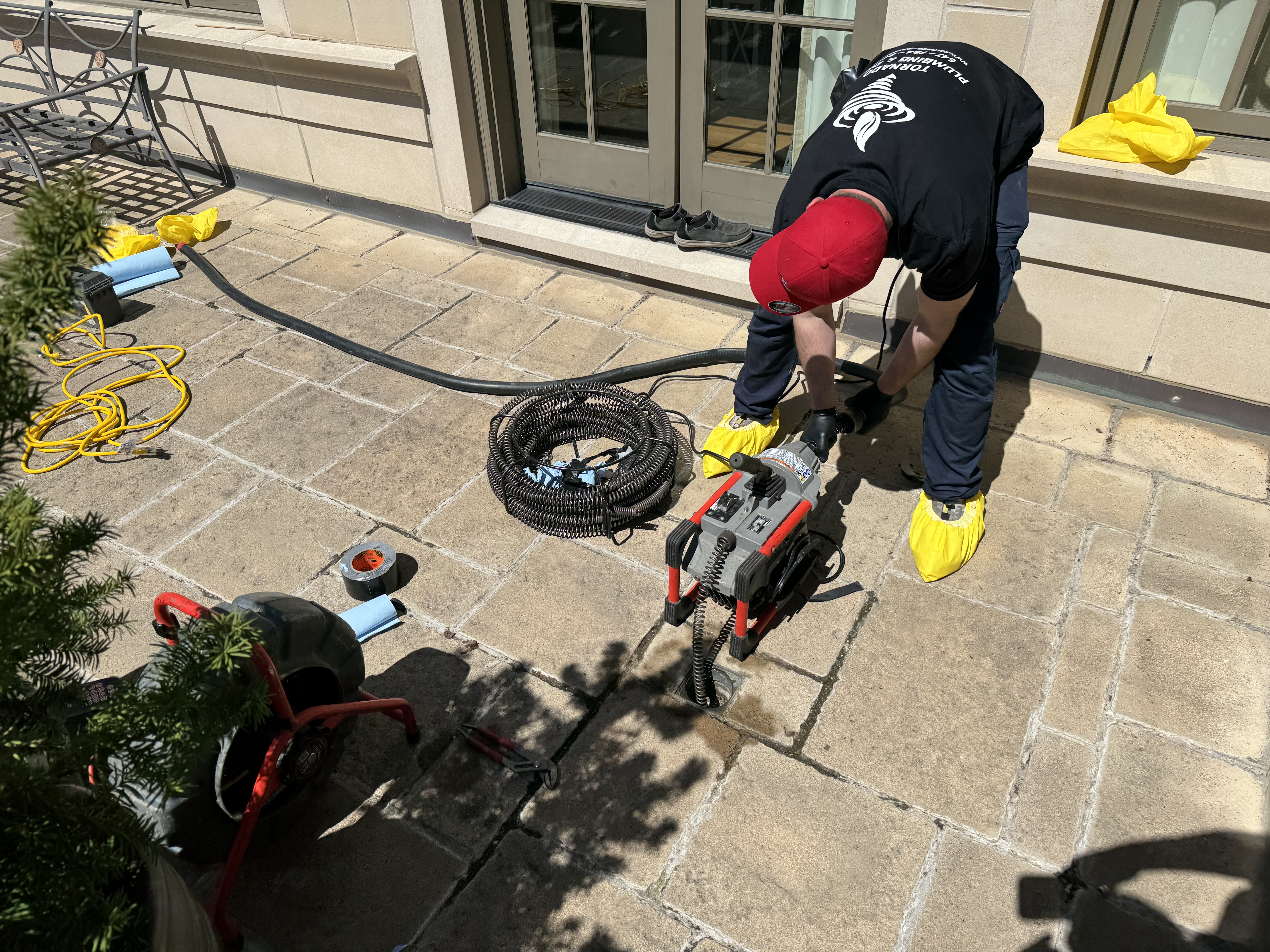
Recent floor drain cleaning in toronto & the gta project
Real Tornado Plumbing & Drains job — photos and notes pulled from the project log, not stock imagery. Location: Scarborough.
Authoritative sources for this service
Public references — City of Toronto programs, federal guidelines, and standards bodies — used for the rules and figures cited on this page.
- City of Toronto — Combined sewers and basement flooding(city)
- City of Toronto — Basement Flooding Protection Subsidy Program(city)
- NASSCO PACP — Pipeline Assessment Certification Program (sewer condition coding)(standard)
- Ontario Building Code — Part 7: Plumbing Services(regulator)
- City of Toronto Sewer Use Bylaw — Chapter 681(city)
- City of Toronto — Priority Lead Water Service Replacement Program(city)
Other services homeowners often compare with this one
If your situation could fit one of these adjacent services instead, open the page that matches more closely before you book.
Fast answers before you call
Why does my floor drain back up during heavy rain?
Most of older Toronto is on a combined or surcharge-prone sewer. During heavy rain the city sewer fills, then pushes back into homes through the lowest fixture — usually the...
My floor drain smells but is not backing up. What is happening?
Usually a dry trap. The water seal in the trap evaporated. Pour a quart of water down the drain. If the smell returns quickly, the trap may be cracked or...
Should I get a backwater valve?
If your home has flooded during heavy rain, or if other homes in your neighbourhood have, a backwater valve usually pays for itself. The City of Toronto subsidy program covers...
Why does the floor drain back up when I do laundry?
Because both share the main building drain, and a restriction in that line shows up first at the lowest fixture. Time to snake the main and consider camera inspection.
Book Floor Drain Cleaning today.
Tornado Plumbing & Drains handles Floor Drain Cleaning across Toronto and the GTA. Call 647-784-8448 or book online for a clean diagnosis, written scope, and the 25-year workmanship warranty on every install and repair.