Hydro Jetting Cost in Toronto (2026): Real Prices, Real Pipe Conditions
By Serhiy Marunchuk, Master Plumber · Licence T95-4969603 · Updated July 3, 2026
Most residential jetting in Toronto runs $400–$1,400 — branch lines on the lower end, sewer mains on the upper. Restaurants on quarterly contracts pay 20–35% less per visit.
Published March 29, 2026 · Last updated July 3, 2026
On this page
Related services
Get a free estimate
Introduction
Hydro jetting is high-pressure water — typically 3,000 to 4,000 PSI for residential rigs and 4,000 to 10,000 PSI for commercial trailer units — pushed through a specialized nozzle that scrubs the entire pipe wall, not just punches a hole through the clog like a snake does. The reason it costs more than snaking is straightforward: more equipment, more setup, more time on the line, and meaningfully better results on grease, scale, and roots. This guide gives you the actual 2026 Toronto numbers by line size and pipe condition, explains when jetting is the right call versus when a $200 snake job will fix it, and walks through what pipe condition has to look like before we'll bring 4,000 PSI to it. If jetting reveals damaged pipe rather than buildup, see our drain repair service — and for routine clogs, standard drain cleaning is often the cheaper first step.
Related services for this guide
If this article matches what you are dealing with, use one of these links to move into the service or broader category that makes the most sense.
Project photos related to this guide
These real project photos help show what this kind of work looks like in the field, not just on the page.
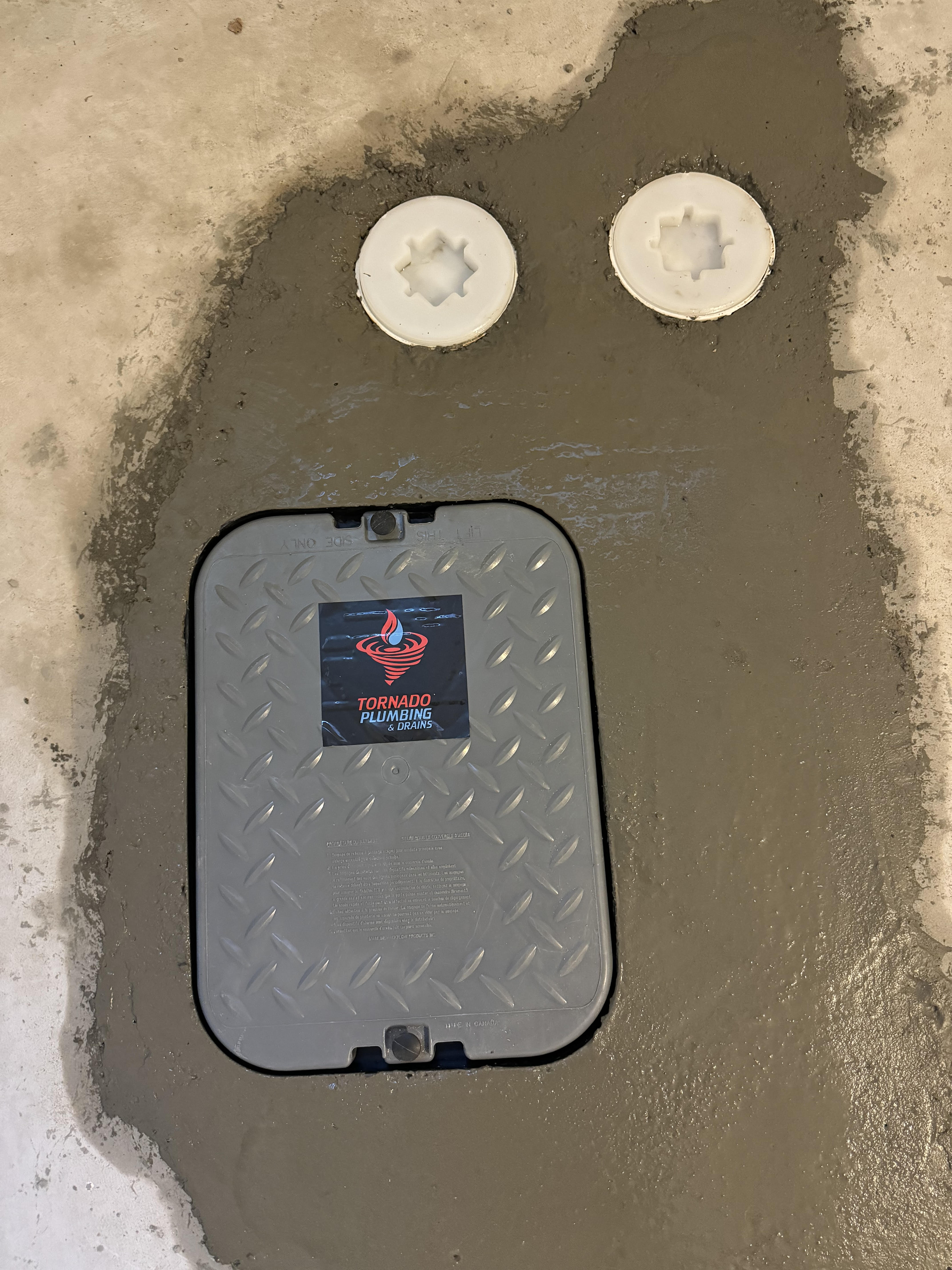
Backwater-valve access finished after concrete patch
This result photo shows the finished access point after basement flood-protection plumbing was installed and the floor was restored.
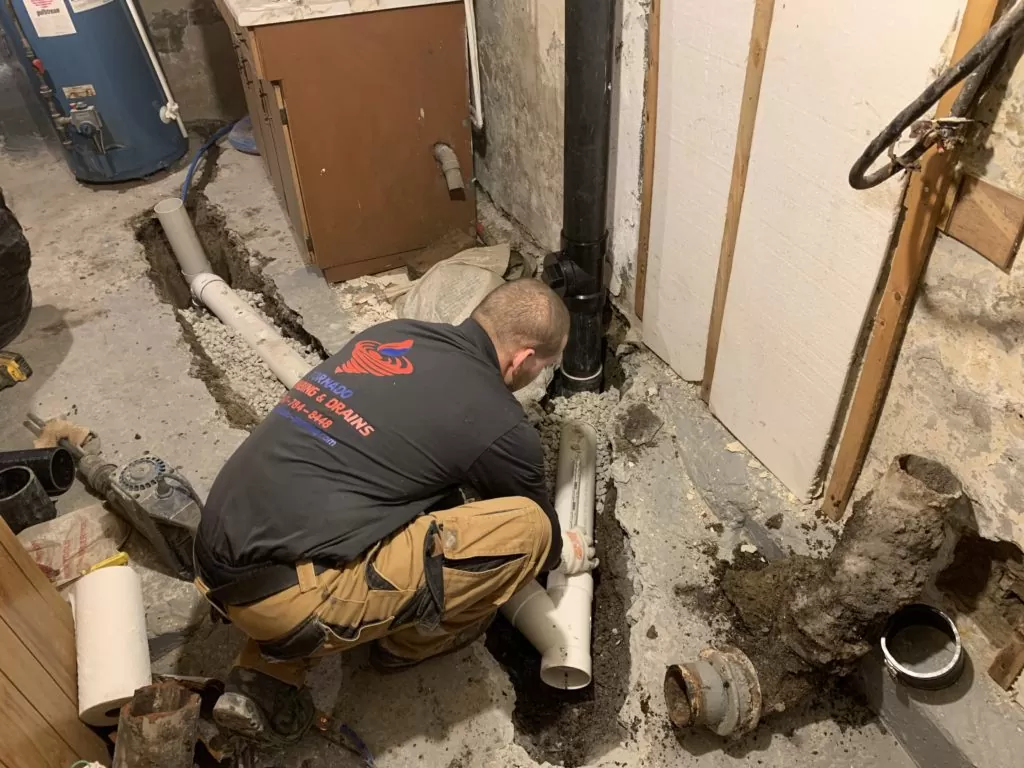
Basement drain tie-in in progress
This project photo shows the below-floor drain installation phase, where route changes, tie-ins, and access all affect the actual scope of the work.
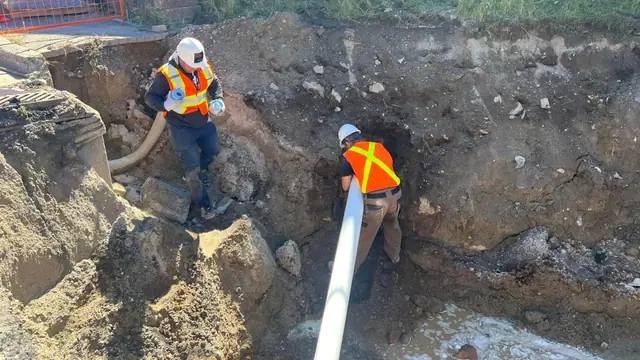
Large-diameter line installation in open excavation
This image captures the moment where the new pipe section is being positioned and checked before the excavation is closed back up.
Read next in this topic
These related guides help you compare cost, scope, and next steps without starting over.
Best local service areas for this topic
Use one of these city pages when you want the same problem explained through local housing, flood risk, access, and neighbourhood-specific plumbing context.
Licensed, insured, reviewed Toronto plumbers
Serving Toronto & the GTA since 2016 — over 1,200 completed jobs.
Master plumber T95-4969603 · Plumbing contractor T94-4992639 · Drain contractor T87-4722944 · Building renovator T85-4728632 · Plumbing license FI6216638.
180+ five-star Google reviews. 400+ HomeStars reviews (Best of 2019–2025). BBB-accredited.
Same-day and after-hours dispatch across Toronto, Etobicoke, North York, Scarborough, York, Mississauga, and Burlington.
25-year workmanship warranty
Every job Tornado Plumbing & Drains completes in Toronto and the GTA — repair, install, replacement, drain work, sewer work, fixture work — is backed by a 25-year workmanship warranty. The written terms are provided with every quote. If our work fails within 25 years of the install date, we come back and make it right.
Quick answer
Residential hydro jetting in Toronto in 2026 typically runs $400–$750 for a 3″ branch line (kitchen, laundry, bath group), $650–$1,400 for a 4″ sewer main with cleanout access, and $1,100–$2,800 when jetting is bundled with pre- and post-clean camera inspection. Commercial restaurant jetting runs $350–$700 ad-hoc and $250–$500 per visit on a quarterly contract. The right pressure depends on pipe material — fragile cast iron always gets a camera inspection before any high-pressure work.
How much does hydro jetting cost in Toronto (2026)?
Residential hydro jetting in Toronto in 2026 typically costs $400-$750 for a 3-inch branch line, $650-$1,400 for a 4-inch sewer main, and $1,100-$2,800 bundled with pre- and post-clean camera inspection. Commercial restaurant jetting runs $350-$700 ad-hoc or $250-$500 per visit on a quarterly contract.
What you should know before booking
Residential jetters run 3,000–4,000 PSI at 4–8 GPM. Commercial trailer-mounted rigs run 4,000–10,000 PSI at 18–40 GPM. Pressure and flow are matched to line size and material.
Grease and biofilm clear at lower pressures (2,500–3,500 PSI). Mineral scale and root mats need higher pressure plus a chain-knocker or warthog-style nozzle.
Pre-clean and post-clean camera inspection adds about $250–$450 — but it's the only objective way to confirm the pipe wall is actually scrubbed clean rather than just opened up.
Severely deteriorated cast iron (channel-rotted, paper-thin walls) should be camera-inspected before any high-pressure jetting. PVC, ABS, and HDPE handle full residential pressure without issue.
Restaurants on a quarterly maintenance contract typically pay 20–35% less per visit than emergency-only billing — and have zero downtime from blocked drains.
Toronto Sewer Use Bylaw (Ch. 681) caps grease and oil discharge at 150 mg/L for commercial properties — the practical reason restaurants jet on schedule rather than on emergency.
Real Toronto hydro jetting prices by line type (2026)
Kitchen, laundry, or bath-group branch line, typically 30–60 ft. Single cleanout access, soft-to-moderate grease, paper, or hair build-up. Usually 60–90 minutes on site including setup and breakdown.
3″ residential branch
$400 – $750
Kitchen, laundry, or bath-group branch line, typically 30–60 ft. Single cleanout access, soft-to-moderate grease, paper, or hair build-up. Usually 60–90 minutes on site including setup and breakdown.
4″ residential sewer main
$650 – $1,400
Full sewer main from the house cleanout to the property line, typically 60–90 ft. Targets grease coating, mineral scale on cast iron, or moderate root intrusion through clay joints. 2–3 hours on site.
Jet + camera bundle (residential)
$1,100 – $2,800
Pre-clean camera to confirm jetting is appropriate, full jetting cycle, post-clean camera with recorded video and PACP-style report. The standard scope when the line condition is unknown.
Cast-iron descaling
$900 – $2,400
Chain-knocker or milling head specifically for hard mineral scale and tubercular corrosion inside aged cast iron. Slower than standard jetting because it's removing pipe-wall deposits without thinning the pipe past the point of repair.
Heavy root intrusion
$850 – $1,800
Warthog-style or root-cutter nozzle for clay laterals with active root mass. Roots are cut, flushed, and the line is camera-confirmed clear. Often paired with a recommendation for spot lining or trenchless replacement of the worst section.
Restaurant kitchen line
$350 – $700 (ad-hoc) · $250 – $500 (contract)
Off-hours dispatch (10 PM–6 AM) is standard. Documented service record provided every visit for City compliance and landlord records. Quarterly contracts drop per-visit cost by 20–35%.
When jetting is the right tool — and when it isn't
Jetting is the right call when
The line has set grease, biofilm, mineral scale, or active root intrusion. A snake has been used and the slowdown returned within months. The pipe is in serviceable condition (PVC, ABS, modern cast iron, or moderately corroded clay/cast iron the camera can confirm). You want the pipe wall scrubbed back to original capacity, not just a hole punched through the clog.
Jetting is not the right call when
The pipe wall is paper-thin from decades of corrosion (jetting can fail it). The line is collapsed or has a separated joint (jetting won't fix structural failure). The clog is a single soft obstruction reachable by a 50-ft snake (the snake is faster and cheaper). The line is currently full of standing sewage with no flow at all (clear the standing water first, then assess).
What we do instead
If pipe condition rules out jetting, the camera inspection from the diagnostic visit becomes the basis for spot repair, trenchless lining, or full replacement. If the symptom is solvable with a standard snake, we tell you and run the cheaper service.
Jetting vs snaking: which do you need?
| Factor | Snake | Hydro jet |
|---|---|---|
| Cost (Toronto, 2026) | $189 – $650 | $400 – $1,400 |
| Best for | Soft, isolated clogs (paper, hair, food) | Set grease, scale, roots, recurring buildup |
| Restores pipe-wall capacity? | No — punches a hole through the clog | Yes — scrubs back to original diameter |
| Time on site | 30–60 min | 60–180 min |
| Equipment cost / weight | Hand-portable, $1K–$5K equipment | Trailer or truck-mounted, $30K+ equipment |
| Safe on aged cast iron | Yes (with caution) | Camera-inspect first; reduce pressure on fragile pipe |
| Removes grease coating | Limited — punches through | Yes — scrubs the wall |
| Removes root mats | Cuts the centre | Cuts and flushes; pairs with chain knocker |
| Returns same line in 6 months? | Often, when underlying issue not addressed | Less often (scrubbed clean) |
What to have ready when you call
These six answers determine the truck, the nozzle, the pressure, and the time on site — and tighten the on-site quote to within 10–15% of the dispatch number.
Which line is the problem — kitchen branch, laundry, single bath, or main sewer line?
Is there an accessible cleanout, or do we need to go through a roof vent or pulled toilet?
Has anyone snaked the line before, and how recent? What was the result?
How is the slowdown showing up — single fixture, multiple fixtures, or backup at the lowest drain?
Property type and age — older central-Toronto home with cast iron, suburban with ABS, restaurant kitchen with grease history?
Do you want a camera inspection bundled in, or just the cleaning?
Three jetting jobs from the last 90 days, anonymized
Roncesvalles, 1923 century home — Cast-iron sewer main with multi-fixture slow drain. Pre-clean camera showed heavy tubercular scale and paper-thin pipe wall in two sections. We declined high-pressure jetting on the rotted sections and instead descaled the upstream cast iron at 2,800 PSI, then quoted CIPP lining for the bottom 18 ft. Total: $1,420 descaling + $4,800 lining (separate scope, separate visit). Customer chose the lining; pre/post camera confirmed full restoration of capacity.
Mississauga, 2018 build, ABS main — Repeat backups every 6 months despite snaking. Camera showed a continuous grease coating across 40 ft of horizontal main from the kitchen branch tie-in. Full jet at 3,500 PSI cleared the pipe wall back to bare ABS. Total: $1,190 (jet + camera bundle). Recommended quarterly maintenance for $320/visit. No backups in the 8 months since.
Yonge & Eglinton, 38-seat restaurant — Sunday-night main backup, kitchen flooded. After-hours dispatch at 11:15 PM, full main jet plus grease-trap pump-out by 4 AM. Total: $1,640 (after-hours premium $180, full main jet $920, grease trap pump $540). Restaurant moved onto monthly contract at $430/visit and hasn't had an unscheduled call since.
Why Toronto pipe conditions decide the price
Toronto's drain and sewer stock is a layered archaeology: clay laterals from pre-1955 builds, cast iron from the 1950s–80s, ABS and PVC from 1980 forward. Combine that with the City's mature street-tree canopy and the result is the kind of mixed-condition line where a one-size-fits-all jetting price doesn't make sense. We see clay-cast-iron-ABS hybrids regularly in central-Toronto homes — three different materials in one 80-foot run, each requiring a different pressure and nozzle. That's why every quote starts with what the camera shows. The City's combined-sewer system in older neighbourhoods is also why restaurant kitchen jetting is on a maintenance schedule rather than emergency-only — Toronto's Sewer Use Bylaw enforces grease discharge limits and the City inspects.
Where to go next
Service page with full scope, line-size pricing, and the warranty terms. Where you book the visit when jetting is the right tool.
If pipe condition is unknown, this is the diagnostic to run first. The footage decides whether jetting is safe or whether spot repair is the better call.
Cast-iron-specific cleaning. Mineral scale and tubercular corrosion need a milling head, not a standard jetting nozzle.
Restaurant, retail, and multi-tenant scope — off-hours scheduling, contracts, and the documentation Toronto's commercial bylaws require.
Sources cited in this guide
Ready to book or compare
If your symptoms match what's described above, Hydro Jetting Services is the booking page. If pipe condition is unknown, start with Drain Camera Inspection — the footage decides the safe method. Restaurants with recurring kitchen issues should look at Commercial Hydro Jetting for contract pricing. Calls go through 647-784-8448 with same-day and after-hours dispatch across Toronto and the GTA.
Common questions about Toronto hydro jetting cost
Is hydro jetting actually worth the extra cost over snaking?
For soft, isolated clogs (paper, hair, food chunks) — no, snaking is faster and cheaper. For grease, mineral scale, or roots, yes — snaking just punches a hole through the build-up; jetting scrubs the wall clean. The tell is recurrence: if you've snaked the same line within the past 12 months and it's slow again, jetting is what actually fixes it.
Can hydro jetting damage my pipes?
Modern PVC, ABS, HDPE, and copper handle 4,000 PSI without issue. Modern cast iron handles 3,000–3,500 PSI. The risk is on severely deteriorated cast iron with channel-rotted bottoms or paper-thin walls — that's why every job in older central-Toronto homes starts with a camera inspection. If we see fragile pipe, we drop pressure, change nozzle, or stop the job and quote repair instead. We don't blow holes through customer pipe.
Why does the price range so wide — $400 to $2,800?
Three reasons: line size (3″ branch is fast, 6″ commercial main is a half-day), pipe condition (clean ABS is straightforward, scaled cast iron with roots is multi-step), and whether camera inspection is bundled. The dispatch call narrows the range — branch line, main, restaurant, or a problem we need to diagnose first.
Should I get a camera inspection before or after the jet?
Both, ideally — pre-clean to confirm jetting is the right tool, post-clean to confirm the line is actually clear. The bundle adds about $250–$450 over jetting alone but answers the next-step question objectively. For routine restaurant maintenance on a known line, post-clean camera is sometimes skipped after the first 2–3 visits establish a baseline.
What does a restaurant maintenance contract actually include?
Scheduled jetting at the agreed interval (monthly, quarterly, or semi-annually based on volume), grease-trap service if applicable, dated service record provided after every visit, off-hours scheduling, and a per-visit price 20–35% below ad-hoc rates. Documentation is what landlords and the City compliance program require — we provide it as part of every visit.
Is the work warrantied?
The cleaning itself doesn't carry a long warranty — drains accumulate again with use, that's the nature of the system. What we warranty is the workmanship: nozzle handling, pipe protection, accurate diagnosis. If we damage a pipe through improper jetting, we repair it. If we miss a defect on the camera that should have been called out, we re-inspect. All Tornado workmanship is backed by our 25-year warranty.
Are you licensed for sewer and drain work in Toronto?
Yes — Drain contractor T87-4722944, Master plumber T95-4969603, Plumbing contractor T94-4992639, plus full Building renovator T85-4728632 and Plumbing license FI6216638. Jetting is performed by drain-contractor-certified technicians under master-plumber supervision.
Explore more