Sump Pump Installation Sizing and Discharge Guide for Toronto Homes (2026)
By Serhiy Marunchuk, Master Plumber · Licence T95-4969603 · Updated August 17, 2026
Sizing a Toronto sump pump correctly means measuring actual inflow, calculating total dynamic head, picking the right horsepower and discharge diameter, and routing per OBC and the Sewer Use Bylaw. Wrong sizing means short-cycling, premature failure, or undersized capacity during the storm.
Published February 26, 2026 · Last updated August 17, 2026
Introduction
Most Toronto sump pump failures we see come down to wrong sizing — a 1/3 HP pump where 1/2 HP was needed, undersized discharge line that limits actual flow, or a check valve in the wrong place. This guide walks through the actual sizing calculation (Plumbing Code-grounded), the discharge requirements under Toronto's Sewer Use Bylaw, and the configuration choices that determine whether the pump runs reliably for 10 years or fails on the third storm. Whatever size you land on, add a battery backup sump pump — the storms that fill the pit fastest are the ones that cut the power.
Related services for this guide
If this article matches what you are dealing with, use one of these links to move into the service or broader category that makes the most sense.
Project photos related to this guide
These real project photos help show what this kind of work looks like in the field, not just on the page.
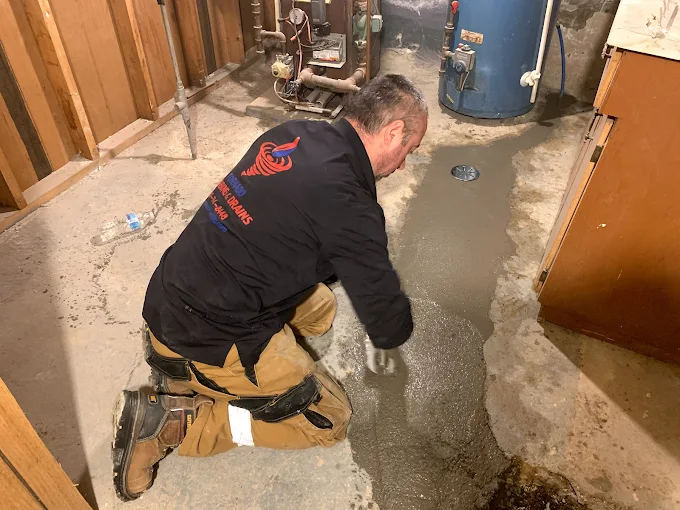
Basement floor patched back after flood-prevention plumbing work
Finished concrete patch after below-floor flood-prevention work, showing the restored surface homeowners see after the plumbing is installed.
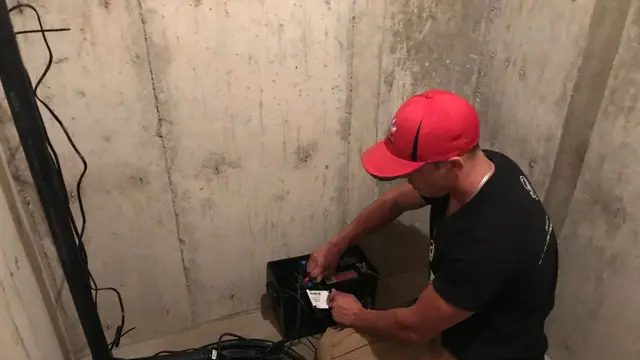
Battery backup sump pump system wiring
This proof photo shows the backup battery and sump components connected and ready for outage protection after the primary sump setup was completed.
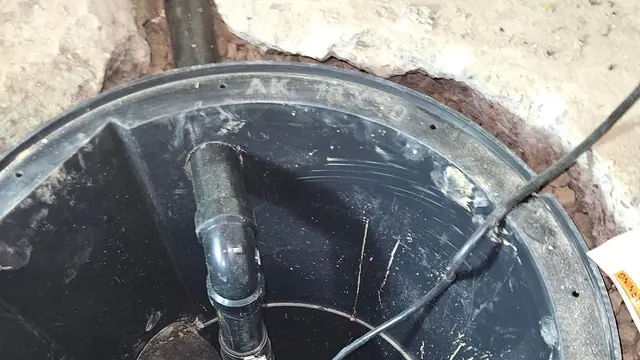
Installed sump pit with pump in place
This is the finished basin stage after the sump pit is set, the pump is placed, and the discharge connection is completed.
Customer stories related to this topic
These customer stories pair real review quotes with the service pages most closely related to this guide.
MR Verxcy
April 2019“We were happy with Tornado plumbing from start and finish. Sergey came on the time to give us a quotation,he found the cracks in our foundation wall also our sump pump didn't work also. We are 100% satisfied with the crew ,they keep job site clean even weather wasn't great, the power flash the driveway and my basement is dry we are so happy!!! Highly recommend”
Most relevant to Sump Pump Installation in Toronto & the GTA.
Google place photo: Tornado Plumbing & DrainsChristina Wilkinson
April 2026“Serhiy and his team did an excellent job! They were very knowledgeable and kind in their explanations on what the best solution for my sump pump discharge issue would be. Also kept a very clean work area and even left me a bunch of the existing materials at my request. I would recommend their services.”
Most relevant to Sump Pump Installation in Toronto & the GTA.
Google place photo: Tornado Plumbing & DrainsOdette Tracey
February 2021“Very responsive service for my sump pump. Troy was very knowledgeable, very professional and made sure I felt comfortable with the suggestions of service recommendations. Will definitely continue to use Tornado and recommend to others.”
Most relevant to Sump Pump Installation in Toronto & the GTA.
Google place photo: Tornado Plumbing & DrainsRead next in this topic
These related guides help you compare cost, scope, and next steps without starting over.
Best local service areas for this topic
Use one of these city pages when you want the same problem explained through local housing, flood risk, access, and neighbourhood-specific plumbing context.
Licensed, insured, reviewed Toronto plumbers
Serving Toronto & the GTA since 2015 — over 1,200 completed jobs.
Master plumber T95-4969603 · Plumbing contractor T94-4992639 · Drain contractor T87-4722944 · Building renovator T85-4728632 · Plumbing license FI6216638.
4.9-star Google rating from 320+ reviews. 400+ HomeStars reviews (Best of 2019–2025). BBB-accredited.
Same-day and after-hours dispatch across Toronto, Etobicoke, North York, Scarborough, York, Mississauga, and Burlington.
25-year workmanship warranty
Every job Tornado Plumbing & Drains completes in Toronto and the GTA — repair, install, replacement, drain work, sewer work, fixture work — is backed by a 25-year workmanship warranty. The written terms are provided with every quote. If our work fails within 25 years of the install date, we come back and make it right.
Quick answer
Proper sump pump sizing for Toronto homes: measure basin inflow rate (time the basin to fill from off to on, calculate GPM), then size pump to ≥1.5× peak inflow GPM. 1/3 HP handles ~45 GPM at 10 ft Total Dynamic Head; 1/2 HP handles ~65 GPM. Discharge pipe must be 1.5″ minimum for 1/3 HP, 2″ for 1/2 HP and above. Termination at grade (6+ ft from foundation, sloped away) or approved storm location — never the sanitary sewer (Toronto Sewer Use Bylaw, Ch. 681). Check valve immediately above pump, optional second check at rim to prevent siphon.
Sizing math and configuration rules
Inflow measurement: time the basin to fill from off to on (in seconds), then GPM = (basin volume in gallons ÷ fill time in seconds) × 60.
Total Dynamic Head (TDH) = vertical lift (ft) + friction losses (~1 ft per 10 ft of pipe + each fitting). Most Toronto basements are 10–15 ft TDH.
Pump capacity at TDH (manufacturer curve): 1/3 HP cast iron typically 45 GPM at 10 ft TDH; 1/2 HP ~65 GPM; 3/4 HP ~85 GPM.
Discharge pipe size: 1.5″ minimum for 1/3 HP, 2″ for 1/2 HP and above. Undersized discharge throttles actual flow regardless of pump rating.
Discharge termination: at grade (6+ ft from foundation, sloped away) or approved storm sewer. Never sanitary (Toronto Sewer Use Bylaw, Ch. 681) — disqualifies City rebate and triggers fines.
Check valve placement: immediately above pump (within 12 in) prevents back-flow into pit. Optional second check at the rim prevents siphon during long discharge runs.
Freeze protection: discharge line should slope continuously to grade or have an air gap at the rim to prevent ice plug forming in winter.
City of Toronto subsidy: up to $2,250 toward the eligible sump pump system, plus $300 for a battery backup.
Sizing examples for typical Toronto homes
| Home type | Typical inflow | Right pump | Discharge |
|---|---|---|---|
| Bungalow, dry basement, low water table | 10–15 GPM peak | 1/3 HP cast iron | 1.5″ to grade |
| Two-story, finished basement, moderate seepage | 20–30 GPM peak | 1/3 HP cast iron + battery backup | 1.5″ to grade with check valves |
| Older central-Toronto home, high water table | 30–45 GPM peak | 1/2 HP cast iron + backup | 2″ to grade |
| Home with prior flood event or chronic seepage | 45+ GPM peak | 1/2 HP cast iron + battery + smart controller | 2″ to grade or storm sewer |
| Very high water table or post-flood scope | 60+ GPM peak | 3/4 HP or dual-pump system | 2″ minimum, possibly multi-discharge |
Right-sizing vs over-sizing
Don't oversize when
Inflow is genuinely low and consistent. Higher horsepower pumps short-cycle on small basins, wear out faster, and run inefficiently. Match pump capacity to actual measured demand with 1.5× margin — no more.
Don't undersize when
Inflow exceeds 30 GPM or basin fills faster than 30 seconds during heavy rain. 1/3 HP can't keep up; basement floods regardless of pump quality. When in doubt at the boundary, step up — the cost difference is small.
How we size on site
We measure inflow at the dispatch visit (time the basin), calculate TDH from the discharge route, then quote the pump capacity that handles peak demand with margin. The wrong-sizing failures we see are usually under-sized installs from contractors who skipped the measurement.
Toronto code and bylaw considerations
Sump pump discharge in Toronto must comply with the Sewer Use Bylaw (Ch. 681), which prohibits sump discharge to the sanitary sewer. Discharge to grade is the standard; storm sewer discharge requires the property to have a connection (most do not). The City's Basement Flooding Protection Subsidy ($2,250 sump-pump component) is contingent on proper code-compliant install — non-sanitary discharge is non-negotiable. Permits are not always required for a like-for-like sump pump replacement but are required when discharge route is being modified or when basin/pit is being newly created. We confirm permit need on the diagnostic visit.
Where to go next
When the situation in this guide already matches what we cover, Sump Pump Installation is the page where you book the visit and see the full scope, pricing, and warranty.
If you want to size correctly the first time, the Basement Waterproofing & Flood Prevention category lists every related service — sump basin retrofit, battery backup, ejector pumps — so you can match scope to what your basement actually needs.
Companion guide on an adjacent angle — useful when the article you're on doesn't fully match your situation.
Turn the diagnosis into a real route
If your basement is at the stage where you're sizing a sump install, Sump Pump Installation is the booking page with scope, pricing, and the rebate-eligible scope notes. The Tornado team confirms basin volume, lift height, and discharge route on site before the install — not after.
Sources cited in this guide
Common questions about Toronto sump pump sizing
How do I measure my sump pump inflow?
Time the basin to fill from the off level to the on level (typically a few inches of vertical rise). Calculate basin volume from cross-sectional area × rise height in inches × 0.052 = gallons. Divide gallons by fill time (seconds), multiply by 60 = GPM. Repeat during a heavy rain event for peak inflow.
Can I just buy the biggest pump available?
No — oversized pumps short-cycle on small basins, wear out faster, and don't actually handle more water (limited by basin and discharge). Right-sized pump with 1.5× margin is the durable answer.
Why can't I discharge into the floor drain or sanitary?
Toronto Sewer Use Bylaw Ch. 681 prohibits sump discharge to sanitary sewer — it overloads the City system, creates back-flow risk, and disqualifies you from the City rebate. Discharge must go to grade or storm sewer.
Explore more