Sewer Smell in the House: Causes, Safe DIY Fixes, and When to Call a Toronto Plumber
By Serhiy Marunchuk, Master Plumber · Licence T95-4969603 · Updated August 17, 2026
Most household sewer smells in Toronto come from one of five causes: a dried-out trap, a failed toilet wax ring, a blocked vent, drain biofilm, or a cracked pipe. Safe DIY steps fix the common ones; a persistent or worsening odour means it's time to call.
Published June 15, 2026 · Last updated August 17, 2026
Introduction
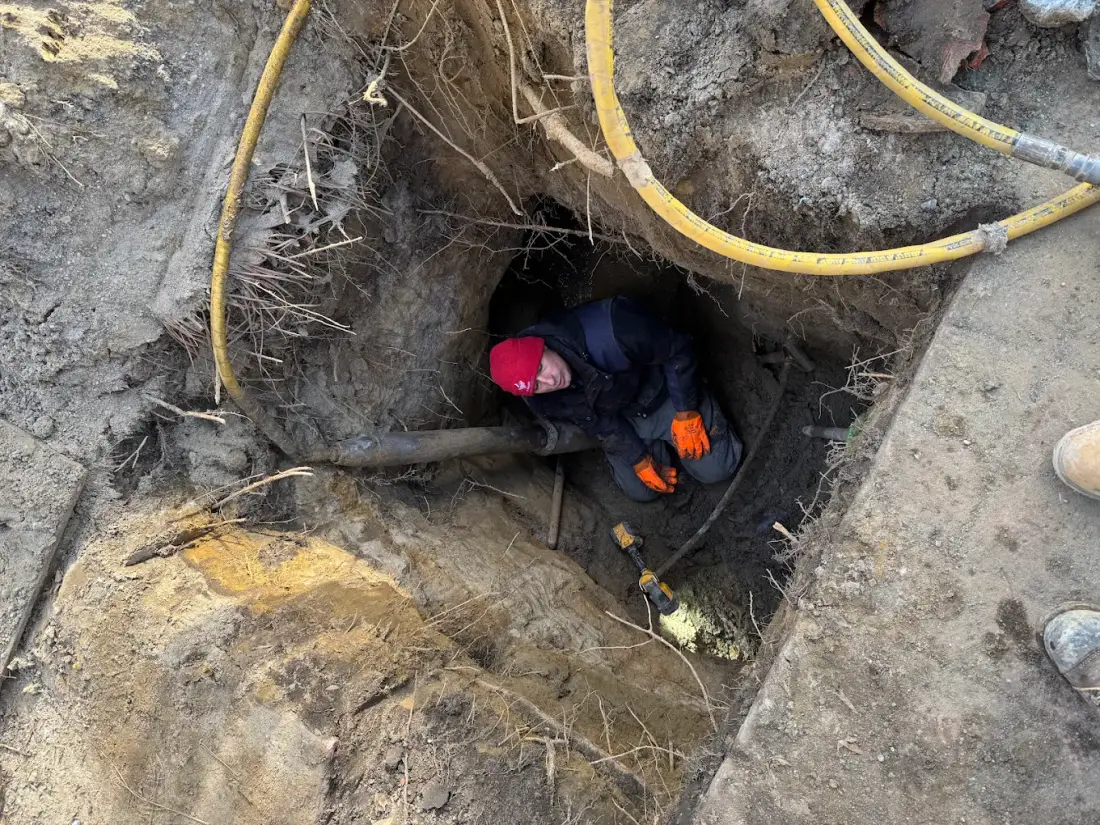
A sudden sewer-gas smell in a Toronto home almost always traces back to one of a few causes: a dry P-trap or floor-drain trap that has lost its water seal, a failed toilet wax ring, a blocked or frost-closed plumbing vent, biofilm built up inside a drain, or a cracked drain or sewer line letting gas escape behind a wall or under the slab. Most of these have safe DIY first steps that cost nothing. This guide walks through what's actually causing the odour, what you can try yourself today, and the signals that mean it's time to call a licensed plumber instead of masking the smell. When the smell traces to a cracked line, a drain camera inspection locates the break and sewer line repair closes the gas path for good.
Related services for this guide
If this article matches what you are dealing with, use one of these links to move into the service or broader category that makes the most sense.
Project photos related to this guide
These real project photos help show what this kind of work looks like in the field, not just on the page.
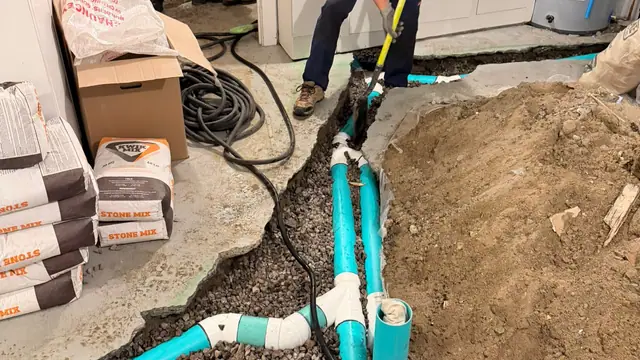
Basement floor opened to replace the under-slab drain lines
Interior drain re-piping, August 2026. The slab was cut along the drain route, the old lines removed, and new PVC drain connections laid on gravel with stub-ups for the fixtures above.
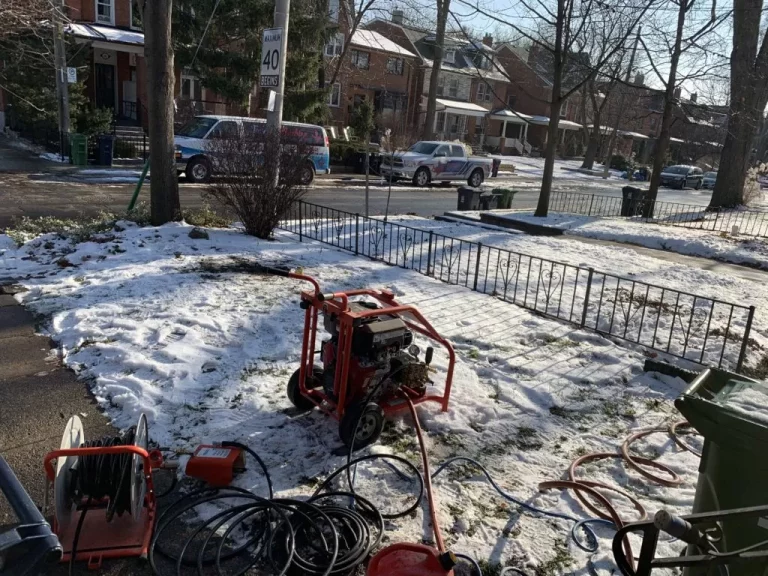
Drain-cleaning equipment set up before line clearing
This image shows the equipment-prep stage of a drain-clearing job, where the line condition still needs to be confirmed before it is obvious whether cleaning alone will solve it.

Close-up of drain access and service equipment
This photo focuses on the actual drain access point and the equipment staged to inspect and clear the affected line.
Customer stories related to this topic
These customer stories pair real review quotes with the service pages most closely related to this guide.
Maria Marin
November 2019“Called Sergiy at Tornado Plumbing and Draining because of a clogged toilet due to a small plastic container that was flushed down the drain by mistake. Sergiy resolved the issue, unclogged the drain, did the camera inspection and installed a clean out on the main drain for future maintenance. This is not the first time that we used his services, Sergiy and his team are skilled and experienced plumbers who are clean and mindful of their environment. We were very happy with their work, their work is reasonable priced and we would recommend them to anyone looking for exceptional service.”
Most relevant to Drain Camera Inspection in Toronto & the GTA.
Google place photo: Tornado Plumbing & DrainsDawn Stocks
May 2021“Peter was great. He kept me updated on time of arrival, pointed out the problems with my main drain and gave me a quote on the spot. No pressure to do more work and he was inexpensive.”
Most relevant to Drain & Sewer Services in Toronto & the GTA.
Google place photo: Tornado Plumbing & DrainsAndrea Kelly
August 2023“Drain Fix and Clean Out Installation Serghiy is absolutely amazing! When I had a drain backup, he promptly arrived and efficiently fixed the issue with precision and care. His professionalism, expertise, and friendly demeanour were evident throughout the process. Serghiy not only resolved the immediate problem but also provided helpful maintenance tips and installed a clean out to make it easier to access in the future. I highly recommend him for any plumbing needs his top-notch service and commitment to customer satisfaction make him the go-to plumber. Thanks, Serghiy!”
Most relevant to Drain & Sewer Services in Toronto & the GTA.
Google place photo: Tornado Plumbing & DrainsRead next in this topic
These related guides help you compare cost, scope, and next steps without starting over.
Best local service areas for this topic
Use one of these city pages when you want the same problem explained through local housing, flood risk, access, and neighbourhood-specific plumbing context.
Licensed, insured, reviewed Toronto plumbers
Serving Toronto & the GTA since 2015 - over 1,200 completed jobs.
Master plumber T95-4969603 · Plumbing contractor T94-4992639 · Drain contractor T87-4722944 · Building renovator T85-4728632 · Plumbing license FI6216638.
4.9-star Google rating from 320+ reviews. 400+ HomeStars reviews (Best of 2019-2025). BBB-accredited.
Same-day and after-hours dispatch across Toronto, Etobicoke, North York, Scarborough, York, Mississauga, and Burlington.
25-year workmanship warranty
Every job Tornado Plumbing & Drains completes in Toronto and the GTA - repair, install, replacement, drain work, sewer work, fixture work - is backed by a 25-year workmanship warranty. The written terms are provided with every quote. If our work fails within 25 years of the install date, we come back and make it right.
Quick answer
The most common Toronto sewer smells come from: a dried-out trap (an unused floor drain, guest bathroom, or basement sink), a failed or shrunken toilet wax ring, a blocked or frost-closed roof vent, biofilm coating the inside of a drain, or a cracked drain/sewer pipe leaking gas behind a wall. Safe DIY first steps: pour about two litres of water (plus a splash of cooking oil to slow evaporation) down rarely-used drains to refill the trap, clean the overflow and drain with hot water and dish soap, and check for a rocking or loose toilet. If the smell returns within days, is strongest in one wall or the basement, or comes with gurgling or slow drains, the cause is structural - stop chasing it with air freshener and call a licensed plumber.
How do I get rid of a sewer smell in my house?
Most house sewer smells come from a dried-out drain trap, so pour about two litres of water (plus a splash of cooking oil to slow evaporation) down rarely-used floor drains and sinks to refill the seal. If the smell returns within days, is strongest in one wall, or comes with gurgling, the cause is structural and needs a licensed plumber.
What's actually causing the smell
A dry trap is the single most common cause - every drain has a U-shaped trap that holds water to block sewer gas, and that water evaporates from fixtures you rarely use.
Floor drains in basements and laundry rooms dry out fastest because nothing runs water through them for weeks at a time.
A toilet that rocks or has a smell at the base usually has a failed wax ring - the seal between the toilet and the floor flange has shrunk or broken.
Plumbing vents can be blocked by leaves, a bird's nest, or winter frost closure - a Toronto-specific issue when warm moist sewer air freezes the vent opening shut.
Biofilm (a slimy bacterial layer) inside drains can smell on its own - a hot-water and dish-soap flush clears early-stage film.
A persistent smell isolated to one wall or one room can mean a cracked drain or sewer pipe - that needs a camera inspection, not a DIY fix.
Sewer gas is mostly hydrogen sulfide and methane - the rotten-egg smell is a warning sign, not just a nuisance, so a smell that won't clear deserves a professional look.
Where the smell is coming from and what to do
| Where you notice it | Most likely cause | Safe DIY first step | When to call |
|---|---|---|---|
| Basement floor drain | Dry trap (evaporated water seal) | Pour ~2 L water + splash of oil to refill the trap | Smell returns within days or water won't hold |
| Guest bathroom / unused sink | Dry P-trap | Run water for 30 seconds to refill the trap | Returns after refilling, or trap leaks |
| Around the base of a toilet | Failed or shrunken wax ring | Check if the toilet rocks; stop using it | Toilet rocks, leaks, or smell persists |
| Whole house, worse on calm days | Blocked or frost-closed roof vent | Visual check from the ground only | Vent is on the roof - call, don't climb |
| One sink, lingering musty odour | Biofilm inside the drain | Hot water + dish soap flush | Smell persists after cleaning |
| Isolated to one wall or room | Cracked drain or sewer pipe | Note the exact location; call | Always call - needs camera inspection |
| Strong, with gurgling or slow drains | Main-line restriction or vent issue | Stop using water; call | Always call - pre-backup signal |
DIY vs call the pro
DIY is fine for
Refilling a dry trap on a floor drain or rarely-used fixture by running water (add a splash of cooking oil to slow re-evaporation). A hot-water and dish-soap flush to clear early-stage biofilm in a single sink. Checking whether a toilet rocks or feels loose at the base. These are no-risk steps that resolve the majority of household sewer smells.
Call when
The smell returns within days of refilling a trap (a leaking trap or venting problem). The odour is isolated to one wall or the basement slab (possible cracked drain). A toilet rocks, leaks, or smells at the base after you check it (wax-ring or flange failure). The vent is suspected and sits on the roof (never climb - frost closure and nesting are common in Toronto). Gurgling, slow drains, or backup accompany the smell (main-line or vent failure).
What we do on the call
We trace the odour to its real source rather than masking it: check and refill traps, test the toilet seal and flange, inspect the venting, and run a drain camera when the smell points to a hidden crack or break. Once the source is confirmed, we recommend the right fix - trap or seal repair, drain cleaning to clear biofilm, or sewer-line repair if the pipe is compromised - and document the result.
Why sewer smells show up differently in Toronto homes
Three Toronto-specific patterns drive most calls. First, older central, east, and west-end homes have unused basement floor drains and cast-iron in-house drains - the floor-drain trap dries out over weeks and lets gas in, while cast iron grows biofilm that smells on its own. Second, Toronto winters cause vent frost closure: warm, moist sewer air rising through the roof vent freezes at the opening and seals it, so the system can't breathe and gas backs into the house. Third, the freeze-thaw cycle and decades-old clay laterals mean cracked or root-damaged pipe is more common here than in newer suburban GTA, and a hairline crack behind a wall can leak gas long before it ever backs up. Knowing your home's age and where the smell concentrates narrows the likely cause quickly.
Sources cited in this guide
- Health Canada - Hydrogen sulfide and your health(government)
Where to go next
When the smell traces to biofilm or a slow drain, Drain Cleaning is the page where you book the visit and see the full scope, pricing, and warranty.
Drain cleaning is one option among many. The Drain & Sewer Services category lays out camera inspection, descaling, and main-line work - so you can match the fix to the actual source of the odour instead of guessing.
Turn the diagnosis into a real route
If you've refilled the traps and cleaned the drains but the smell keeps coming back, Drain Cleaning is the booking page. The visit includes a camera inspection when the odour points to a hidden crack - so you find the real source instead of chasing the smell room to room.
Common questions
Is a sewer smell in the house dangerous?
A faint, occasional smell from a dried-out trap is usually a nuisance you can fix in minutes. A strong or persistent sewer smell is worth taking seriously - sewer gas contains hydrogen sulfide and methane, and a smell that won't clear after refilling traps and cleaning drains points to a venting or structural problem. If the odour is strong, won't go away, or comes with headaches or nausea, ventilate the area and call a licensed plumber rather than masking it.
Why does my basement floor drain smell?
Almost always a dry trap. The floor drain has a U-shaped trap that holds water to block sewer gas, and because nothing runs through it for weeks, that water evaporates and the gas comes up. Pour about two litres of water down it, then add a splash of cooking oil to float on top and slow the next evaporation. If the smell returns within days, the trap may be cracked or leaking, or the line may have a venting issue - that's a call.
Will I need a camera inspection?
Often, yes - particularly when the smell is isolated to one wall or the basement slab, when it persists after you've refilled traps and cleaned drains, or when it comes with gurgling or slow drains. A camera inspection finds hidden cracks, breaks, and root intrusion that let gas escape, and bundling it into the visit gives you footage that documents the line's actual condition.
Is the work warrantied?
Yes. Every job we complete is backed by a 25-year workmanship warranty. The written terms are provided with the quote. If our work fails within 25 years of the install date, we come back and make it right.
Are you licensed in Toronto?
Yes - Master plumber T95-4969603, Plumbing contractor T94-4992639, Drain contractor T87-4722944, Building renovator T85-4728632, Plumbing license FI6216638. Tornado has been serving Toronto and the GTA since 2015 with over 1,200 completed jobs.
Explore more