Grease Traps 101 for Toronto Restaurants: Sizing, Cleaning Frequency, and Bylaw Compliance
By Serhiy Marunchuk, Master Plumber · Licence T95-4969603 · Updated September 5, 2026
Toronto restaurant grease traps must be sized to peak flow with 24-minute retention (Plumbing Code), cleaned every 30–90 days by trap size and volume, and documented for City Sewer Use Bylaw compliance. Here's how each piece works.
Published February 26, 2026 · Last updated September 5, 2026
Introduction
Grease trap sizing isn't optional in Toronto — undersized traps blow past the City's 150 mg/L grease/oil discharge limit routinely, and that's how restaurants get fined. This guide walks through the sizing math (Plumbing Code formula), the cleaning frequency the City actually expects, and the documentation that satisfies the Sewer Use Bylaw inspectors. Whether you're a new restaurant rough-in or an existing operator getting compliance pressure, the rules are the same.
Related services for this guide
If this article matches what you are dealing with, use one of these links to move into the service or broader category that makes the most sense.
Project photos related to this guide
These real project photos help show what this kind of work looks like in the field, not just on the page.
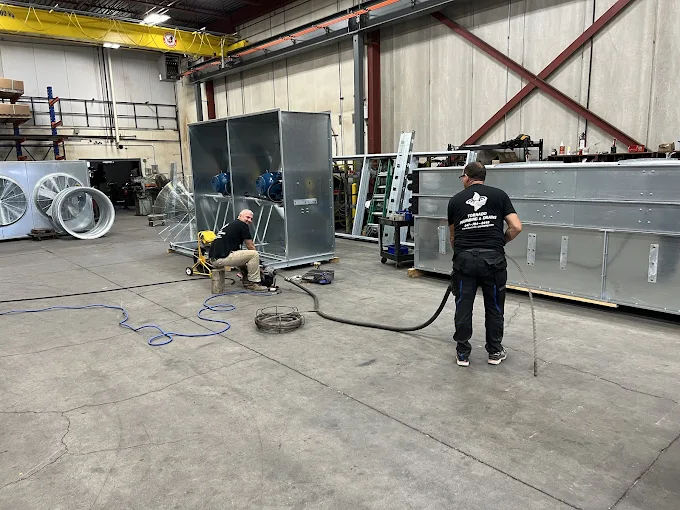
Commercial plumbing crew working inside an industrial facility
Commercial crew on site inside an industrial facility, showing the kind of access, equipment, and coordination commercial plumbing work can involve.
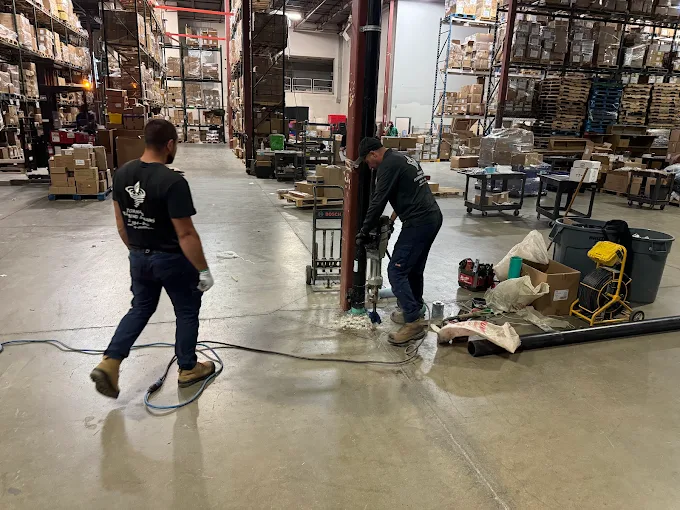
Commercial service crew working inside an industrial facility
This facility photo gives the commercial service pages a broader proof image for inspection, cleaning, and hydro-jetting related work in larger buildings.
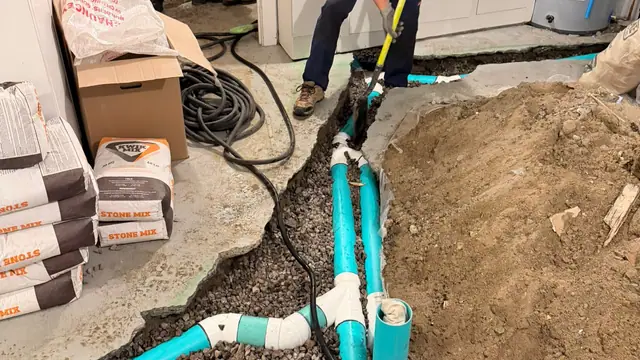
Basement floor opened to replace the under-slab drain lines
Interior drain re-piping, August 2026. The slab was cut along the drain route, the old lines removed, and new PVC drain connections laid on gravel with stub-ups for the fixtures above.
Customer stories related to this topic
These customer stories pair real review quotes with the service pages most closely related to this guide.
Nastaran Razavi
April 2026“Very impressed with Tornado Plumbing & Drains! They installed our grease trap quickly and professionally, without any delays. The team was respectful, organized, and made sure everything was up to code. They also gave us useful tips on maintenance, which was a big plus. Highly recommended!”
Most relevant to Commercial Plumbing in Toronto & the GTA.
Google place photo: Tornado Plumbing & DrainsBabar T. Karamat
August 2021“Peter from Tornado came well prepared for the job. We got power wash done. He did the work professionally and ensured through camera inspection that the line is fully cleaned and cleared after the wash was done. Would highly recommend Tornado to anyone needing a professional service at a reasonable price.”
Most relevant to Drain Camera Inspection in Toronto & the GTA.
Google place photo: Tornado Plumbing & DrainsClaudia Lang
May 2019“Serhij and his team did a great job on waterproofing our basement and placing a french drain, as well as hooking up a new sump pump. They dug down to the bottom of the house foundation, drained a pond that we wanted to get rid of and left the place completely tidy. All for a very fair and reasonable price. Highly recommended.”
Most relevant to Sump Pump Installation in Toronto & the GTA.
Google place photo: Tornado Plumbing & DrainsRead next in this topic
These related guides help you compare cost, scope, and next steps without starting over.
Best local service areas for this topic
Use one of these city pages when you want the same problem explained through local housing, flood risk, access, and neighbourhood-specific plumbing context.
Licensed, insured, reviewed Toronto plumbers
Serving Toronto & the GTA since 2015 — over 1,200 completed jobs.
Master plumber T95-4969603 · Plumbing contractor T94-4992639 · Drain contractor T87-4722944 · Building renovator T85-4728632 · Plumbing license FI6216638.
4.9-star Google rating from 320+ reviews. 400+ HomeStars reviews (Best of 2019–2025). BBB-accredited.
Same-day and after-hours dispatch across Toronto, Etobicoke, North York, Scarborough, York, Mississauga, and Burlington.
25-year workmanship warranty
Every job Tornado Plumbing & Drains completes in Toronto and the GTA — repair, install, replacement, drain work, sewer work, fixture work — is backed by a 25-year workmanship warranty. The written terms are provided with every quote. If our work fails within 25 years of the install date, we come back and make it right.
Quick answer
Grease trap sizing for Toronto restaurants is driven by the Ontario Plumbing Code formula: trap volume in litres ≥ peak flow (L/min) × retention time (typically 24 minutes). Cleaning frequency is set by the City based on trap size and kitchen volume — typically every 30–90 days. Toronto Sewer Use Bylaw (Ch. 681) caps grease/oil discharge at 150 mg/L; documented service records (date, hauler license, manifest) are required. Under-counter traps for small/moderate kitchens; exterior interceptors for high-volume.
What you need to know
Sizing rule under Ontario Plumbing Code: trap volume (L) ≥ peak flow (L/min) × retention time (24 min standard).
Toronto cleaning frequency by City schedule: typically 30 days for high-volume kitchens, 60–90 days for moderate.
Sewer Use Bylaw (Ch. 681) caps grease/oil discharge at 150 mg/L. Undersized or unmaintained traps blow past this routinely.
Service documentation must include: date, volume pumped (L), hauler license number, disposal manifest, technician signature.
Under-counter traps: 50–200 L typical, ~$1,800–$4,500 installed. Exterior grease interceptors: 750–4,500+ L, ~$5,500–$18,000 installed.
Properties with chronic violations face fines, surcharges, and potential service restrictions under the bylaw.
Cleaning visits are typically 30–60 minutes for under-counter traps, 60–120 minutes for exterior interceptors with vacuum truck.
Sizing examples by kitchen type (Toronto, OBC formula)
| Kitchen type | Estimated peak flow (L/min) | Trap size required (L, 24 min retention) | Cleaning frequency |
|---|---|---|---|
| Coffee shop / cafe | 8–15 | 200–360 | Every 60–90 days |
| Quick-service / takeout | 20–35 | 480–840 | Every 45–60 days |
| Mid-volume restaurant (50–100 seats) | 40–60 | 960–1,440 | Every 30–60 days |
| Full-service restaurant (100–200 seats) | 60–100 | 1,440–2,400 (interior) | Every 30 days |
| High-volume restaurant (200+ seats) | 100–150 | 2,400–3,600 (exterior interceptor) | Every 30 days, sometimes more often |
| Hotel / institutional kitchen | 150–250+ | 3,600–6,000+ (exterior interceptor) | Every 14–30 days |
Under-counter vs exterior interceptor — which one your kitchen needs
Under-counter trap (typically 50–200 L): installed under the dish-station or kitchen sink, intercepts grease before it enters the drain line. Cheaper to install, but easier to overload — sized for small to moderate kitchens. Most common for cafes, takeout, and small restaurants.
Exterior grease interceptor (typically 750–4,500+ L): installed underground outside the building, intercepts the entire kitchen's combined drainage. More expensive to install but handles much higher volume and longer retention. Required for full-service and high-volume restaurants.
Switching from under-counter to exterior is a major install (excavation, new connection routing, possibly permit-required pavement work) — cost $5,500–$18,000. Most restaurants outgrow under-counter traps within 3–5 years if volume grows; planning for the right size at the rough-in stage is meaningfully cheaper than retrofitting later.
When to upgrade vs maintain
Stay with under-counter when
Kitchen volume is consistently under ~50 covers/day. Existing trap is sized correctly for current peak flow with retention margin. Cleaning frequency every 60–90 days holds the trap below capacity.
Upgrade to exterior interceptor when
Volume has grown past the under-counter trap's effective capacity. Cleaning frequency has shortened to 30 days or less and trap is still over-loaded. City has issued compliance notices about discharge levels. New build or major reno — exterior interceptor at the start is cheaper than retrofitting.
Free sizing assessment
We do free sizing walk-throughs for new builds, expansions, or compliance-pressure situations. The Plumbing Code formula plus your actual measured peak flow gives a defensible sizing recommendation that satisfies the City inspector.
Toronto's grease compliance environment
Toronto's Sewer Use Bylaw (Ch. 681) is one of the more actively enforced in Canada. The 150 mg/L grease/oil discharge cap is real — the City samples and tests, and undersized/unmaintained traps push restaurants over the line routinely. Fines and surcharges follow. Toronto Public Health also inspects food premises and flags grease-management issues that overlap with the Sewer Use Bylaw. Documented service from a licensed contractor is what satisfies both. We file pump-out manifests with the City as part of every grease-trap service.
Where to go next
Service page for new install, replacement, and scheduled pump-out service.
Companion service — kitchen drain lines downstream of the grease trap.
Full commercial scope including backflow, drain maintenance, fixture work.
Sources cited in this guide
Ready to size, install, or service
Book sizing assessment, install, or scheduled pump-out at Grease Trap Installation & Service. Calls go through 647-784-8448.
Common questions about Toronto grease traps
How do I know what size grease trap I need?
Use the Ontario Plumbing Code formula: trap volume (L) ≥ peak flow (L/min) × retention time (24 minutes standard). Peak flow comes from your actual peak-hour fixture-unit count. We do free sizing walk-throughs for new builds and existing operators getting compliance pressure.
How often does the City require cleaning?
Frequency is set by the City based on trap size and kitchen volume — typically 30 days for high-volume kitchens, 60–90 days for moderate. The exact schedule is on the property's compliance file. If unsure, default to monthly and adjust based on observed loading.
What documentation does the City inspector want to see?
Per-visit service record with: date, volume pumped (L), hauler license number, disposal manifest, technician signature. We provide all of this as standard. Records are kept on file under the property address for 5+ years.
What happens if I'm under-sized and over the discharge limit?
First step is a sizing audit and remedial cleaning. If the trap genuinely can't hold the volume even with 30-day cleaning, the path is upgrade to a larger under-counter or exterior interceptor. The City typically gives a compliance window before fines escalate — proactive upgrade is cheaper than the eventual fine and forced replacement.
Explore more