Rough-In Plumbing in Toronto & the GTA
Toronto & the GTA • Call 647-784-8448
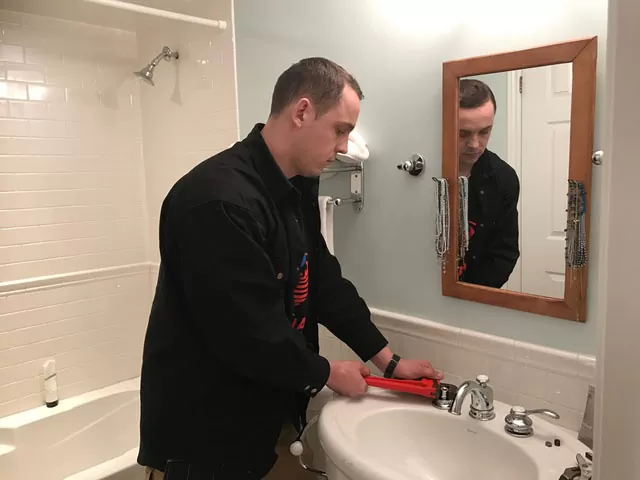
Rough-in plumbing is the work behind the walls and below the floors that determines whether the finished bathroom, kitchen, basement, or laundry room actually works. Drain slope, vent location, supply layout, fixture spacing, and code compliance all have to be right before drywall closes the wall. Tornado Plumbing & Drains designs and installs rough-in plumbing across Toronto and the GTA — for additions, renovations, basement bathrooms, and full new construction.
Last updated September 4, 2026
When this service makes sense
Part of Plumbing Repairs & Installations in Toronto & the GTA
Book this service when
Book this when a new bathroom, kitchen, laundry, or suite needs waste, vent, and supply run before the walls close, a fixture is moving more than a few inches, or the room sits below the main drain.
Common signs
- There's no waste, vent, or water stubbed in where the fixture needs to go, so new lines have to be run and tied into the existing stack or main before framing closes
- You're moving a toilet, tub, or shower more than a few inches — the existing drain and vent won't reach, so the flange and trap arm have to be relocated within code
- The new bathroom floor sits below the main building drain, so gravity won't carry waste out and the rough-in has to be built around an ejector pit and pump
- Walls or the slab are already open for the project and it's the one chance to re-run failing galvanized or undersized supply lines before everything is covered
If you're not sure, compare these too
- Sewage Ejector Pump Installation - when the new bathroom sits below the main drain
- Commercial Rough-In & Tenant Fit-Out - for commercial, restaurant, or medical fit-outs
On this page
Quick guide and key details
What changes price and scope
- Room type and number of fixtures.
- Access and how much new line has to be run.
- Whether an ejector pit is needed below the main drain.
How a professional visit usually unfolds
1. Layout review
Confirm fixture locations, slope direction, and tie-in points. Rough-in starts with a plan.
2. Permit
Pull plumbing permit. Required for all rough-in work.
3. Drain, waste, vent (DWV)
Install drain lines with proper slope and vents. Code-required and prevents siphoning.
4. Supply lines
Run hot and cold to each fixture with proper isolation. Future serviceability.
5. Stub-outs
Cap supply and drain at fixture locations. Ready for finish trim.
Recent Rough-In Plumbing work
These real project photos show the kind of work this service involves, so you can see examples before you book.
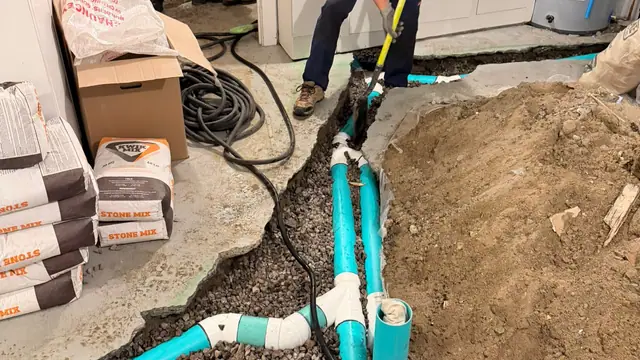
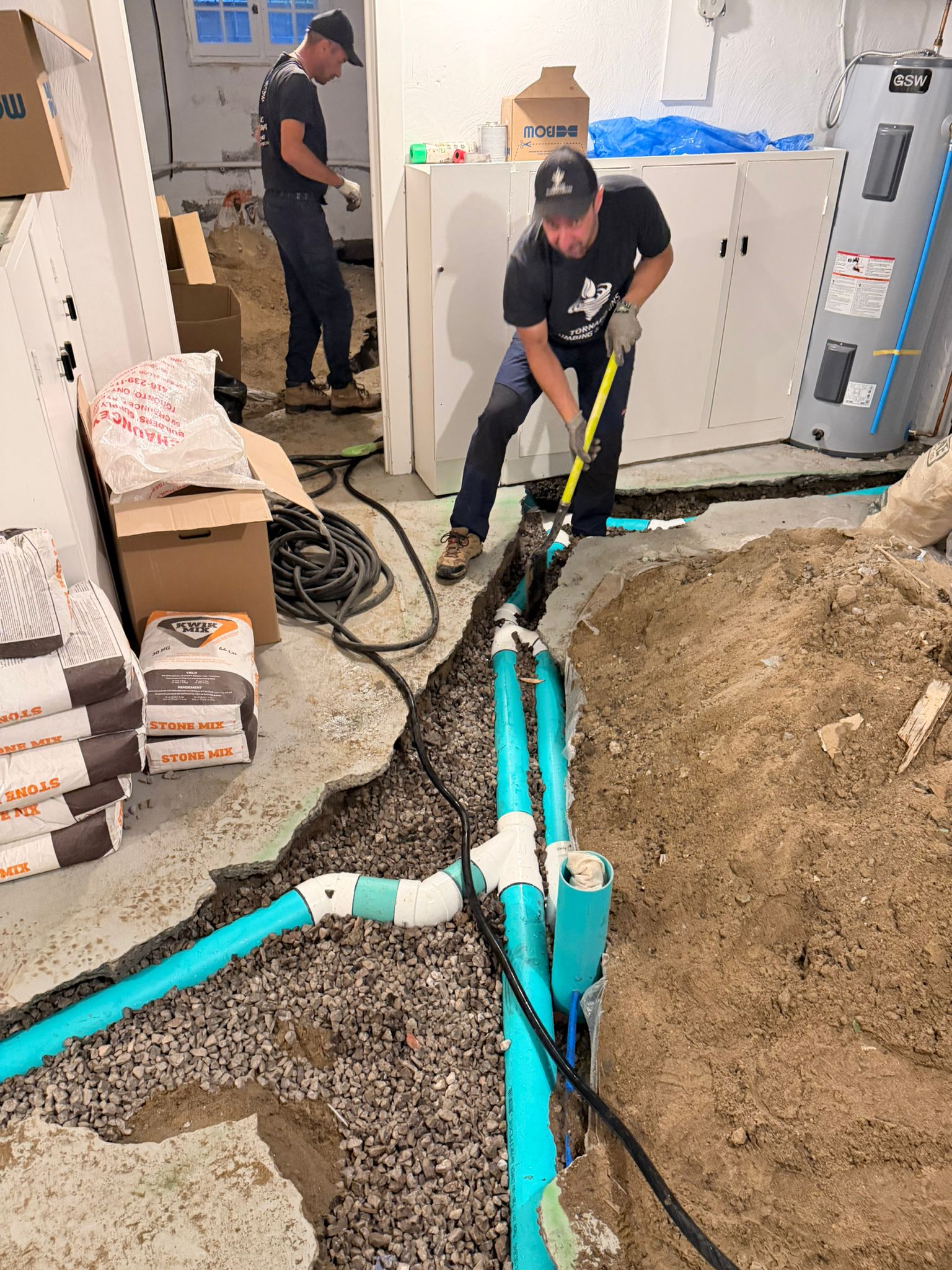
Basement floor opened to replace the under-slab drain lines
Interior drain re-piping, August 2026. The slab was cut along the drain route, the old lines removed, and new PVC drain connections laid on gravel with stub-ups for the fixtures above.
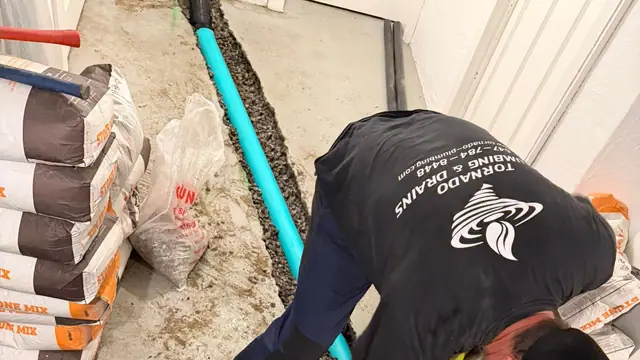
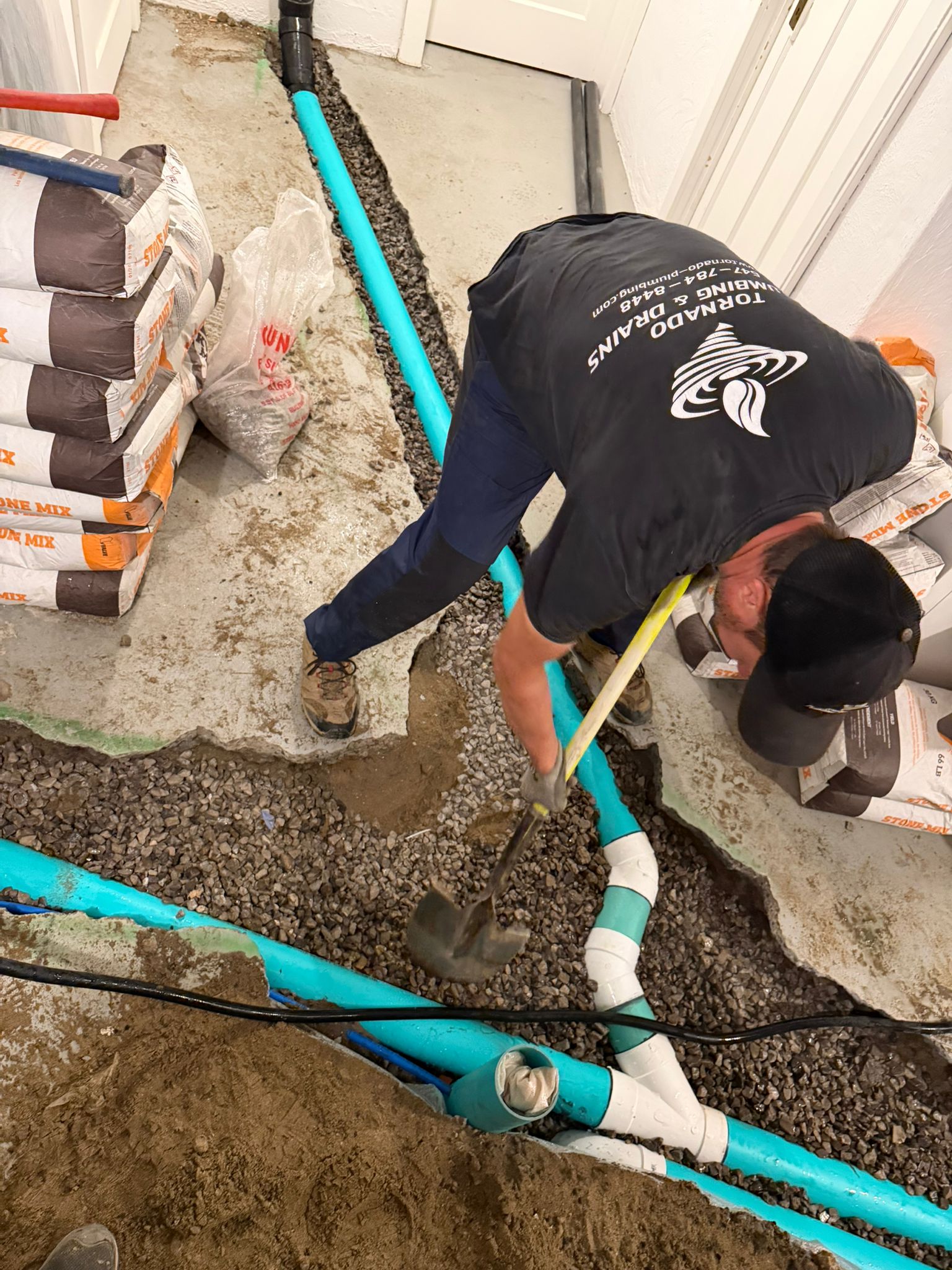
Bedding the new basement drain run in gravel
Same August 2026 basement drain project: each fitting is supported and the run is bedded in clear gravel before restoration, so the slope set during installation does not move.
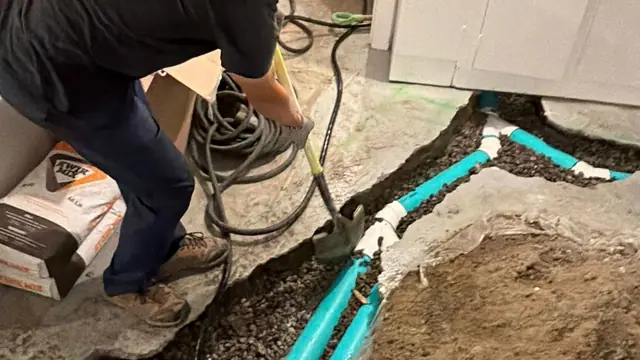
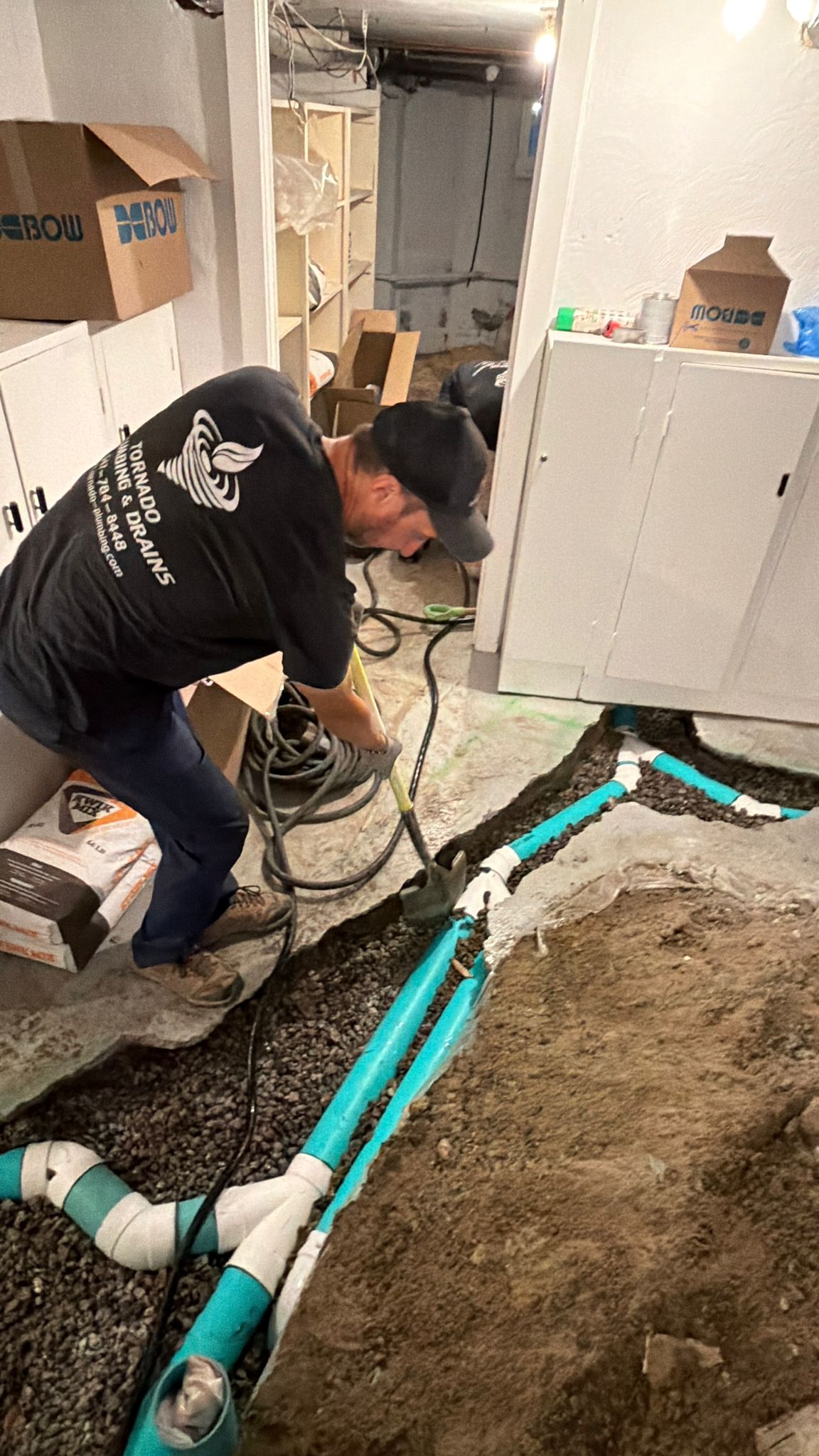
Running the new drain line along the basement wall
Same August 2026 basement drain project: the replacement run follows the original route where slope allowed, with new stub-ups placed for the fixtures being reconnected.
Rough-in pricing (Toronto 2026)
| Scope | Starting from | Typical range |
|---|---|---|
| Single fixture rough-in (laundry, sink) | $650 | $650 to $1,500 |
| Bathroom rough-in (toilet + sink + tub/shower) | $2,400 | $2,400 to $5,500 |
| Basement bathroom rough-in (with ejector if needed) | $3,500 | $3,500 to $7,500 |
| Kitchen rough-in (sink + dishwasher + ice maker) | $1,400 | $1,400 to $3,200 |
Ranges are for planning and triage. Final pricing depends on access, urgency, materials, and whether the visit stays isolated once the area is opened.
Cities Where This Service Is a Strong Fit
Related Services
- Plumbing Inspection & Maintenance
Plumbing inspection and maintenance in Toronto & GTA: whole-home review of supply, drain, fixtures, water heater, and flood-prevention systems before they fail.
- Faucet Repair & Replacement
Faucet repair in Toronto for drips, under-sink leaks, and seized handles, plus replacement. Book online or call 647-784-8448. From $120, licensed & insured.
- Toilet Repair & Installation
Toilet repair and installation in Toronto: running toilets, base leaks, weak flush, and new installs. Book online or call 647-784-8448 — repairs from $150.
- Sink Installation & Replacement
Sink installation & replacement in Toronto: kitchen, bath, vanity & laundry sinks fitted to your drain, supply & shutoffs. From $280. Call 647-784-8448.
- Dishwasher Installation & Hookup
Dishwasher installation and hookup in Toronto & GTA: water supply line, drain line, air gap or high loop, and shutoff valve work for new and replacement
- Garbage Disposal Installation & Repair
Garbage disposal installation, replacement, and repair in Toronto & GTA: jammed disposers, leaking units, hum-but-no-grind, and full new installations.
- Shower & Tub Valve Repair
Shower and tub valve repair in Toronto & GTA: cartridge service, diverter repair, pressure-balance valve replacement, dripping tub spouts, and full valve
- Pipe Repair & Repiping
Pipe repair and repiping in Toronto & GTA: section repipe, whole-home repipe, copper, PEX, and replacement of failed galvanized or polybutylene supply lines.
Related Guides
- Garbage Disposal & Kitchen Sink Backup Cost in Toronto (2026): Clear, Repair, or Replace
Garbage-disposal jam or kitchen-sink backup in Toronto 2026: $189–$350 to clear a clog, $250–$500 disposer swap, $400–$750 to jet a grease-packed line.
- Rough-In Plumbing for Basement Bathrooms in Toronto: Layout, Drainage, OBC Compliance, and the Mistakes That Fail Inspection
Toronto basement bathroom rough-in: drain layout, vent routing, ejector vs gravity, and the OBC Part 7 venting requirements that get inspections passed first
- Toilet Repair vs Replacement Cost in Toronto (2026): When Each Makes Sense
Toilet repair in Toronto costs $150–$380; replacement $450–$1,800. When a $25 flapper is enough, and when a cracked tank or wax-ring leak means replacing.
- Basement Bathroom Rough-In Plumbing Cost in Toronto (2026): What You Pay With and Without Existing Stubs
Basement bathroom rough-in in Toronto: $3,500–$6,500 with existing stubs, $6,500–$9,500 gravity slab break-in, $8,500–$13,500 with new ejector pit.
- How to Hire a Licensed Plumber in Toronto (Checklist + Red Flags)
Hiring a plumber in Toronto: verify the Certificate of Qualification and City contractor licence, confirm insurance and WSIB, and spot the red flags to avoid.
Licensed, insured, reviewed Toronto plumbers
- Serving Toronto & the GTA since 2015 — over 1,200 completed jobs.
- Master plumber T95-4969603 · Plumbing contractor T94-4992639 · Drain contractor T87-4722944 · Building renovator T85-4728632 · Plumbing license FI6216638.
- 4.9-star Google rating from 320+ reviews. 400+ HomeStars reviews (Best of 2019–2025). BBB-accredited.
- Same-day and after-hours dispatch across Toronto, Etobicoke, North York, Scarborough, York, Mississauga, and Burlington.
25-year workmanship warranty
Every job Tornado Plumbing & Drains completes in Toronto and the GTA — repair, install, replacement, drain work, sewer work, fixture work — is backed by a 25-year workmanship warranty. The written terms are provided with every quote. If our work fails within 25 years of the install date, we come back and make it right.
Rough-in is the one stage you can't fix after drywall
Every fixture you stand in front of later — the toilet flange, the shower valve, the kitchen sink, the laundry standpipe — is located, sloped, and sized during rough-in, then sealed inside the wall or under the slab. Get the drain slope, vent height, or supply spacing wrong and the only correction is opening up finished surfaces. We rough in the DWV, water supply, and stub-outs to your fixture schedule, then pressure-test and book the city inspection before anyone closes the wall. For a basement bathroom that sits below the building drain, the layout is built around a sewage ejector pump so waste can be lifted up to the main.
What usually forces a rough-in
- There's no waste, vent, or water stubbed in where the fixture needs to go, so new lines have to be run and tied into the existing stack or main before framing closes
- You're moving a toilet, tub, or shower more than a few inches — the existing drain and vent won't reach, so the flange and trap arm have to be relocated within code
- The new bathroom floor sits below the main building drain, so gravity won't carry waste out and the rough-in has to be built around an ejector pit and pump
- Walls or the slab are already open for the project and it's the one chance to re-run failing galvanized or undersized supply lines before everything is covered
- A builder or contractor needs a licensed plumber to install the DWV and supply and pass the city's pre-cover inspection without holding up framing and drywall
- The slope, vent sizing, or trap-arm length on a previous DIY or unpermitted rough-in won't pass inspection and the lines have to be corrected before cover
What's included
- Layout review against your fixture plan — confirming toilet rough-in distance, shower valve height, sink and vanity drain locations, and fixture spacing before any pipe is cut
- DWV installation: properly sloped drain and waste lines, correctly sized and located vents, and a connection to the existing stack or main
- Water supply rough-in: hot and cold lines run to each fixture with stub-outs capped for the finishing trades
- Slab or wall openings where required for new drain tie-ins, plus blocking and securing of all pipe so it can't shift behind drywall
- Permit application and coordination of the city's rough-in (pre-cover) inspection so the wall can legally close
- Air or water pressure test on the supply and a DWV test to confirm no leaks before cover, plus cleanup of the work area
- Written 25-year workmanship warranty on the rough-in installation
Rough-in is the right service for:
- New bathroom in a basement, addition, or renovation.
- New kitchen layout with relocated fixtures.
- Laundry room in a new location.
- In-law suite or rental unit.
- New construction or major renovation.
- Wet bar or kitchenette.
Rough-in cost
Pricing depends on the room type, number of fixtures, access, and how much new line has to be run. A basement bathroom rough-in including drainage, supply, and venting is the most common scenario. Adding fixtures to a renovation or new construction is scoped per fixture.
What to share when you call
- Layout drawings or sketches of the planned room.
- Fixtures planned (toilet, sink, tub, shower, laundry).
- Whether the room is below or above the main building drain.
- Access to the existing plumbing.
- Renovation timing and other trades involved.
- Permit status.
Toronto context
Rough-in work in Toronto basement bathrooms, kitchen renovations, and additions is where the project either gets done right or gets undone in five years. We follow Ontario Building Code Part 7 (vent sizing, trap arm length, fixture spacing), pull the City permit, and pre-build for the inspector before the slab goes back.
What to confirm before approving rough-in
- DWV slope and venting should be documented to code.
- Fixture stub-outs should match the chosen fixtures.
- Pressure test and city inspection should be part of the scope.
Useful info on the call: layout drawings, fixture plan, and renovation timing.
Why Is Professional Plumbing Planning So Important?
Successful plumbing starts long before the first pipe is installed. Experienced contractors work alongside builders, architects, and project managers to create a plumbing system that supports the home's layout while complying with local building codes.
Every bathroom, kitchen, laundry room, and outdoor water connection must be carefully planned. Contractors determine the correct pipe sizes, water pressure requirements, drainage routes, and venting systems to ensure the plumbing performs efficiently throughout the entire home.
Good planning also prevents costly construction delays. Identifying potential issues early helps avoid relocating pipes or modifying walls after framing has already begun.
How Does Professional Installation Protect Your Investment?
The quality of a home's plumbing depends on more than the materials used. Even premium pipes and fixtures can develop problems if they are installed incorrectly.
Experienced plumbing contractors follow proven installation practices to ensure secure pipe connections, proper drainage slopes, accurate fixture placement, and balanced water pressure. Before walls are closed, the entire system is thoroughly tested to identify leaks or weaknesses that could become major issues later.
Professional installation significantly reduces the likelihood of hidden water damage, mold growth, recurring leaks, and premature plumbing failures, helping homeowners protect one of their biggest financial investments.
Why Does Local Experience Matter in Toronto?
Toronto's homes experience unique plumbing challenges due to seasonal temperature changes, aging municipal infrastructure in some neighborhoods, and varying soil conditions. These factors can affect everything from underground water lines to sewer connections.
An experienced local plumbing contractor understands these regional conditions and designs systems that perform reliably throughout every season. They know how to minimize freezing risks, improve drainage efficiency, and ensure new plumbing integrates properly with municipal water and sewer systems.
Local knowledge can make a significant difference in the long-term performance of a newly constructed home.
Why Are Drainage and Sewer Systems Just as Important as Water Supply?
Many homeowners focus on faucets, showers, and water heaters, but an efficient drainage system is equally important. Every sink, toilet, shower, and appliance depends on properly installed drain lines to remove wastewater safely and efficiently.
Poor drainage design can result in slow drains, unpleasant odors, recurring clogs, or even sewer backups. During new construction, investing in professional Drain & Sewer Services in Toronto helps ensure the drainage system is correctly sized, properly vented, and built for dependable long-term performance.
Well-designed sewer connections also make future maintenance easier and reduce the risk of unexpected plumbing issues after homeowners move in.
Frequently asked questions
Do I need a permit for rough-in plumbing?
Yes. All rough-in work in Toronto requires a plumbing permit and an inspection before drywall closes the wall.
Will I need a sewage ejector for a basement bathroom?
If the basement fixtures are below the main building drain, yes. The ejector pumps wastewater up to the drain. Some lower-floor renovations can run by gravity if the layout allows.
Can I do my own rough-in?
Some homeowners with the right experience and permits do. The risk of getting slope or venting wrong is high, and inspection failures cost more than hiring a plumber would have.
When does the rough-in inspection happen?
After all DWV and supply is installed but before walls are closed. The inspector checks slope, venting, supply, and pressure test.
Why should I hire an experienced plumbing contractor for a new home?
An experienced plumbing contractor ensures your plumbing system is properly designed, installed to code, and built for long-term reliability, helping prevent costly repairs after construction.
When should a plumbing contractor be involved in a new home construction project?
A plumbing contractor should be involved during the planning stage so water supply lines, drainage systems, and fixture locations are designed correctly before construction begins.
Why are Drain & Sewer Services in Toronto important for new home construction?
Professional Drain & Sewer Services in Toronto ensure wastewater flows efficiently, reduce the risk of future clogs or sewer backups, and help keep your home's plumbing system operating safely.
Related services
Rough-In Plumbing: real customer reviews
What customers say about our rough-in plumbing work, in their own words, straight from their Google reviews.
lorraine wood
August 2022“Tornado Plumbing and Drains did an excellent job replacing my old drains and correcting some very old plumbing in my old house in only 2 days. Peter was very thorough in evaluating and explaining in detail the problems with the drains and how they would be repaired. He was extremely patient in answering all of my concerns. The team showed up on time, protected the work areas and did an excellent job with the final clean-up. They are assisting me with the rebate for the valve also. The cost for the work was very reasonable and several thousand dollars less than two other companies. I have already recommended Tornado to several friends and recommend them without reservation.”
Most relevant to Rough-In Plumbing in Toronto & the GTA.
Google place photo: Tornado Plumbing & DrainsJohn Donahue
October 2022“Peter was very thorough in going about his work, both inside and outside the home. Very polite, very detailed and very helpful.”
Most relevant to Rough-In Plumbing in Toronto & the GTA.
Google place photo: Tornado Plumbing & DrainsMimi Lam
June 2020“I can’t recommend Tornado plumbing enough. Sergei and his team are literally the best. Sergei always provides the best recommendations and gives you his honest opinion. He doesn’t over sell and gives you the best advice. I had to have my main valve change which was something we had discussed a while ago from another service I had hired him for. The shut off valve was old and had lead component. I knew from past experience that anytime I needed to turn it on or off, it would start leaking. There was also a lead pipe leading underground. I made the decision to change all the lead pipe as opposed to just changing the shut off valve because it would eventually need to be changed regardless. Sergei dug from the front of my house to the water valve in my basement with minimal interruptions to my tenants, and minimal mess. This speaks to his attention to detail. He goes over and beyond my expectations. Thank you Sergei and Tornado Plumbing.”
Most relevant to Plumbing Repairs & Installations in Toronto & the GTA.
Google place photo: Tornado Plumbing & DrainsRecent rough-in plumbing project
Real Tornado Plumbing & Drains job — photos and notes pulled from the project log, not stock imagery. Location: Toronto & the GTA.
Authoritative sources for this service
Public references — City of Toronto programs, federal guidelines, and standards bodies — used for the rules and figures cited on this page.
- Ontario Building Code — Part 7: Plumbing Services(regulator)
- City of Toronto — Plumbing permits(city)
- CSA B125.3 — Plumbing fittings(standard)
- City of Toronto — Priority Lead Water Service Replacement Program(city)
- City of Toronto — Combined sewers and basement flooding(city)
- City of Toronto Sewer Use Bylaw — Chapter 681(city)
Other services homeowners often compare with this one
If your situation could fit one of these adjacent services instead, open the page that matches more closely before you book.
Fast answers before you call
Do I need a permit for rough-in plumbing?
Yes. All rough-in work in Toronto requires a plumbing permit and an inspection before drywall closes the wall.
Will I need a sewage ejector for a basement bathroom?
If the basement fixtures are below the main building drain, yes. The ejector pumps wastewater up to the drain. Some lower-floor renovations can run by gravity if the layout allows.
Can I do my own rough-in?
Some homeowners with the right experience and permits do. The risk of getting slope or venting wrong is high, and inspection failures cost more than hiring a plumber would have.
When does the rough-in inspection happen?
After all DWV and supply is installed but before walls are closed. The inspector checks slope, venting, supply, and pressure test.
Book Rough-In Plumbing today.
Tornado Plumbing & Drains handles Rough-In Plumbing across Toronto and the GTA. Call 647-784-8448 or book online for a clean diagnosis, written scope, and the 25-year workmanship warranty on every install and repair.