Leak Detection in Toronto: Finding Hidden Leaks Behind Walls, Under Slabs, and in Ceilings
By Serhiy Marunchuk, Master Plumber · Licence T95-4969603 · Updated August 17, 2026
Hidden leaks behind walls and under slabs are detected with acoustic listening, thermal imaging, tracer gas (helium/hydrogen), and pressure testing. Most Toronto plumbers find slab and wall leaks within 30–90 minutes — catching them early often means a $400 spot repair instead of $8,000+ in mould remediation.
Published February 26, 2026 · Last updated August 17, 2026
On this page
Related services
Get a free estimate
Introduction
A hidden leak in a Toronto home is the kind of problem that turns into a five-figure repair if you wait long enough. Slab leaks waste litres per hour silently while soaking the subfloor; wall leaks behind drywall produce mould within 24–72 hours. The good news: modern leak detection is non-invasive and fast — acoustic, thermal, and tracer-gas methods locate the leak without tearing up the wall. This guide explains how each method works, when each is right, and the cost-benefit of catching the leak early. If you need the work handled rather than researched, see leak detection in Toronto for pricing, process, and booking. If water is actively spreading, start with our emergency plumbing service; leaks on the buried service pipe fall under main water line repair.
Related services for this guide
If this article matches what you are dealing with, use one of these links to move into the service or broader category that makes the most sense.
Project photos related to this guide
These real project photos help show what this kind of work looks like in the field, not just on the page.

Technician working under a kitchen sink
This is a straightforward interior-service photo that supports fixture repair, leak investigation, and small-space plumbing work.
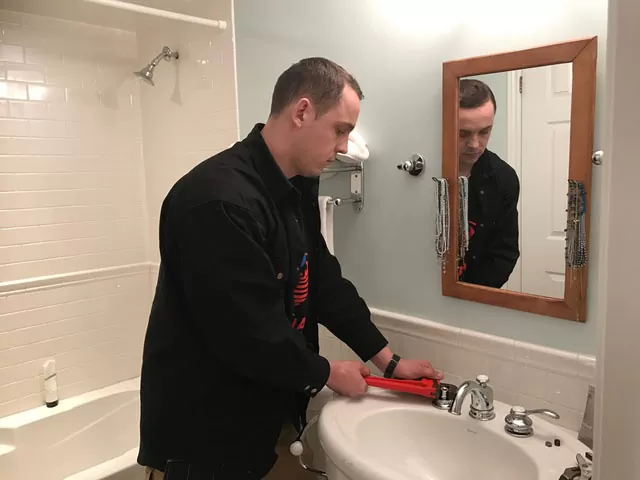
Technician handling a residential interior plumbing service call
This is a useful general indoor-service photo for interior plumbing pages where homeowners want to see a real technician on site instead of generic brand graphics.
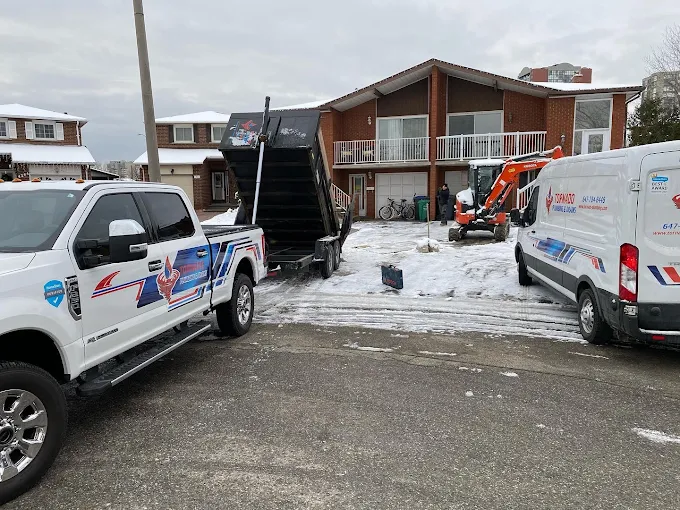
Winter emergency plumbing jobsite with trucks and excavation equipment
This winter jobsite photo helps emergency-service pages show what a real response looks like when the problem cannot wait and outdoor access, weather, and urgency all affect scope.
Customer stories related to this topic
These customer stories pair real review quotes with the service pages most closely related to this guide.
Rayon Camon
March 2019“We got sewer back up in our basement,after we got Tornado plumbing and drain to fix the problem,they excavated 2 holes out side removed a building trap and use pipe burst technology. The problem was with a big Tree over 130 years at the front and they destroyed our clay pipe. The main problem was (my wife planted Beautiful flowers and excavation supposed to be right there),she was really worry, but tornado plumbing saved them all (you can’t even tell some excavation was done before) They have the best equipment and provide the best service. We will recommend highly!!!!!!!”
Most relevant to Burst Pipe Repair in Toronto & the GTA.
Google place photo: Tornado Plumbing & DrainsKaryn pope
December 2021“I can not say enough great stuff about our dealings with this company from the first phone call and consultation, to fitting us in the same day due to our own work constraints, to the quality of the work performed. Peter’s servicing of a most difficult drainage problem, was extremely knowledgeable, calm, patient, determined and persistent in solving our issues. His work was clean and tidy and respectful of our property. From start to finish this company was a true delight to use and pricing was very fair. I highly recommend them.”
Most relevant to Emergency Plumbing Service in Toronto & the GTA.
Google place photo: Tornado Plumbing & DrainsShu Pui Lui
May 2022“I am very happy with Peter and Naz's work replacing part of my pipe that was causing the blockage. They came on the same day I called them and the work was done by end of the following day. The area they had to dig was tricky between a tree and interlock but they made an effort to avoid taking my interlock apart which saved me from more repair work. The quote was fair and Peter is professional and trustworthy. I highly recommend them.”
Most relevant to Emergency Plumbing Service in Toronto & the GTA.
Google place photo: Tornado Plumbing & DrainsRead next in this topic
These related guides help you compare cost, scope, and next steps without starting over.
Best local service areas for this topic
Use one of these city pages when you want the same problem explained through local housing, flood risk, access, and neighbourhood-specific plumbing context.
Licensed, insured, reviewed Toronto plumbers
Serving Toronto & the GTA since 2015 — over 1,200 completed jobs.
Master plumber T95-4969603 · Plumbing contractor T94-4992639 · Drain contractor T87-4722944 · Building renovator T85-4728632 · Plumbing license FI6216638.
4.9-star Google rating from 320+ reviews. 400+ HomeStars reviews (Best of 2019–2025). BBB-accredited.
Same-day and after-hours dispatch across Toronto, Etobicoke, North York, Scarborough, York, Mississauga, and Burlington.
25-year workmanship warranty
Every job Tornado Plumbing & Drains completes in Toronto and the GTA — repair, install, replacement, drain work, sewer work, fixture work — is backed by a 25-year workmanship warranty. The written terms are provided with every quote. If our work fails within 25 years of the install date, we come back and make it right.
Quick answer
Hidden leaks behind walls and under slabs are detected with non-invasive tools: acoustic listening devices, thermal imaging, tracer-gas (helium/hydrogen), and pressure testing. Most Toronto plumbers find slab and wall leaks within 30–90 minutes using a combination of these methods. Catching a hidden leak early often means a $400 spot repair instead of $8,000+ in mould remediation and finish replacement. Slab leaks waste an average of 30+ litres per hour undetected — the water bill often shows it before any visible damage.
Why early detection matters in Toronto
Slab leaks waste an average of 30+ litres per hour undetected — the water bill often shows it before any visible damage.
Acoustic listening detects pressurized leaks at depths up to 6 ft through concrete.
Thermal imaging detects temperature differentials from leaking hot lines and damp drywall — non-invasive and fast.
Tracer-gas detection (helium or hydrogen mix) is the most sensitive method for slow leaks and is non-toxic.
Hidden leaks behind walls cause mould within 24–72 hours under typical Toronto conditions (Health Canada guidance).
Most Ontario insurance policies exclude 'gradual deterioration' — slow hidden leaks discovered late are routinely denied. Documented early detection is the defence.
Toronto leak detection visit cost: $280–$650 typical; pays back through prevented mould remediation ($3,000–$15,000) and avoided insurance disputes.
Leak detection methods and when each is right
| Method | How it works | Best for | Limitation |
|---|---|---|---|
| Acoustic listening | Sensitive microphone picks up pressurized leak sound through concrete or drywall | Pressurized supply leaks, slab leaks, behind-wall leaks | Less effective on slow drips or unpressurized drains |
| Thermal imaging | Infrared camera detects temperature differential from leaking hot/cold lines or damp areas | Hot-water leaks, behind-drywall moisture, ceiling leaks | Limited on cold-line slow leaks; needs temperature differential |
| Tracer gas | Inject helium or hydrogen mix into the line; sensor detects the gas escaping at the leak | Slow leaks, slab leaks, complex leak paths | Requires line isolation; takes longer setup |
| Pressure / static test | Isolate the section, pressurize, monitor for pressure drop | Confirming leak presence, narrowing the section | Doesn't pinpoint the exact location alone |
| Moisture meter (drywall) | Measures moisture content in drywall | Confirming behind-wall water spread | Surface confirmation; needs combined with above |
When to book leak detection
Book detection when
Unexplained 2x+ water bill increase. Visible damp spot on drywall or ceiling with no obvious source. Sound of running water with no fixtures on. Warm spot on the floor (slab leak with hot line). Mould or musty smell in a room. Insurance asking for cause-of-loss documentation.
Skip detection when
Visible leak with obvious source (you can see the dripping pipe or fixture). Active flooding (call emergency dispatch first). Pre-emptive 'just in case' inspection without symptoms.
What we bring
Acoustic listening device, thermal imaging camera, tracer-gas kit, pressure-test gauges, moisture meter. We use multiple methods on the same visit — usually find the leak in 30–90 minutes. Quote the repair scope on the spot once located.
Why Toronto leak detection has insurance-claim weight
Toronto's older housing stock means pinhole copper leaks (common at 50+ year mark), galvanized service-line leaks, and slab leaks under post-1970 builds. Most Ontario home insurance policies treat slow hidden leaks as 'gradual deterioration' — excluded — unless you can show you couldn't reasonably have known. A documented leak detection visit, with photos and a written report, is the evidence that supports the claim. Without documentation, the insurer can argue the homeowner should have noticed earlier. We provide the evidence package as standard.
Sources cited in this guide
- Health Canada — Indoor mould(federal)
- Insurance Bureau of Canada — water damage(industry)
Where to go next
When the situation in this guide already matches what we cover, Water Leak Detection & Repair is the page where you book the visit and see the full scope, pricing, and warranty.
Once a leak is located, the next decision is repair scope. The Plumbing Repairs & Installations category covers pipe repair, repiping, and fixture work — so you can decide whether to section, branch, or repipe based on what we found.
Turn the diagnosis into a real route
If the meter is moving when nothing is on, or the wall has a stain that wasn't there last month, Leak Detection & Repair is the booking page. We locate first, then quote the repair scope — not the other way around.
Explore more