Emergency Plumbing in Toronto: What Counts as an Emergency, and What to Do First
By Serhiy Marunchuk, Master Plumber · Licence T95-4969603 · Updated August 17, 2026
What counts as a plumbing emergency in Toronto: active water leak you can't shut off, sewage backup, no water service, gas smell from a water heater, or any flooding event. Non-emergencies that can wait until morning: dripping faucet, slow drain, single-fixture clog. Same-day and after-hours dispatch standard across the GTA.
Published February 26, 2026 · Last updated August 17, 2026
On this page
Related services
Get a free estimate
Introduction
Most calls Tornado runs after-hours fall into one of five real-emergency categories. Knowing which is which saves money (after-hours premium $80–$200 on a problem that could have waited) and prevents damage (waiting until morning on a problem that should have been called at 11 PM). This guide is the triage table — what's a real emergency, what can wait, and what to do in the first 5 minutes regardless. If you need the work handled rather than researched, see emergency plumbing service in Toronto for pricing, process, and booking. After the crisis passes, prevention installs like a backwater valve or sump pump are what keep the next storm from becoming another 2 AM call.
Related services for this guide
If this article matches what you are dealing with, use one of these links to move into the service or broader category that makes the most sense.
Project photos related to this guide
These real project photos help show what this kind of work looks like in the field, not just on the page.
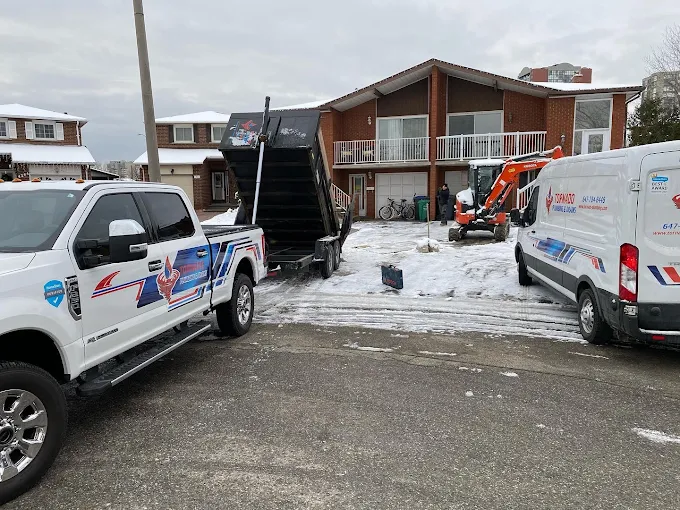
Winter emergency plumbing jobsite with trucks and excavation equipment
This winter jobsite photo helps emergency-service pages show what a real response looks like when the problem cannot wait and outdoor access, weather, and urgency all affect scope.

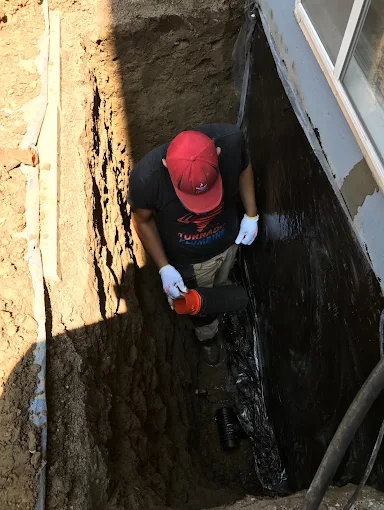
Serhiy on an active plumbing job site
This owner-led job-site photo reinforces that the company is showing real field work, not stock construction imagery.

Technician working under a kitchen sink
This is a straightforward interior-service photo that supports fixture repair, leak investigation, and small-space plumbing work.
Customer stories related to this topic
These customer stories pair real review quotes with the service pages most closely related to this guide.
Antho B
October 2024“I had a non urgent situation but nevertheless, they scheduled an appointment within the same day and it all went very smooth. Serhiy is super knowledgeable, honest and very professional. He was on time and fixed both washrooms within a very reasonable time. He did not rush and took the time that was required to fix both sinks. I highly recommend Tornado Plumbing as your number one choice!”
Most relevant to Emergency Plumbing Service in Toronto & the GTA.
Google place photo: Tornado Plumbing & DrainsCharles Qi
April 2019“Exterior water proofing: We were half way through our renovation and one day found lots of water in the basement after a major snow melt. A friend who had good experience working with Tornado Plumbing and Sergey previously recommended him to me. Sergey came the same day I called and identified the problem being the below grade windows and likely broken delta membrane from interior water proofing. He also provided a competitive quote by the end of the day and started on the project within a week. It was a big job but Sergey and his crew finished everything in 2 days with quality. I would highly recommend Sergey for and his team for their professionalism and efficiency.”
Most relevant to Emergency Plumbing Service in Toronto & the GTA.
Google place photo: Tornado Plumbing & DrainsKaryn pope
December 2021“I can not say enough great stuff about our dealings with this company from the first phone call and consultation, to fitting us in the same day due to our own work constraints, to the quality of the work performed. Peter’s servicing of a most difficult drainage problem, was extremely knowledgeable, calm, patient, determined and persistent in solving our issues. His work was clean and tidy and respectful of our property. From start to finish this company was a true delight to use and pricing was very fair. I highly recommend them.”
Most relevant to Emergency Plumbing Service in Toronto & the GTA.
Google place photo: Tornado Plumbing & DrainsRead next in this topic
These related guides help you compare cost, scope, and next steps without starting over.
Best local service areas for this topic
Use one of these city pages when you want the same problem explained through local housing, flood risk, access, and neighbourhood-specific plumbing context.
Licensed, insured, reviewed Toronto plumbers
Serving Toronto & the GTA since 2015 — over 1,200 completed jobs.
Master plumber T95-4969603 · Plumbing contractor T94-4992639 · Drain contractor T87-4722944 · Building renovator T85-4728632 · Plumbing license FI6216638.
4.9-star Google rating from 320+ reviews. 400+ HomeStars reviews (Best of 2019–2025). BBB-accredited.
Same-day and after-hours dispatch across Toronto, Etobicoke, North York, Scarborough, York, Mississauga, and Burlington.
25-year workmanship warranty
Every job Tornado Plumbing & Drains completes in Toronto and the GTA — repair, install, replacement, drain work, sewer work, fixture work — is backed by a 25-year workmanship warranty. The written terms are provided with every quote. If our work fails within 25 years of the install date, we come back and make it right.
Quick answer
Real plumbing emergencies in Toronto: active water leak you can't shut off, sewage backup, no water service in winter, gas smell from a water heater, basement flooding event. Non-emergencies (wait until morning): dripping faucet, slow drain, single-fixture clog, running toilet you can shut off at the supply. For real emergencies: shut off water/gas at the source, photograph everything, call. Tornado dispatches same-day and after-hours across Toronto, Etobicoke, North York, Scarborough, York, Mississauga, and Burlington — 647-784-8448.
What counts as a real plumbing emergency in Toronto (2026)?
Five situations are real emergencies: an active leak you can't shut off, a sewage backup, no water or hot water in winter, a gas smell, or a basement flooding event. Everything else (dripping faucet, slow drain, single-fixture clog, running toilet) can wait until morning. After-hours premiums typically run $80–$200 over standard daytime dispatch.
What you should know about Toronto emergency plumbing
Definite emergencies: active leak, sewage backup, no-water/no-hot-water in winter, gas smell, basement flooding.
Non-emergencies that can wait: dripping faucet, slow drain, single fixture clog, running toilet you can shut off at the supply.
Same-day dispatch covers Toronto, Etobicoke, North York, Scarborough, York, Mississauga, and Burlington.
After-hours premium typically $80–$200 over standard daytime dispatch.
First action on most emergencies: locate and operate the main shutoff. Knowing where it is in advance saves thousands in damage.
Average Toronto basement flood claim: ~$43,000 (Insurance Bureau of Canada). Speed of shutoff is the dominant variable.
Most insurers require a licensed plumber's invoice and cause-of-loss letter for sudden-and-accidental water-damage claims.
Emergency vs wait-until-morning — the triage table
| Symptom | Emergency? | What to do |
|---|---|---|
| Active water leak you can't stop | Yes | Shut off main, photograph, call |
| Burst pipe in finished space | Yes | Shut off main, kill power if near outlets, call |
| Sewage water backing up through floor drain | Yes | Stay out of water, stop running water, call |
| No water service in winter (frozen pipe) | Yes | Locate freeze, gentle thaw, call if can't find or burst |
| No hot water in winter | Yes (within hours, not minutes) | Try resetting tank, call same-day |
| Gas smell near water heater | Yes — call gas + plumber | Evacuate, call gas utility (Enbridge: 1-866-763-5427), then plumber |
| Basement flooding (any source) | Yes | Photograph, contain, call |
| Toilet won't flush, only one fixture | No (wait til morning) | Plunger; if stays clogged, book for AM |
| Slow bath drain | No | Drain snake; book for AM if needed |
| Dripping faucet | No | Note and book for AM |
| Running toilet (you can shut off at supply) | No | Shut off supply at toilet; book for AM |
| Wet spot on ceiling, expanding slowly | Yes (call) | Shut off main if possible, photograph, call |
Booking emergency vs morning
Book emergency dispatch when
Damage is actively spreading. Finished space is at risk. You can't shut off the source. Sewage water is involved. Gas smell present. Any condition where waiting 8 hours adds materially to the damage cost.
Book for morning (save the after-hours premium) when
You've stopped the source (closed shutoff valve, isolated fixture). Single fixture is affected and others work. No active flooding. Damage isn't expanding. Air quality is fine.
What we dispatch
Tornado emergency dispatch brings: licensed master/journeyman plumber, truck with PEX/copper/ABS supply, full valve and shutoff inventory, basic drywall opener and patch material, water-extraction wet-vac, thermal imaging and acoustic listening, pressure-test gauges, PPE for Category-3 sewage. Most emergency calls finish on the first visit.
Toronto-specific emergency patterns
Toronto's emergency-call patterns follow the calendar: summer (June–September) is dominated by sewer-backup events from combined-sewer surcharge during heavy rain, especially in older central, east, and west neighbourhoods. Winter (December–March) is dominated by frozen-pipe burst events in vulnerable locations. Spring and fall are quieter except for rain-day backups on poorly-maintained sumps. Knowing the season tells us what truck to roll: summer calls get the camera and backwater-valve scope ready; winter calls get the thawing equipment and pipe-replacement materials. Tornado dispatches same-day and after-hours across Toronto, Etobicoke, North York, Scarborough, York, Mississauga, and Burlington with 60–90 minute typical arrival on active emergencies.
Sources cited in this guide
What to have ready when you call the emergency line
Even a rough version of these details on the dispatch call lets us arrive with the right equipment instead of making a second trip.
Which of the five categories you're in: active leak you can't stop, sewage backup, no water/no hot water in winter, gas smell, or basement flooding — it tells us which truck to roll.
Whether you've already shut off the main, and if not, where it is (usually near the meter on the front basement wall) so we can walk you through it on the call.
Photos or a short video of the source and the spread of water — ceiling stain, floor drain, the pipe itself — both for us and for your insurance file.
What the water looks like: clean supply water versus grey/black sewage backing up through a floor drain, since sewage means everyone stays out of the room.
Whether power is near the water (outlets, panel, the water heater) and if you can safely kill the breaker to that area.
For a gas smell: confirm you've evacuated and called Enbridge (1-866-763-5427) first — we coordinate after the utility makes it safe.
Your address and the closest cross street, plus access notes (lockbox, gate code, parking, which door) so the 60–90 minute arrival isn't delayed.
Where to go next
When the situation in this guide already matches what we cover, Emergency Plumbing Service is the page where you book the visit and see the full scope, pricing, and warranty.
The Emergency Plumbing category lists every emergency-intent service — sewage backup, burst pipe, leak detection, frozen pipe — so the right page comes up first when the next call needs to happen fast.
After the first-response steps
Emergency Plumbing is the category page that lists every emergency-intent service we run — sewage backup, burst pipe, leak detection, frozen pipe, no-water situations. Calls go through 647-784-8448 with same-day dispatch across Toronto and the GTA.
Common questions about emergency plumbing
What counts as a plumbing emergency?
Active flooding, a burst pipe, sewage backup, no water, frozen pipe failure, a major leak through a ceiling, or water near electrical should be treated as an emergency. Slow drains or minor drips can still be urgent, but active damage gets priority.
What should I do before an emergency plumber arrives?
Shut the main water valve for clean-water leaks, stop using fixtures for sewage backups, keep people away from contaminated water, move valuables out of the area, and take photos for insurance. Dispatch can walk you through the right first step for the exact situation.
Do emergency plumbing visits cost more after hours?
After-hours work can cost more because dispatch, labour availability, and urgent parts sourcing are different from scheduled daytime visits. The exact cost depends on the problem, access, and whether a temporary stabilization or full repair is possible on the first visit.
Can an emergency plumber fix the issue immediately or only stop the damage?
The first goal is to make the home safe and stop active damage. Many problems can be repaired immediately, but some need follow-up work after water is controlled, the line is inspected, or specialty parts are available.
Are Tornado emergency plumbers licensed in Toronto?
Yes. Tornado is licensed in Toronto, including Master plumber T95-4969603, and has served Toronto and the GTA since 2015. Emergency work is documented clearly so homeowners understand the cause, repair, and next prevention step.
Explore more