Water Pressure & PRV Installation Cost in Toronto (2026): What a Pressure Reducing Valve Really Costs
By Serhiy Marunchuk, Master Plumber · Licence T95-4969603 · Updated June 15, 2026
A PRV replacement runs $450–$900, a new PRV install $650–$1,400, and a PRV with the code-required expansion tank $850–$1,800. Here's how to tell whether high pressure is your problem — and what each tier buys.
Published June 15, 2026
On this page
Related services
Get a free estimate
Introduction
High water pressure is the quiet, expensive plumbing problem most Toronto homeowners never test for. When incoming city pressure climbs above the 80 psi code limit, it shortens the life of every fixture, fitting, and appliance in the house — faucet cartridges, toilet fill valves, dishwasher hoses, and water heaters all fail faster. A pressure reducing valve (PRV) is the fix: a spring-loaded brass valve that holds the house at a tested 50 to 60 psi no matter how high the street side swings. This guide gives you the real 2026 Toronto numbers by scope, explains why a PRV almost always needs a thermal expansion tank, and shows you how to confirm high pressure is actually your problem before you book the work.
Related services for this guide
If this article matches what you are dealing with, use one of these links to move into the service or broader category that makes the most sense.
Project photos related to this guide
These real project photos help show what this kind of work looks like in the field, not just on the page.
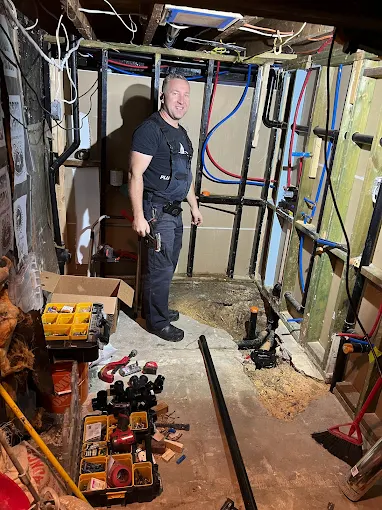
Interior renovation rough-in plumbing in progress
This renovation-stage photo gives rough-in, repiping, and interior plumbing pages a stronger proof image than generic stock-style service graphics.
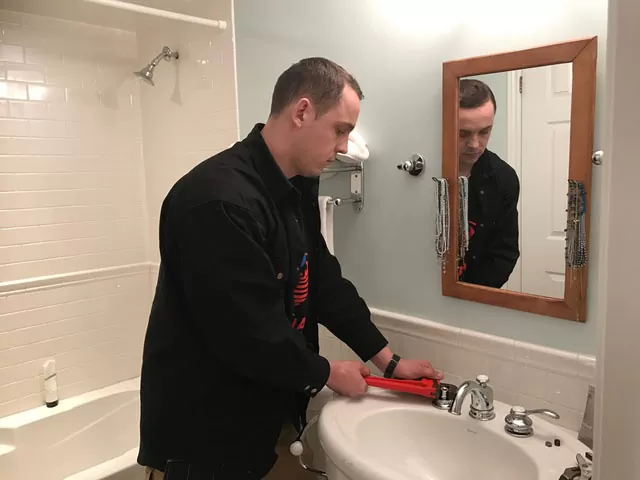
Technician handling a residential interior plumbing service call
This is a useful general indoor-service photo for interior plumbing pages where homeowners want to see a real technician on site instead of generic brand graphics.
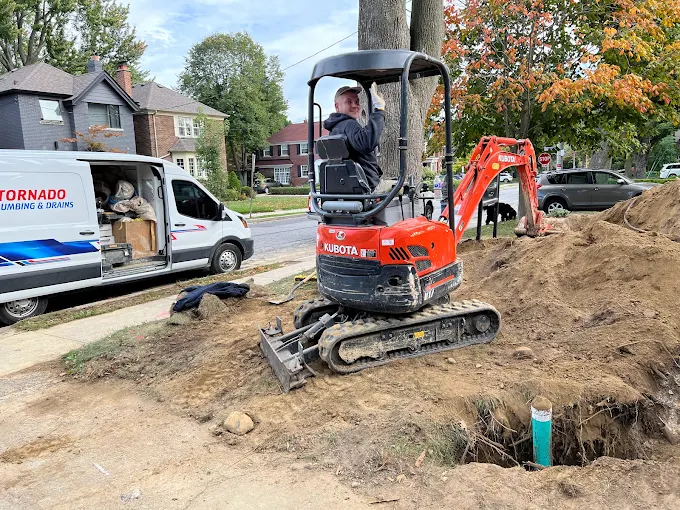
Residential service-line excavation in progress
This proof image shows the work stage where access, depth, and the surface route are already affecting time and cost on a buried service-line job.
Read next in this topic
These related guides help you compare cost, scope, and next steps without starting over.
Best local service areas for this topic
Use one of these city pages when you want the same problem explained through local housing, flood risk, access, and neighbourhood-specific plumbing context.
Licensed, insured, reviewed Toronto plumbers
Serving Toronto & the GTA since 2016 — over 1,200 completed jobs.
Master plumber T95-4969603 · Plumbing contractor T94-4992639 · Drain contractor T87-4722944 · Building renovator T85-4728632 · Plumbing license FI6216638.
180+ five-star Google reviews. 400+ HomeStars reviews (Best of 2019–2025). BBB-accredited.
Same-day and after-hours dispatch across Toronto, Etobicoke, North York, Scarborough, York, Mississauga, and Burlington.
25-year workmanship warranty
Every job Tornado Plumbing & Drains completes in Toronto and the GTA — repair, install, replacement, drain work, sewer work, fixture work — is backed by a 25-year workmanship warranty. The written terms are provided with every quote. If our work fails within 25 years of the install date, we come back and make it right.
Quick answer
Replacing an existing PRV in Toronto runs $450–$900 in 2026. A new PRV installation — where there was never a valve before — runs $650–$1,400 because the supply line has to be cut and a gauge added. A new PRV paired with the code-required thermal expansion tank runs $850–$1,800. The biggest swings are whether a valve already exists, whether an expansion tank is needed, and how accessible the supply line is at the install point near your main shutoff.
How much does a pressure reducing valve cost in Toronto in 2026?
A PRV in Toronto costs $450–$1,800 in 2026 depending on scope. Swapping an aged valve that already exists is the cheapest job at $450–$900. A first-time install with no existing valve runs $650–$1,400. Adding the expansion tank that a closed system requires by code brings the total to $850–$1,800. Pressure is tested first — a PRV only makes sense when the gauge actually reads above the 80 psi code limit.
What you should know before booking
80 psi is the residential code limit for incoming supply pressure. A hose-bib gauge reading above that is the trigger for a PRV.
The correct target after a PRV is 50 to 60 psi, verified at multiple fixtures — not just at the valve.
A PRV closes your house off from the street, creating a closed system. Code requires a thermal expansion tank so water-heater heat-up has somewhere to go.
Typical residential PRVs last 10 to 15 years. A failed PRV stops holding its setpoint — pressure creeps back up after adjustment.
Toronto street pressure can swing 60 to 100 psi depending on neighbourhood and elevation; homes low on a hill or near a pumping station are the most exposed.
A PRV only reduces pressure — it will not fix low pressure, which usually points to the buried service line or interior restriction.
Replacing the valve protects the plumbing going forward; it does not undo damage from years of high pressure already done to fixtures and joints.
Real Toronto PRV install prices (2026)
The cheapest case. An aged PRV that no longer holds its setpoint is swapped at the same location. No cut-in, often no new expansion tank if one already exists.
PRV replacement (existing valve)
$450 – $900
The cheapest case. An aged PRV that no longer holds its setpoint is swapped at the same location. No cut-in, often no new expansion tank if one already exists.
New PRV installation
$650 – $1,400
No valve was ever installed. The supply line is shut down and drained, cut into just past the main shutoff, and the correctly sized PRV plus an outlet gauge are added.
PRV + thermal expansion tank
$850 – $1,800
The most common new-install scope. Because the PRV creates a closed system, code requires an expansion tank to absorb water-heater pressure spikes. Bundled with the valve, this is the full compliant job.
Gauge pressure test (standalone)
$0 – $150
Confirming static and peak incoming pressure with a gauge. Often rolled into the install scope at no separate charge when the test leads to booked work.
Complex / restricted access surcharge
+ $150 – $500
Tight mechanical rooms, a buried or hard-to-reach shutoff, or soldered connections in awkward spots add labour time to any of the tiers above.
What a PRV actually does (and what it doesn't)
What it does: a pressure reducing valve sits on the main line just past your shutoff and holds downstream pressure at a fixed setpoint no matter how high the city side climbs. The spring tension is set against a diaphragm, so once the outlet is dialled in, the valve throttles incoming flow to keep the house at a tested 50 to 60 psi even as street pressure swings overnight. That protects faucet cartridges, toilet fill valves, dishwasher and washing-machine hoses, and the water heater from the constant strain of high pressure.
What it doesn't do: a PRV will not raise low pressure — if your problem is weak flow, the cause is usually the buried service line, the city tap, or an interior restriction, and the fix is Main Water Line Repair & Replacement, not a regulator. A PRV also can't undo damage already done by years of high pressure; if valves, supply lines, or fixtures have already failed, the right scope is repair or repipe alongside the new valve.
Three Toronto PRV jobs from the past 90 days
High Park, no existing valve, 88 psi at the hose bib — Repeat faucet-cartridge failures and a hissing toilet fill valve. Gauge confirmed 88 psi static. New PRV installed just past the shutoff with a thermal expansion tank to close the system properly. Total: $1,250. Outlet locked at 55 psi, verified at the kitchen, both bathrooms, and the laundry standpipe.
Leslieville, 15-year-old PRV creeping up — The existing valve had been adjusted twice and kept drifting back above 80 psi. Straight replacement at the same location; existing expansion tank was sound and reused. Total: $720. New valve set to 52 psi and held on the follow-up check.
Scarborough, low on a hill, water heater T&P dripping — Street pressure tested at 96 psi at peak. The water heater's relief valve had been dripping for months because nothing upstream was capping the incoming pressure. New PRV plus expansion tank installed. Total: $1,480. The relief-valve drip stopped once downstream pressure was held at 58 psi.
When a PRV is the right call
Install or replace a PRV when
A gauge on the hose bib reads above 80 psi. The home has no PRV and sits low on a hill or near a pumping station. An existing PRV is 10–15+ years old and no longer holds its setpoint. A new water heater, tankless unit, or dishwasher install requires pressure brought into spec to protect the warranty. The water heater's T&P relief valve keeps dripping, or pipes bang and hammer when valves close.
Look at other scope when
Your problem is low or weak pressure — a PRV only reduces, it can't boost; that's a service-line or interior-restriction question. The symptom is isolated to one fixture (a single dripping faucet or a slow tap) rather than the whole house — that's a fixture repair. Pressure tests within the normal 50–80 psi range, in which case a PRV solves nothing.
What we recommend instead
If high pressure has already damaged fixtures or supply lines, the PRV is paired with repair or repipe scope, not installed alone. If the issue is low pressure or a buried-line concern, the right starting point is the broader Water Lines & Service Upgrades category so we diagnose the actual cause before quoting parts.
What to have ready when you call
These six answers tell us whether you need a replacement, a new install, or a full PRV-plus-expansion-tank job — and tighten the on-site quote before we arrive.
What pressure symptoms are you seeing — banging pipes, repeat fixture leaks, a dripping water-heater relief valve, or a hissing toilet?
Is there already a PRV on the line, and roughly how old is it?
Have you taken a gauge reading at a hose bib? If so, what was the number?
Is there an expansion tank already installed near the water heater?
Photos of the main shutoff area where the valve would go.
Any recent water-heater, dishwasher, or appliance issues that might be pressure-related.
Why water pressure is a Toronto-specific story
Toronto street pressure can swing anywhere from 60 to 100 psi depending on neighbourhood and elevation. Homes sitting low relative to a nearby water tower or pumping station — and many properties across North York, Scarborough, and the older central neighbourhoods — routinely see the high end of that range. The city has to maintain enough pressure to serve the highest fixtures in the highest buildings on the grid, which means lower-lying houses get more pressure than their plumbing was ever designed for. That's why a hose-bib gauge reading is worth doing even if nothing seems wrong yet: at 90-plus psi, the damage to cartridges, fill valves, and solder joints is happening quietly long before a fixture actually fails. A PRV sized to the home's flow demand — not just the line size — is the standard fix across the GTA.
Where to go next
Service page with full scope, the pressure-test step, expansion-tank handling, and the 25-year workmanship warranty on the install.
The parent category if you're not sure whether high pressure, low pressure, or a buried-line problem is the real issue.
The right scope if the problem turns out to be weak flow or a damaged buried service line rather than excess pressure.
If a dripping T&P relief valve or premature water-heater failure pointed you here, the expansion-tank-plus-PRV scope usually solves it.
The companion cost guide for the buried supply line — useful if low pressure or a lead service line is in the picture.
Sources cited in this guide
Ready to bring your pressure into spec
Book a Pressure Reducing Valve (PRV) Installation and we test the incoming pressure, size the valve to your home, and add the code-required expansion tank when the system is closed. Not sure whether high pressure is the issue? Start with Water Lines & Service Upgrades and we diagnose before quoting. Calls go through 647-784-8448 with same-day and after-hours dispatch across Toronto.
Common questions about Toronto PRV cost
What does a PRV actually cost in Toronto in 2026?
Replacing an existing valve runs $450–$900. A first-time install with no prior valve runs $650–$1,400. Adding the code-required thermal expansion tank brings a new install to $850–$1,800. The price depends mostly on whether a valve already exists, whether an expansion tank is needed, and how accessible the supply line is at the install point.
What is the right water pressure for a home?
Generally 50 to 60 psi. Above 80 psi is over the code limit and too high for most fixtures and appliances; below about 40 psi feels weak. After a PRV install we set and verify the outlet at the 50–60 psi target across multiple fixtures.
Do I really need an expansion tank with a PRV?
Usually yes. A PRV creates a closed system, which means thermal expansion from your water heater has nowhere to go when it heats up. An expansion tank absorbs that pressure spike, and code requires one in many situations. Skipping it is the most common reason a relief valve keeps dripping after a PRV goes in.
How long does a PRV last?
Typical residential PRVs last 10 to 15 years. A failing PRV stops holding its setpoint — you adjust it down and the pressure creeps back up within days or weeks. When that happens, replacement is the fix, not repeated adjustment.
Will a PRV fix low water pressure?
No. A PRV only reduces pressure — it cannot boost it. Low or weak pressure usually points to the buried service line, the city tap, or an interior restriction, which is a different scope. We test before recommending anything so you don't pay for a valve that won't help.
How do I know if my pressure is too high?
Put an inexpensive gauge on an outdoor hose bib and read the static pressure. Above 80 psi is over the limit. Other signs include banging or hammering pipes when valves close, repeat faucet-cartridge or toilet-fill-valve failures, a hissing toilet, a dripping water-heater relief valve, and appliances failing early. We confirm with our own gauge test before quoting.
Is the PRV install warrantied?
Yes — Tornado's 25-year workmanship warranty covers the installation: the cut-in, the connections, and the valve setup. The valve mechanism itself carries the manufacturer's warranty. If our installation work fails within 25 years, we come back and make it right.
Explore more