Sewage Ejector Pump Repair in Toronto & the GTA
Toronto & the GTA • Call 647-784-8448
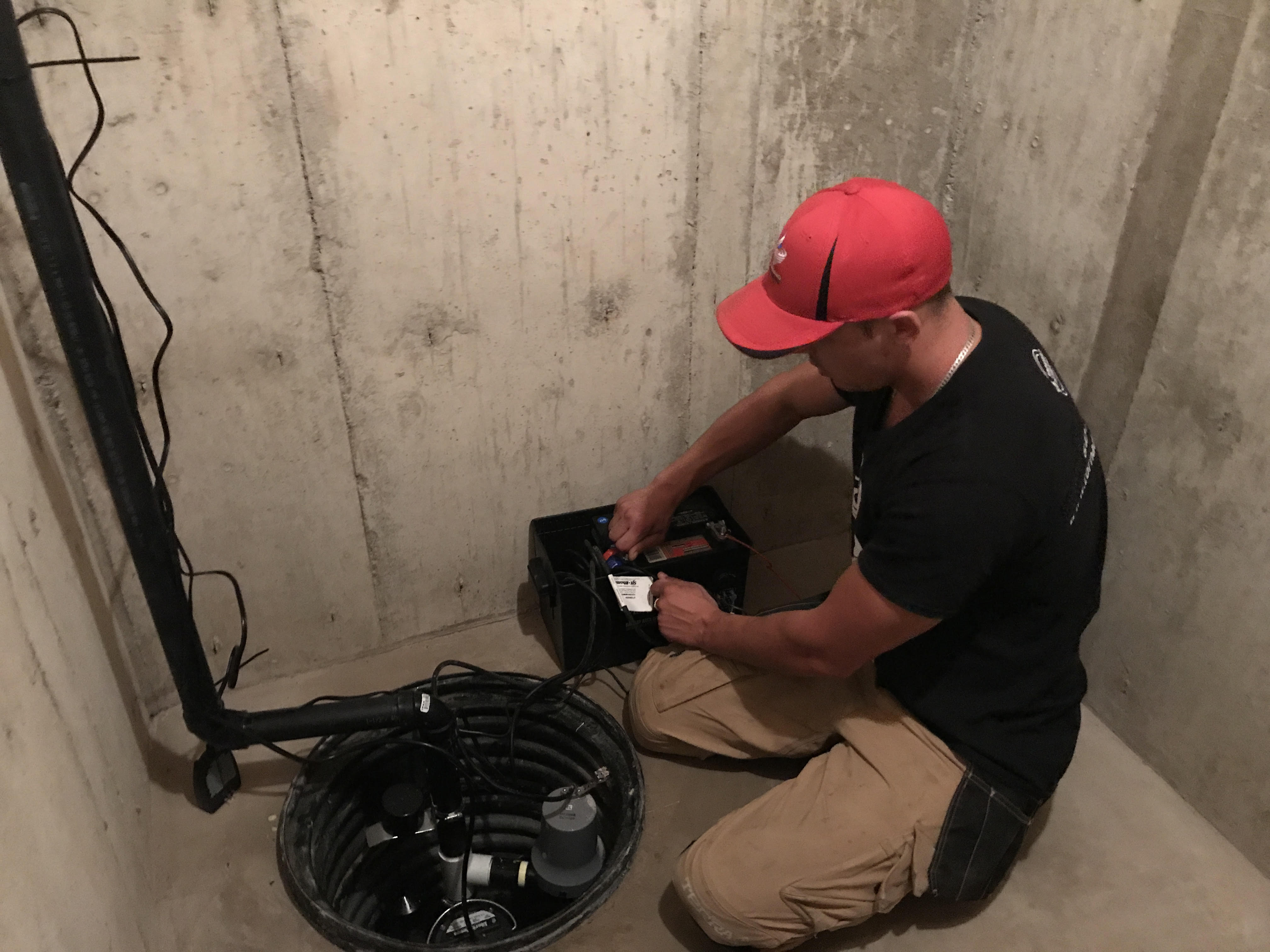
When a sewage ejector pump fails, the basement bathroom or laundry stops working immediately, and odour or backup is usually right behind. Tornado Plumbing & Drains repairs and replaces sewage ejector pumps across Toronto and the GTA — pump replacement, float and check valve service, basin seal repair, vent issues, and full-system troubleshooting.
Last updated September 5, 2026
When this service makes sense
Part of Basement Waterproofing & Flood Prevention in Toronto & the GTA
Book this service when
Book this when the basement bathroom or laundry has stopped draining because the ejector runs without moving waste, does not run at all, cycles constantly, or the basin smells of sewer gas.
Common signs
- Pump runs but does not move waste (clog, failed impeller).
- Pump does not run (failed float, electrical, motor).
- Sewage smell from the basin (failed seal or vent).
- Pump cycles constantly (failed check valve).
If you're not sure, compare these too
- Sewage Ejector Pump Installation - when the pump, basin, or venting was never installed correctly
- Drain Basin Services - when the basin itself is the problem rather than the pump
On this page
Quick guide and key details
What changes price and scope
- Whether the pump can be repaired or needs replacement.
- Whether the basin seal needs work.
- Whether the vent has issues.
How a professional visit usually unfolds
1. Inspect the basin
Check seal, vent, and pump access. Many issues are basin-related, not pump-related.
2. Test the pump
Confirm motor runs and float activates. Identifies electrical vs. mechanical failure.
3. Check the check valve
Confirm the valve holds — pumped waste should not return. Failed check valve causes short-cycling and backup.
4. Repair or replace
Service or replace the failed component. Restores function.
5. Test the system
Run a full fixture cycle and confirm operation. Confirms the fix.
Recent Sewage Ejector Pump Repair work
These real project photos show the kind of work this service involves, so you can see examples before you book.
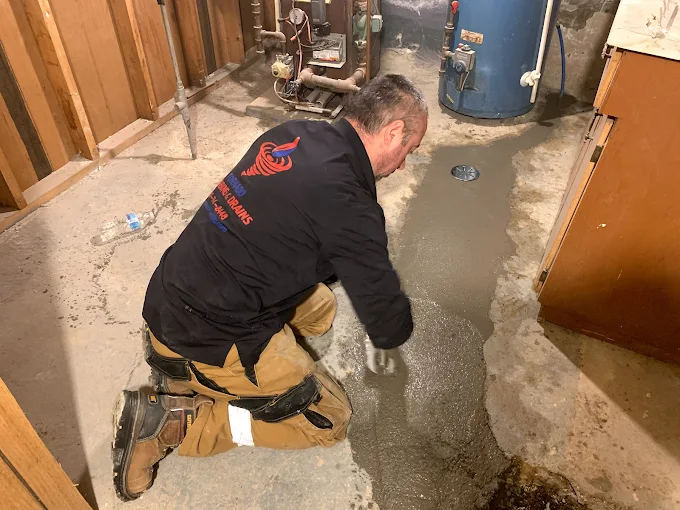
Basement floor patched back after flood-prevention plumbing work
Finished concrete patch after below-floor flood-prevention work, showing the restored surface homeowners see after the plumbing is installed.
Ejector pump repair pricing (Toronto 2026)
| Service | Starting from | Typical range |
|---|---|---|
| Diagnostic visit | $180 | $180 to $400 |
| Pump replacement (existing basin) | $900 | $900 to $1,800 |
| Check valve replacement | $280 | $280 to $600 |
| Basin seal / vent repair | $320 | $320 to $900 |
Ranges are for planning and triage. Final pricing depends on access, urgency, materials, and whether the visit stays isolated once the area is opened.
Cities Where This Service Is a Strong Fit
Related Services
- Weeping Tile & Basement Drainage System
Weeping tile and foundation drainage systems in Toronto & GTA: interior or exterior weeping tile, drainage membrane, crack repair and sump tie-in to control water at the foundation.
- Foundation Waterproofing
Foundation waterproofing in Toronto & GTA: exterior excavation, membrane application, foundation crack injection, drainage layer, and weeping tile integration.
- Backwater Valve Installation
Backwater valve installation in Toronto from $1,440: floor cut, valve set, tested, City subsidy filed. Book or call 647-784-8448, licensed & insured.
- Backwater Valve Repair & Maintenance
Backwater valve repair and maintenance in Toronto: flap inspection, gasket replacement, debris cleaning, and annual servicing so the valve actually closes
- Sump Pump Installation
Sump pump installation in Toronto: new pit, pump, check valve, discharge line, and battery backup. Book or call 647-784-8448. From $720, 25-yr warranty.
- Sump Pump Replacement
Sump pump replacement in Toronto & GTA: same-day swap when the pump has failed, cycles non-stop or is past its 8 to 10 year life. Check valve swapped if worn.
- Sump Pump Repair & Maintenance
Sump pump repair and maintenance in Toronto: float, check valve, discharge, alarm, and battery testing — annual service before storm season.
- Battery Backup Sump Pump
Battery backup sump pump installation in Toronto & GTA: secondary pump that runs on battery power when the grid is down — built for storm-and-outage events.
- Sewage Ejector Pump Installation
Sewage ejector pump installation in Toronto for basement bathrooms, laundry rooms, and below-grade fixtures that need to pump wastewater up to the main building
- Basement Floor Drain Backup
Basement floor drain backup service in Toronto: diagnose whether the cause is sewer surcharge, main-line restriction, or local clog — and plan the right
Related Guides
- My Basement Is Flooding Right Now: Step-by-Step (Toronto, 2026)
Active basement flood in Toronto right now? Safety first, then your insurance file, then the plumbing: the steps in the order our dispatcher walks you through.
- Sump Pump Installation Cost in Toronto (2026): Pit, Pump, Backup, Rebate
Sump pump installation in Toronto runs $1,400 to $6,500 in 2026 depending on the pit, the pump and battery backup. Real numbers, sizing and the City subsidy.
- Backwater Valve Installation Cost in Toronto (2026): With and Without the City Rebate
Backwater valve installation costs $2,800 to $4,800 in Toronto in 2026; the City rebate covers up to $1,600 per valve. What drives the price and how to claim.
- Toronto Basement Flooding Protection Subsidy (2026): The $6,650 Guide
Toronto's Basement Flooding Protection Subsidy rose to $6,650 per property in May 2026. What it covers, who qualifies and what your contractor must document.
- Battery Backup Sump Pump Cost in Toronto (2026): The Numbers That Matter When the Power Goes Out
A battery backup sump pump costs $1,200 to $2,400 as a retrofit in Toronto, or $3,500 to $6,500 in a combined system. Which battery type and runtime to pick.
- After the Flood: Cleanup, Insurance, and Stopping the Next One (Toronto, 2026)
What to do after a basement flood in Toronto: safe cleanup, documenting for insurance, drying timelines, and preventing the next backup. Call 647-784-8448.
Licensed, insured, reviewed Toronto plumbers
- Serving Toronto & the GTA since 2015 — over 1,200 completed jobs.
- Master plumber T95-4969603 · Plumbing contractor T94-4992639 · Drain contractor T87-4722944 · Building renovator T85-4728632 · Plumbing license FI6216638.
- 4.9-star Google rating from 320+ reviews. 400+ HomeStars reviews (Best of 2019–2025). BBB-accredited.
- Same-day and after-hours dispatch across Toronto, Etobicoke, North York, Scarborough, York, Mississauga, and Burlington.
25-year workmanship warranty
Every job Tornado Plumbing & Drains completes in Toronto and the GTA — repair, install, replacement, drain work, sewer work, fixture work — is backed by a 25-year workmanship warranty. The written terms are provided with every quote. If our work fails within 25 years of the install date, we come back and make it right.
How a sewage ejector pump repair is diagnosed
An ejector pump is built to grind and lift sewage and solids out of a sealed, vented below-grade basin, which is why its repair is different from a sump pump that only moves clean groundwater — see how we handle that on sump pump repair. On the visit we sort the fault into one of three buckets: electrical (no power, tripped breaker, dead motor windings), mechanical (worn impeller, seized bearings, a float hung up on the basin wall), or hydraulic (a check valve or discharge line that won't let the pit clear). Reading the motor's amp draw and watching one full cycle tells us which bucket you're in before we open anything, so you're not paying for guesswork.
Common ejector pump problems:
- Pump runs but does not move waste (clog, failed impeller).
- Pump does not run (failed float, electrical, motor).
- Sewage smell from the basin (failed seal or vent).
- Pump cycles constantly (failed check valve).
- Backup at the basement fixture.
- Loud rattling, grinding, or motor noise.
What's included
- On-site diagnosis: we check the float switch, motor draw, and check valve, confirm the pit is cycling and clearing, and tell you whether a repair or a full pump replacement is the right call
- Float and switch service or replacement so the pump triggers at the correct level instead of running dry or letting the basin overflow
- Check valve and discharge work to stop effluent backflow into the pit and the short-cycling that burns out motors
- Pump rebuild or full ejector pump swap, sized to your basin and lift height, with the discharge and unions reconnected and leak-tested
- Basin lid re-seal and vent check so sewer gas stays contained and the pump isn't fighting an air-locked pit
- Pit cleanout, removal and disposal of the old unit, and a wiped-down work area before we leave
- A written 25-year workmanship warranty on the repair or replacement we perform
Repair cost
Pricing depends on whether the pump can be repaired or needs replacement, whether the basin seal needs work, and whether the vent has issues. Pump replacement using the existing basin is the most common scenario and stays in the mid-range.
What to share when you call
- Symptom (pump silent, runs constantly, smell, backup).
- Approximate age of the pump.
- Brand and model if visible.
- Whether the basement fixture is currently usable or sealed off.
- Any prior service history.
- Photos of the basin and pump.
Toronto context
Toronto sewage ejector pumps fail two ways — the impeller jams on a non-flushable wipe or a foreign object, or the basin seal degrades and the bathroom starts to smell. Repair vs replacement depends on the age of the unit and whether the basin and vent are still up to code.
When this is not enough
Repairing the pump itself fixes most failures. When the basin seal has failed, the vent has corroded, or the basin itself has cracked, repair is no longer the right tool — replacement of the pump and basin together is. We will tell you on the visit which path actually solves the problem.
What to confirm before approving repair
- The basin seal and vent should be inspected, not just the pump.
- Pump replacement should match the original capacity or upgrade with reason.
- The repair should be tested through a full fixture cycle.
Useful info on the call: symptom, pump age, basin access, and prior service.
Frequently asked questions
How long do ejector pumps last?
7 to 10 years for typical residential pumps. Heavy use, hard water, or wipes flushed down the toilet shorten life.
Why does the basin smell?
Most often a failed seal on the basin lid or a vent issue. The basin must be airtight to keep odour out.
Can I keep using the basement fixture during the repair?
No. Once the pump is offline, the basement fixture has no drainage and should not be used until the repair is complete.
Should I upgrade the pump?
Sometimes, especially if the previous pump was undersized or the household uses the basement bathroom heavily. The right capacity matches the fixture load.
Related services
Sewage Ejector Pump Repair: real customer reviews
What customers say about our sewage ejector pump repair work, in their own words, straight from their Google reviews.
Kylie Walters - Toronto Realtor
May 2026“Highly recommend Serhiy and Tornado Plumbing! They were incredibly quick to respond, professional, friendly, and honest throughout the whole process. What I thought could turn into a huge and expensive project ended up having a much simpler solution because Serhiy took the time to assess everything properly and give genuine advice instead of pushing unnecessary work. He found a great solution for installing my backwater valve and made the entire process easy and stress-free. It's hard to find people who are both skilled and honest these days, and I wouldn't hesitate to use them again.”
Most relevant to Backwater Valve Installation in Toronto & the GTA.
Google place photo: Tornado Plumbing & DrainsOdette Tracey
February 2021“Very responsive service for my sump pump. Troy was very knowledgeable, very professional and made sure I felt comfortable with the suggestions of service recommendations. Will definitely continue to use Tornado and recommend to others.”
Most relevant to Sump Pump Installation in Toronto & the GTA.
Google place photo: Tornado Plumbing & DrainsKevin Lee
January 2021“Tornado waterproofed my foundation and installed a sump pump. Great quality of work, courteous service, easy to work with, good pricing. Thanks Sergey!”
Most relevant to Sump Pump Installation in Toronto & the GTA.
Google place photo: Tornado Plumbing & DrainsAuthoritative sources for this service
Public references — City of Toronto programs, federal guidelines, and standards bodies — used for the rules and figures cited on this page.
- ESA — Electrical Safety Authority (Ontario electrical permits)(regulator)
- City of Toronto — Basement Flooding Protection Subsidy Program(city)
- City of Toronto — Combined sewers and basement flooding(city)
- Ontario Building Code — Part 7: Plumbing Services(regulator)
- IICRC S500 — Standard for Professional Water Damage Restoration(standard)
- City of Toronto — Priority Lead Water Service Replacement Program(city)
Other services homeowners often compare with this one
If your situation could fit one of these adjacent services instead, open the page that matches more closely before you book.
Fast answers before you call
How long do ejector pumps last?
7 to 10 years for typical residential pumps. Heavy use, hard water, or wipes flushed down the toilet shorten life.
Why does the basin smell?
Most often a failed seal on the basin lid or a vent issue. The basin must be airtight to keep odour out.
Can I keep using the basement fixture during the repair?
No. Once the pump is offline, the basement fixture has no drainage and should not be used until the repair is complete.
Should I upgrade the pump?
Sometimes, especially if the previous pump was undersized or the household uses the basement bathroom heavily. The right capacity matches the fixture load.
Book Sewage Ejector Pump Repair today.
Tornado Plumbing & Drains handles Sewage Ejector Pump Repair across Toronto and the GTA. Call 647-784-8448 or book online for a clean diagnosis, written scope, and the 25-year workmanship warranty on every install and repair.