Backwater Valve Services in Toronto & the GTA
Toronto & the GTA • Call 647-784-8448
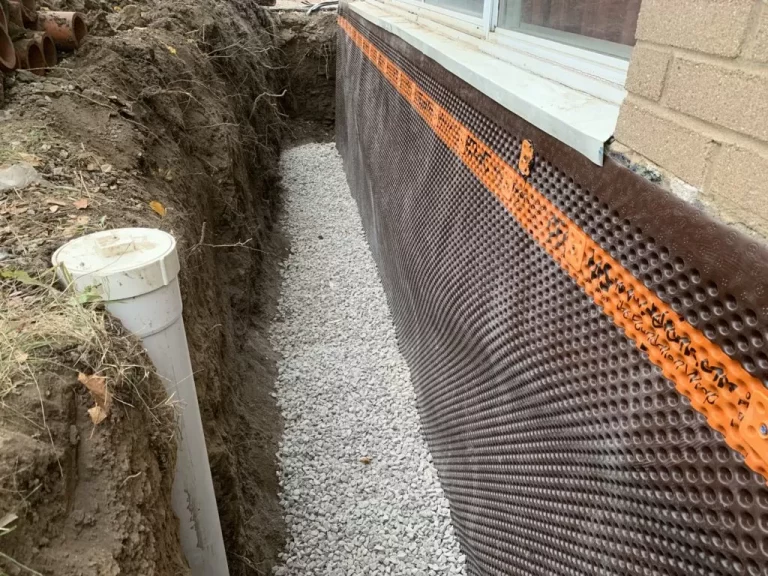
A backwater valve is a one-way gate on the building drain that closes during sewer surcharge — the moment when the city sewer fills up during heavy rain and tries to push wastewater back into your home. Tornado Plumbing & Drains installs, tests, and maintains backwater valves across Toronto and the GTA, with paperwork ready for the City of Toronto subsidy program.
Last updated April 24, 2026
When this service makes sense
Part of Basement Waterproofing & Flood Prevention in Toronto & the GTA
Book this service when
A good place to start for storm-driven water entry, repeated pump failures, or homes planning flood-prevention upgrades before the next heavy rain.
Common signs
- Sewage or grey water has come up through the basement floor drain or laundry tub during heavy rain
- Your street or neighbourhood is on a combined sewer and neighbours have had basement backups
- Your insurer or the City subsidy program requires a backwater valve before coverage or rebate
- You have an older valve but the basement still floods, so the flap may be stuck open, missing, or clogged with debris
If you're not sure, compare these too
- Basement Waterproofing System in Toronto & the GTA - Basement waterproofing system in Toronto & GTA: interior weeping tile, exterior membrane, perimeter drainage, sump integration, and subsidy-eligible flood
- Foundation Waterproofing in Toronto & the GTA - Foundation waterproofing in Toronto & GTA: exterior excavation, membrane application, foundation crack injection, drainage layer, and weeping tile integration.
- Backwater Valve Installation in Toronto & the GTA - Backwater valve installation in Toronto from $1,440: floor cut, valve set, tested, City subsidy filed. Book or call 647-784-8448, licensed & insured.
On this page
Quick guide and key details
When this page makes sense
A good place to start for storm-driven water entry, repeated pump failures, or homes planning flood-prevention upgrades before the next heavy rain.
Most common signs
- Sewage or grey water has come up through the basement floor drain or laundry tub during heavy rain
- Your street or neighbourhood is on a combined sewer and neighbours have had basement backups
- Your insurer or the City subsidy program requires a backwater valve before coverage or rebate
- You have an older valve but the basement still floods, so the flap may be stuck open, missing, or clogged with debris
What the visit usually includes
- New installation: Locate the building drain, install valve, restore floor.
- Repair / maintenance: Open the access plate, clean flap, replace gasket if needed.
- Existing valve, still flooding: Inspect the valve and the rest of the flood-prevention system.
What changes price and scope
- Whether the solution is isolated to a valve or pump, or extends into waterproofing and drainage work.
- Excavation, electrical coordination, permits, and inspection requirements.
- Existing flood history, basement layout, and access to the current drainage path.
How a professional visit usually unfolds
New installation
Locate the building drain, install valve, restore floor. Adds surcharge protection to homes that never had it.
Repair / maintenance
Open the access plate, clean flap, replace gasket if needed. Keeps the valve operational.
Existing valve, still flooding
Inspect the valve and the rest of the flood-prevention system. The cause may be elsewhere (wall seepage, sump failure).
Subsidy paperwork
Document the install per City requirements. Required to claim the subsidy.
Recent Backwater Valve Services in Toronto & the GTA work in Toronto & the GTA
These real project photos show the kind of work this service involves, so you can see examples before you book.
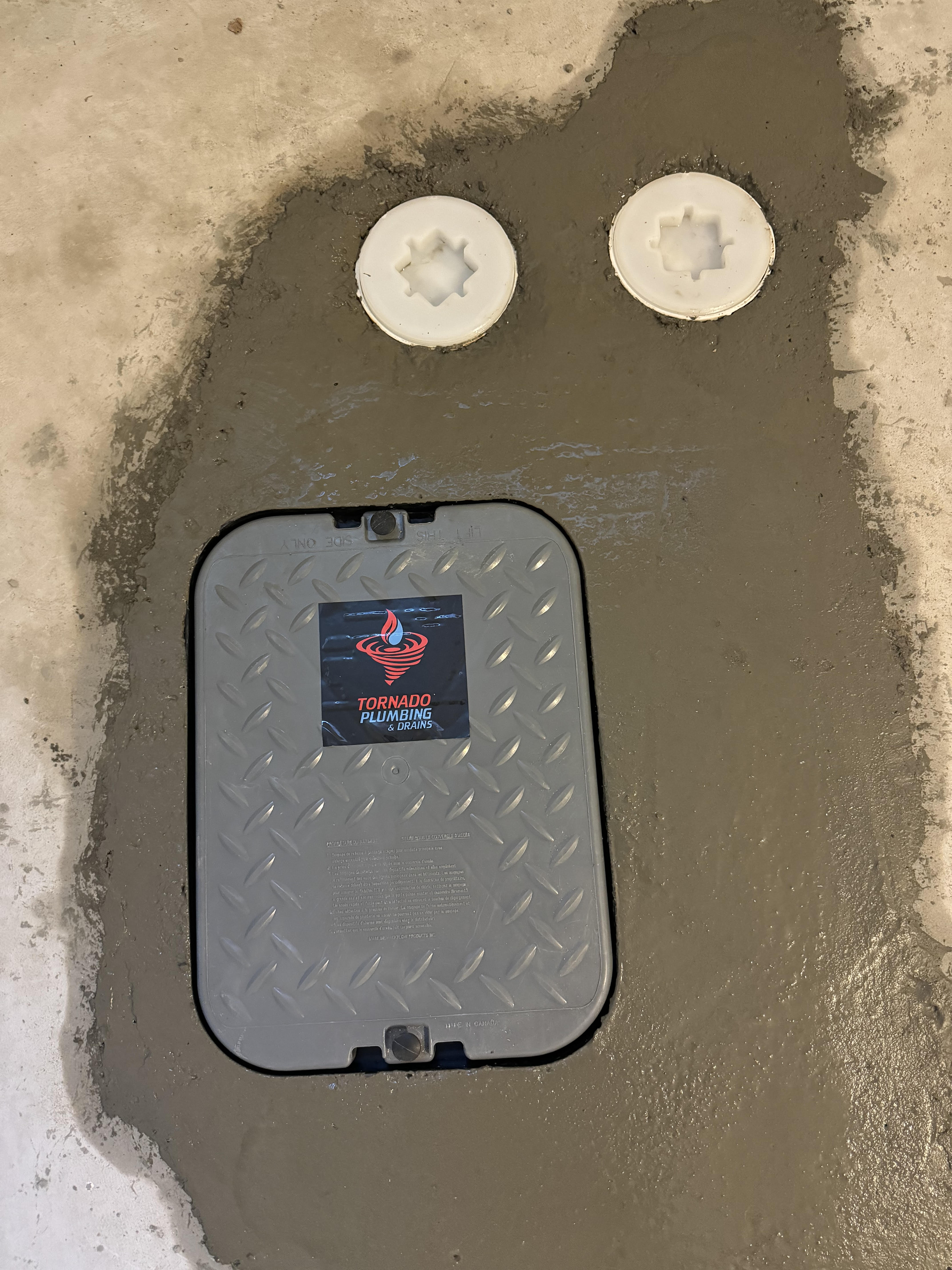
Backwater-valve access finished after concrete patch
This result photo shows the finished access point after basement flood-protection plumbing was installed and the floor was restored.
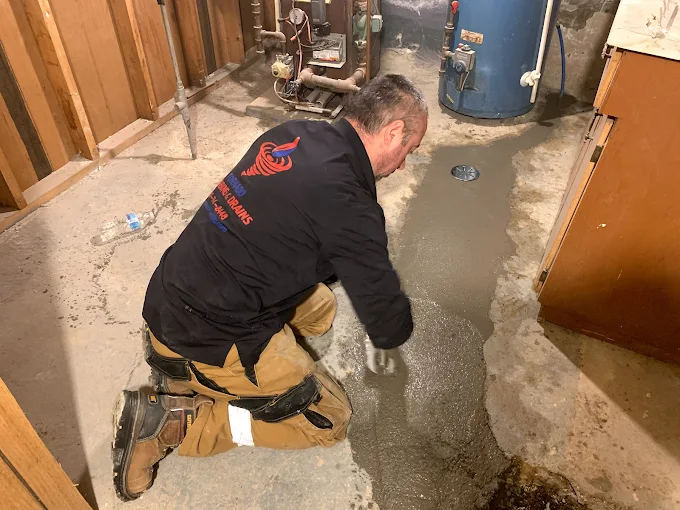
Basement floor patched back after flood-prevention plumbing work
Finished concrete patch after below-floor flood-prevention work, showing the restored surface homeowners see after the plumbing is installed.
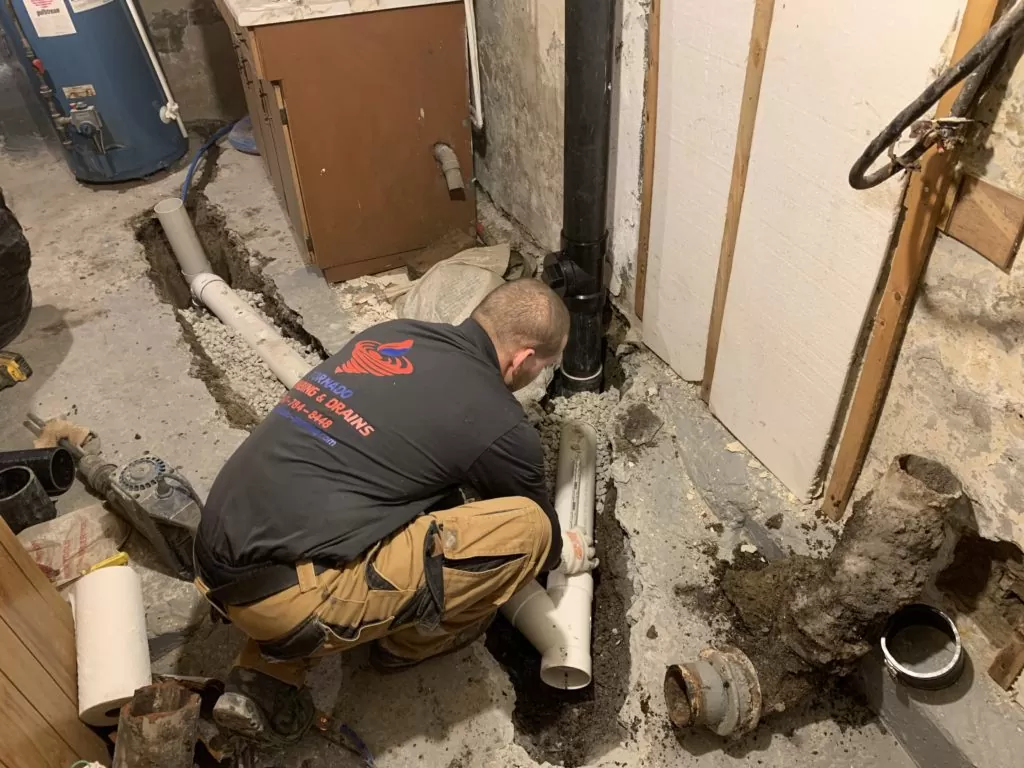
Basement drain tie-in in progress
This project photo shows the below-floor drain installation phase, where route changes, tie-ins, and access all affect the actual scope of the work.
Backwater valve pricing (Toronto 2026)
| Service | Starting from | Typical range |
|---|---|---|
| Backwater valve installation | $1,440 | $1,440 to $2,800 |
| Backwater valve maintenance | $180 | $180 to $400 |
| Backwater valve repair (gasket / flap) | $280 | $280 to $600 |
| Annual inspection | $150 | $150 to $300 |
Ranges are for planning and triage. Final pricing depends on access, urgency, materials, and whether the visit stays isolated once the area is opened.
Cities Where This Service Is a Strong Fit
- Toronto
Century homes, condo towers, and flood-prone basements make Toronto the broadest local plumbing market on the site.
- Scarborough
Useful for root intrusion, storm-related drain issues, and homes where terrain changes the drainage risk.
- Etobicoke
Old-home drain risk, redevelopment pressure, and lake-adjacent flooding make this a strong preventative market.
- Mississauga
A good path for mixed-density infrastructure, sump planning, and combining equipment replacement with diagnostics.
Related Services
- Basement Waterproofing System in Toronto & the GTA
Basement waterproofing system in Toronto & GTA: interior weeping tile, exterior membrane, perimeter drainage, sump integration, and subsidy-eligible flood
- Foundation Waterproofing in Toronto & the GTA
Foundation waterproofing in Toronto & GTA: exterior excavation, membrane application, foundation crack injection, drainage layer, and weeping tile integration.
- Backwater Valve Installation in Toronto & the GTA
Backwater valve installation in Toronto from $1,440: floor cut, valve set, tested, City subsidy filed. Book or call 647-784-8448, licensed & insured.
- Backwater Valve Repair & Maintenance in Toronto & the GTA
Backwater valve repair and maintenance in Toronto: flap inspection, gasket replacement, debris cleaning, and annual servicing so the valve actually closes
- Sump Pump Services in Toronto & the GTA
Sump pump services in Toronto & GTA: installation, replacement, repair, maintenance, battery backup, basin work, discharge upgrades, and subsidy planning.
- Sump Pump Installation in Toronto & the GTA
Sump pump installation in Toronto: new pit, pump, check valve, discharge line, and battery backup. Book or call 647-784-8448. From $720, 25-yr warranty.
- Sump Pump Replacement in Toronto & the GTA
Sump pump replacement in Toronto & GTA: same-day pump swap when the existing pump has failed, is undersized, or is past its service life.
- Sump Pump Repair & Maintenance in Toronto & the GTA
Sump pump repair and maintenance in Toronto: float, check valve, discharge, alarm, and battery testing — annual service before storm season.
- Battery Backup Sump Pump in Toronto & the GTA
Battery backup sump pump installation in Toronto & GTA: secondary pump that runs on battery power when the grid is down — built for storm-and-outage events.
- Sump Pump Basin Installation in Toronto & the GTA
Sump pump basin and pit installation in Toronto: cutting concrete, installing a properly sized basin, perforated pit liner, and tying it into the home's
- Sewage Ejector Pump Installation in Toronto & the GTA
Sewage ejector pump installation in Toronto for basement bathrooms, laundry rooms, and below-grade fixtures that need to pump wastewater up to the main building
- Sewage Ejector Pump Repair in Toronto & the GTA
Sewage ejector pump repair in Toronto & GTA: pump replacement, basin seal, vent troubleshooting, and emergency response when a basement bathroom backs up.
- Basement Floor Drain Backup in Toronto & the GTA
Basement floor drain backup service in Toronto: diagnose whether the cause is sewer surcharge, main-line restriction, or local clog — and plan the right
Related Guides
- Toronto Basement Flooding Protection Subsidy (2026): The $6,650 Guide
The City of Toronto Basement Flooding Protection Subsidy was expanded to $6,650/property in May 2026.
- Backwater Valve Installation Cost in Toronto (2026): With and Without the City Rebate
Backwater valve installation in Toronto costs $2,800–$4,800 in 2026 — and the City rebate covers up to $1,600 per valve.
- Sump Pump Installation Cost in Toronto (2026): Pit, Pump, Backup, Rebate
Sump pump install in Toronto runs $1,400–$6,500 in 2026 depending on pit, pump type, and battery backup.
- My Basement Is Flooding Right Now: Step-by-Step (Toronto, 2026)
Active basement flood in Toronto right now?
Licensed, insured, reviewed Toronto plumbers
- Serving Toronto & the GTA since 2016 — over 1,200 completed jobs.
- Master plumber T95-4969603 · Plumbing contractor T94-4992639 · Drain contractor T87-4722944 · Building renovator T85-4728632 · Plumbing license FI6216638.
- 180+ five-star Google reviews. 400+ HomeStars reviews (Best of 2019–2025). BBB-accredited.
- Same-day and after-hours dispatch across Toronto, Etobicoke, North York, Scarborough, York, Mississauga, and Burlington.
25-year workmanship warranty
Every job Tornado Plumbing & Drains completes in Toronto and the GTA — repair, install, replacement, drain work, sewer work, fixture work — is backed by a 25-year workmanship warranty. The written terms are provided with every quote. If our work fails within 25 years of the install date, we come back and make it right.
Normally-open valves, balanced flaps, and a clear access cover
Most modern backwater valves are the normally-open type: the flap sits up out of the flow so the drain runs normally, then drops and seals only when sewer water tries to come back up. That design only works if the flap pivot stays clean and the access cover is reachable — a valve buried under finished flooring can't be serviced or inspected. We size and position the valve on the building drain, set it with a watertight clamp or threaded riser, and leave the clear cover accessible so the flap can be checked. If you also have a sump pump, we coordinate the two so the basement is protected from both groundwater and sewer surcharge.
Signs you need a backwater valve installed or serviced
- Sewage or grey water has come up through the basement floor drain or laundry tub during heavy rain
- Your street or neighbourhood is on a combined sewer and neighbours have had basement backups
- Your insurer or the City subsidy program requires a backwater valve before coverage or rebate
- You have an older valve but the basement still floods, so the flap may be stuck open, missing, or clogged with debris
- The drain gurgles or drains slowly after a storm, a sign the flap isn't reseating properly
- Renovating a basement and adding a finished floor, bathroom, or bedroom below the surcharge line
- There's an existing valve of unknown age with no record of the flap and gasket ever being inspected
What's included
- Locating the building drain and confirming the valve goes downstream of all the fixtures it needs to protect
- Core-cutting and removing the concrete floor section, then installing the backwater valve on the main line with a watertight connection
- Setting the valve level so the flap seats fully, and bringing the clear access cover up flush and reachable for future inspection
- Restoring the concrete floor around the new access box
- A flap and seat function check, confirming the gate drops and seals before we close up
- City of Toronto subsidy documentation and the licensed-contractor paperwork the rebate requires
- Cleanup of concrete debris and the written 25-year workmanship warranty on the installation
Backwater valve services we offer
- Backwater Valve Installation — new installation in basement floor.
- Backwater Valve Repair & Maintenance — flap cleaning, gasket service, replacement.
- Annual inspection and testing.
- Subsidy paperwork support under the Toronto program.
- Coordinated installs with sump pump and battery backup.
- Existing-valve diagnosis when basement is still flooding.
Why a backwater valve matters in Toronto
Older Toronto neighbourhoods are on combined or surcharge-prone sewers. During heavy rain, the city sewer can fill up and reverse direction, pushing wastewater back into the lowest fixture in your home — usually the basement floor drain. A backwater valve closes during that reversal, keeping the wastewater in the city sewer instead of in your basement.
Toronto subsidy planning
The City's Basement Flooding Protection Subsidy Program covers backwater valves and alarms as eligible work. The expanded program starts May 1, 2026, with up to $6,650 per property for eligible work completed on or after November 12, 2025. Tornado Plumbing & Drains is set up to provide the documentation and licensed-contractor work the City requires.
Backwater valve pricing
Pricing depends on whether the work is new installation, repair, or maintenance, and whether the basement floor needs cutting and restoration for a new valve. Repairs and maintenance stay in the lower range. New installations including floor cutting, valve, and floor restoration are higher.
What to share when you call
- Whether the home has flooded during heavy rain.
- Whether a backwater valve is already installed.
- Basement layout and access to the building drain.
- Subsidy plans.
- Sump pump and battery backup status.
- Photos of the basement floor and any cleanouts.
Toronto context
A backwater valve in a Toronto basement is the difference between a stressful storm warning and a destroyed finished basement. The City of Toronto subsidy makes it cheaper than it's ever been. Service includes annual flap inspection, debris removal at the gate, and confirming the gasket still seals — usually 20 minutes when the cleanout is accessible.
What to confirm before approving backwater valve work
- Subsidy eligibility should be verified before assuming a net cost.
- The installation should be documented with photos and paperwork the City requires.
- Annual maintenance should be scheduled — valves with debris buildup do not close properly.
Useful info on the call: flood history, existing flood-prevention hardware, and subsidy plans.
Frequently asked questions
Do I need a backwater valve?
If your home has flooded during heavy rain or your neighbourhood has a history of basement flooding, yes — a backwater valve is the most direct fix for sewer surcharge. The Toronto subsidy program supports eligible installations.
How often does a backwater valve need maintenance?
Annual inspection is recommended. Debris in the line can prevent the flap from sealing during a surcharge event.
Can I install a backwater valve myself?
No. Subsidy eligibility requires a licensed contractor, permits, and proper installation in the building drain. DIY installation also voids subsidy and creates risk for future drain service.
What is the new Toronto subsidy amount?
Up to $6,650 per property under the expanded program starting May 1, 2026, for eligible work completed on or after November 12, 2025. Eligibility includes backwater valves and alarms, sump pump and battery backup, and severance and capping of storm sewer or external weeping-tile connections.
Related services
Recent backwater valve services in toronto & the gta project
Real Tornado Plumbing & Drains job — photos and notes pulled from the project log, not stock imagery. Location: Toronto.
Authoritative sources for this service
Public references — City of Toronto programs, federal guidelines, and standards bodies — used for the rules and figures cited on this page.
- City of Toronto — Basement Flooding Protection Subsidy Program(city)
- City of Toronto — Combined sewers and basement flooding(city)
- ESA — Electrical Safety Authority (Ontario electrical permits)(regulator)
- IICRC S500 — Standard for Professional Water Damage Restoration(standard)
- Environment and Climate Change Canada — Toronto precipitation data(federal)
- Insurance Bureau of Canada — Water damage and flooding statistics(industry)
Other services homeowners often compare with this one
If your situation could fit one of these adjacent services instead, open the page that matches more closely before you book.
Fast answers before you call
Do I need a backwater valve?
If your home has flooded during heavy rain or your neighbourhood has a history of basement flooding, yes — a backwater valve is the most direct fix for sewer surcharge....
How often does a backwater valve need maintenance?
Annual inspection is recommended. Debris in the line can prevent the flap from sealing during a surcharge event.
Can I install a backwater valve myself?
No. Subsidy eligibility requires a licensed contractor, permits, and proper installation in the building drain. DIY installation also voids subsidy and creates risk for future drain service.
What is the new Toronto subsidy amount?
Up to $6,650 per property under the expanded program starting May 1, 2026, for eligible work completed on or after November 12, 2025. Eligibility includes backwater valves and alarms, sump...
Book Backwater Valve Services today.
Tornado Plumbing & Drains handles Backwater Valve Services across Toronto and the GTA. Call 647-784-8448 or book online for a clean diagnosis, written scope, and the 25-year workmanship warranty on every install and repair.