Sewer Line Replacement in Toronto: Traditional vs. Trenchless Options
By Serhiy Marunchuk, Master Plumber · Licence T95-4969603 · Updated October 15, 2026
Compare traditional excavation and trenchless methods to understand which sewer replacement approach may be suitable for your Toronto property.
Published October 15, 2026
On this page
Related services
Get a free estimate
Introduction
A damaged sewer line can create problems that are easy to overlook at first. Recurring drain backups, slow drainage, sewage odours, unusually wet areas in the yard, or wastewater backing up into a basement may all indicate an issue with an underground sewer pipe.
When a sewer line has deteriorated beyond practical repair, homeowners may need to consider sewer line replacement in Toronto. Two of the main approaches are traditional sewer replacement and trenchless replacement. Both can provide a long-term solution, but they involve very different installation methods.
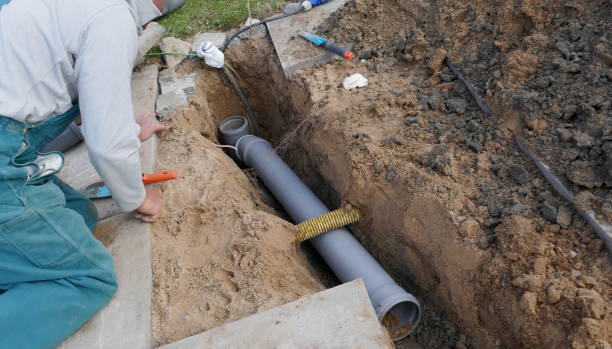
Traditional replacement generally requires excavation along the sewer route to expose and replace the damaged pipe. Trenchless methods are designed to minimize excavation and, when site conditions allow, can replace or rehabilitate a sewer line through limited access points.
Understanding these options can help Toronto homeowners make a more informed decision based on pipe condition, property layout, accessibility, and the type of sewer problem involved.
Related services for this guide
If this article matches what you are dealing with, use one of these links to move into the service or broader category that makes the most sense.
Project photos related to this guide
These real project photos help show what this kind of work looks like in the field, not just on the page.
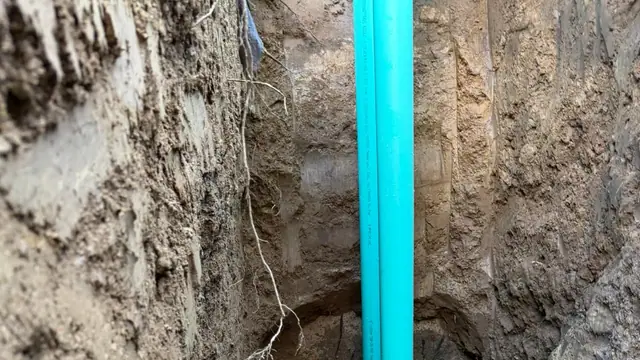
Finished connection: new PVC lateral, shielded couplings and cleanout stub before backfill
Completed connection on the August 2026 lateral replacement: the new pipe meets the existing line on shielded couplings, with a cleanout stub left accessible at grade.
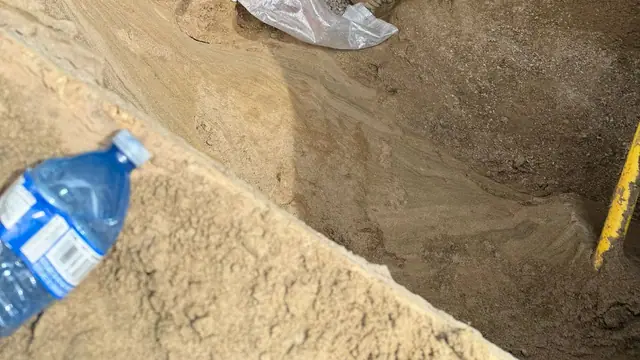
New sewer lateral bedded in gravel at the bottom of the excavation
Open-cut sewer lateral replacement, August 2026. The old line was removed and the new run was laid on gravel bedding and tied to a green PVC riser that becomes the accessible cleanout for future camera and cleaning work.
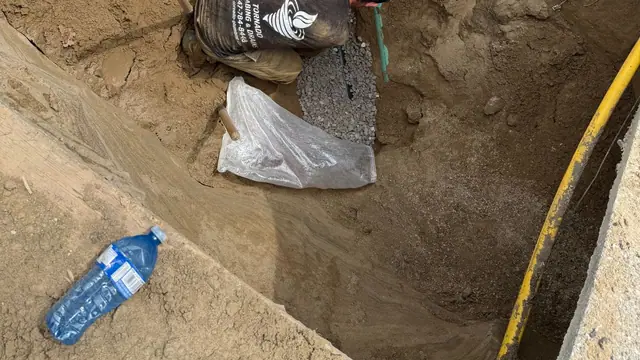
Tying the new lateral into the cleanout riser inside the excavation
Same August 2026 lateral replacement: the cleanout riser is connected to the new pipe before backfill so the line can be inspected without digging again.
Customer stories related to this topic
These customer stories pair real review quotes with the service pages most closely related to this guide.
Maria Marin
November 2019“Called Sergiy at Tornado Plumbing and Draining because of a clogged toilet due to a small plastic container that was flushed down the drain by mistake. Sergiy resolved the issue, unclogged the drain, did the camera inspection and installed a clean out on the main drain for future maintenance. This is not the first time that we used his services, Sergiy and his team are skilled and experienced plumbers who are clean and mindful of their environment. We were very happy with their work, their work is reasonable priced and we would recommend them to anyone looking for exceptional service.”
Most relevant to Drain Camera Inspection in Toronto & the GTA.
Google place photo: Tornado Plumbing & DrainsAndrea Kelly
August 2023“Drain Fix and Clean Out Installation Serghiy is absolutely amazing! When I had a drain backup, he promptly arrived and efficiently fixed the issue with precision and care. His professionalism, expertise, and friendly demeanour were evident throughout the process. Serghiy not only resolved the immediate problem but also provided helpful maintenance tips and installed a clean out to make it easier to access in the future. I highly recommend him for any plumbing needs his top-notch service and commitment to customer satisfaction make him the go-to plumber. Thanks, Serghiy!”
Most relevant to Drain & Sewer Services in Toronto & the GTA.
Google place photo: Tornado Plumbing & DrainsDale Howey
September 2020“Tornado was very quick to get back to me after I called to get a quote on a drain issue and arranged to come on-site the next day. Troy was very careful to contain any mess and describe the work done in detail. I wouldn't hesitate to use them again.”
Most relevant to Drain & Sewer Services in Toronto & the GTA.
Google place photo: Tornado Plumbing & DrainsRead next in this topic
These related guides help you compare cost, scope, and next steps without starting over.
Best local service areas for this topic
Use one of these city pages when you want the same problem explained through local housing, flood risk, access, and neighbourhood-specific plumbing context.
Why Sewer Lines Need Replacement
Sewer pipes are built to last, but underground plumbing can deteriorate over time. Older properties may have sewer lines affected by age, corrosion, shifting soil, tree-root intrusion, cracks, separated joints, or repeated blockages.
In some situations, cleaning or a localized repair may resolve the problem. For example, a small damaged section may be addressed without replacing the entire line. However, widespread deterioration or repeated failures can make full replacement a more practical long-term solution.
A professional sewer inspection can help determine whether the problem is isolated or affects a larger portion of the sewer line.
This distinction is important because main sewer line repair Toronto homeowners may need is not necessarily the same as complete sewer line replacement. A proper inspection helps identify whether the pipe needs cleaning, spot repair, structural rehabilitation, or replacement.
Signs Your Sewer Line May Have a Serious Problem
Sewer problems often develop gradually. A single slow drain may not immediately indicate a major underground issue, but repeated problems affecting several fixtures can be more concerning.
Common warning signs include:
Recurring drain blockages
Multiple slow drains
Sewage odours
Gurgling plumbing fixtures
Wastewater backing up into the basement
Frequent sewer cleaning requirements
Unusually wet areas in the yard
Visible sewage near an exterior cleanout
A collapsed sewer pipe Toronto homeowners are dealing with can cause particularly severe symptoms because wastewater may have limited or no path through the damaged section.
However, these symptoms do not automatically mean the sewer line needs to be replaced. A camera inspection and professional assessment should be used to determine the actual cause.
Traditional Sewer Line Replacement
Traditional sewer replacement is the conventional method of replacing an underground sewer pipe. It typically involves excavating a trench along the affected section of the sewer line.
Once the pipe is exposed, the damaged section can be removed and replaced with new piping. The excavation is then backfilled, followed by restoration of the affected surface.
One advantage of traditional replacement is direct access to the sewer line. This can be helpful when the pipe has extensive structural damage, when the sewer route needs to be modified, or when additional underground work is required.
However, excavation can create considerable disruption.
Depending on where the sewer line is located, landscaping, gardens, concrete, asphalt, flooring, or other finished surfaces may need to be removed and restored.
For some Toronto properties, especially those with limited access or extensive landscaping, minimizing excavation may be an important consideration.
What Is Trenchless Sewer Replacement?
Trenchless sewer replacement is an alternative approach designed to reduce the amount of surface excavation required.
Instead of exposing the entire sewer pipe, specialized equipment can be used through existing access points or strategically positioned openings. The exact technique depends on the condition and configuration of the existing sewer.
Two commonly used trenchless approaches include pipe bursting and cured-in-place pipe lining.
Pipe bursting breaks apart the existing pipe while simultaneously installing a new pipe along the existing route.
Cured-in-place pipe lining involves inserting a resin-coated liner inside the existing pipe and curing it to form a new pipe within the old one.
These methods can be useful in situations where minimizing excavation is important. However, trenchless technology is not suitable for every sewer line.
Trenchless Sewer Repair vs. Sewer Replacement
The terms repair and replacement are sometimes used interchangeably, but they can describe different approaches.
Trenchless sewer repair Toronto homeowners consider may involve rehabilitating the existing pipe rather than completely excavating and replacing it. Depending on the technology used, trenchless work may restore the structural integrity and flow characteristics of a damaged sewer line while reducing surface disruption.
A traditional replacement, on the other hand, physically removes the damaged pipe and installs a new section.
The right approach depends on factors such as the severity of damage, pipe material, pipe diameter, alignment, accessibility, and whether the existing sewer route is suitable for trenchless technology.
A camera inspection is an important first step before deciding between these options.
Traditional vs. Trenchless Sewer Replacement
The biggest difference between traditional and trenchless replacement is how the sewer line is accessed.
Traditional replacement requires excavation to expose the pipe. Trenchless methods aim to reduce excavation by using specialized equipment and existing or strategically created access points.
For example, a sewer line running underneath a landscaped yard may make traditional excavation more disruptive. A sewer route beneath a driveway, patio, or other finished surface can also increase restoration requirements.
Trenchless replacement may reduce these disruptions, but it is not automatically the better option.
Pipe diameter, alignment, depth, bends, connections, existing damage, and access points all need to be considered.
What About a Collapsed Sewer Pipe?
A collapsed sewer pipe presents a different challenge from a simple blockage or minor crack.
When a section of sewer pipe collapses, wastewater flow can become severely restricted. The collapse may result from deterioration, soil movement, corrosion, external pressure, or the failure of an aging pipe.
In some cases, a collapsed section can be repaired or replaced using a trenchless method. In other situations, excavation may be necessary to remove the damaged section and restore the sewer connection.
The appropriate method depends on the location and severity of the collapse.
This is one reason why homeowners should avoid assuming that a particular repair method will work before the sewer line has been professionally inspected.
Weeping Tile and Sewer Line Problems
Another underground drainage system that may be encountered during plumbing work is the weeping tile system.
Weeping tile, also known as foundation drainage, helps collect groundwater around a building's foundation and direct it toward an appropriate drainage point.
Problems with foundation drainage can sometimes be confused with sewer issues because both can contribute to moisture or water problems in a basement.
In situations where the foundation drainage system itself is damaged or deteriorated, weeping tile replacement Toronto homeowners consider may involve excavation around the foundation rather than replacement of the main sanitary sewer line.
Understanding the difference between these systems is important. A sewer line carries wastewater from plumbing fixtures, while weeping tile is designed to manage groundwater around the foundation.
A proper assessment can help determine which underground system is actually responsible for the problem.
How Much Does Sewer Line Replacement Cost in Toronto?
There is no single price for sewer line replacement because every property has different conditions.
Traditional replacement costs can be affected by the length and depth of the sewer line, excavation requirements, soil conditions, accessibility, pipe size, and restoration requirements.
Trenchless work also has several cost factors, including the selected technology, pipe diameter, length of the affected section, access requirements, equipment, and existing pipe condition.
Surface restoration can represent a significant part of the overall project. Replacing a sewer beneath a simple landscaped area may have different restoration requirements than replacing one beneath a concrete driveway or finished basement.
For this reason, homeowners should be cautious about relying on a generic price without first having the sewer line inspected.
The Importance of a Sewer Camera Inspection
A sewer camera inspection can provide valuable information before replacement work begins.
The camera can help identify cracks, root intrusion, corrosion, separated joints, heavy buildup, damaged connections, and collapsed sections. It can also help locate the problem within the sewer line.
This information helps determine whether the appropriate solution is cleaning, localized repair, trenchless rehabilitation, or complete replacement.
For example, a small isolated defect may not justify replacing the entire sewer line. On the other hand, extensive structural deterioration or multiple damaged sections may make replacement the more practical option.
An inspection therefore helps reduce guesswork and allows the homeowner to understand the actual condition of the underground pipe.
When Is Traditional Replacement the Better Option?
Traditional replacement may be appropriate when the sewer line has extensive structural damage or when the existing route cannot accommodate a trenchless solution.
It may also make sense when excavation is already required for other underground work.
Direct access to the pipe allows professionals to remove damaged sections, inspect surrounding conditions, make necessary connections, and install new piping.
Although traditional excavation can be more disruptive, it remains a dependable method for many sewer replacement projects.
When Can Trenchless Replacement Be a Better Choice?
Trenchless replacement can be worth considering when minimizing surface disruption is important and the existing sewer configuration meets the technical requirements for the selected method.
It may be particularly useful where excavation would disturb landscaping, driveways, patios, or other finished surfaces.
However, trenchless does not mean completely excavation-free. Access points may still be required, and certain properties may not be suitable for trenchless technology.
The decision should therefore be based on the actual site conditions rather than simply choosing the method with the least excavation.
Choosing the Right Sewer Replacement Method
The best sewer replacement method depends on the property's specific circumstances.
Important factors include the condition of the existing pipe, location and depth of the sewer, pipe diameter, alignment, access, surrounding structures, surface restoration requirements, and the extent of the damage.
Homeowners should also consider whether the problem is actually with the sanitary sewer line or another underground drainage system.
A professional assessment can help distinguish between sewer replacement, sewer repair, drainage work, and other possible solutions.
The objective is not simply to replace an old pipe. It is to select a reliable long-term solution that addresses the underlying problem while taking the property and surrounding conditions into account.
Conclusion
When a sewer line reaches the point where replacement is necessary, Toronto homeowners may have several options.
Traditional sewer replacement provides direct access to the underground pipe and can be appropriate for extensive damage, difficult configurations, or situations where excavation is already required.
Trenchless methods can reduce surface disruption when the existing sewer route and pipe condition make them suitable.
The right choice depends on the individual property, not simply on whether one method is newer or involves less digging.
A professional sewer camera inspection and site assessment can help determine whether the problem requires cleaning, main sewer line repair Toronto, trenchless rehabilitation, or complete sewer line replacement.
Understanding the condition of the pipe before work begins can help homeowners make a more informed decision and avoid unnecessary excavation or repeated short-term repairs.
Frequently Asked Questions
What is the difference between trenchless and traditional sewer replacement?
Traditional replacement requires excavation to expose the sewer pipe, while trenchless methods use specialized equipment to replace or rehabilitate the pipe through limited access points. The appropriate method depends on the property's conditions and the condition of the existing sewer.
Is trenchless sewer repair suitable for every Toronto property?
No. Trenchless sewer repair depends on factors such as pipe condition, diameter, alignment, access, connections, and surrounding site conditions. A professional inspection is needed to determine whether the method is feasible.
How do I know if I have a collapsed sewer pipe?
Recurring backups, severe drainage problems, sewage odours, and complete loss of flow can indicate a collapsed pipe. A sewer camera inspection can help identify whether a section of the sewer has collapsed.
Does a collapsed sewer pipe always need to be completely replaced?
Not necessarily. Depending on the location and severity of the collapse, certain repair or trenchless methods may be possible. The appropriate solution should be determined after inspecting the damaged section.
Is weeping tile the same as a sewer line?
No. A sanitary sewer line carries wastewater from plumbing fixtures, while weeping tile is part of a foundation drainage system designed to manage groundwater around the building.
When might weeping tile replacement be necessary?
Weeping tile replacement may be considered when the foundation drainage system is damaged, blocked, deteriorated, or no longer functioning properly. The work is different from replacing the home's main sanitary sewer line.
How much does sewer line replacement cost in Toronto?
The cost varies based on pipe length, depth, accessibility, damage, replacement method, excavation, equipment, and surface restoration. An inspection and site assessment are generally needed for an accurate estimate.
Can trenchless sewer replacement avoid digging up my entire yard?
In many suitable situations, trenchless methods can significantly reduce excavation. However, some access points may still be required, and the amount of excavation depends on the property's sewer configuration and selected technology.
Should I repair or replace my sewer line?
A localized problem may be suitable for repair, while extensive deterioration, repeated failures, or a collapsed section may make replacement more practical. A camera inspection can help determine the appropriate approach.
Explore more