Toronto Storm Season Plumbing Checklist (2026): 30 Minutes That Saves $43,000
By Serhiy Marunchuk, Master Plumber · Licence T95-4969603 · Updated June 15, 2026
The annual maintenance routine every Toronto homeowner should run before storm season — sump pump test, backwater valve inspection, downspout clearance, sewer camera. Average flood claim avoided: $43,000.
Published March 28, 2026 · Last updated June 15, 2026
On this page
Related services
Get a free estimate
Introduction
Storm season in Toronto runs roughly April through October — peak intensity June–August. The flood-prevention systems most homes already have (sump pump, backwater valve, weeping tile, downspouts) work — but only if they actually function when called on. This checklist is what we run on Tornado service contracts every spring: 30 minutes of testing and inspection that catches the failures that would otherwise show up as $43,000 insurance claims during the next major storm.
Related services for this guide
If this article matches what you are dealing with, use one of these links to move into the service or broader category that makes the most sense.
Project photos related to this guide
These real project photos help show what this kind of work looks like in the field, not just on the page.
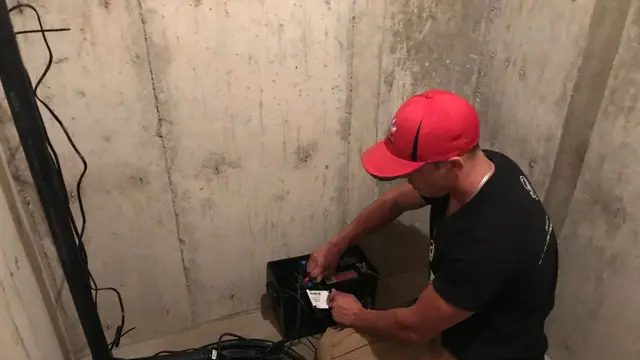
Battery backup sump pump system wiring
This proof photo shows the backup battery and sump components connected and ready for outage protection after the primary sump setup was completed.
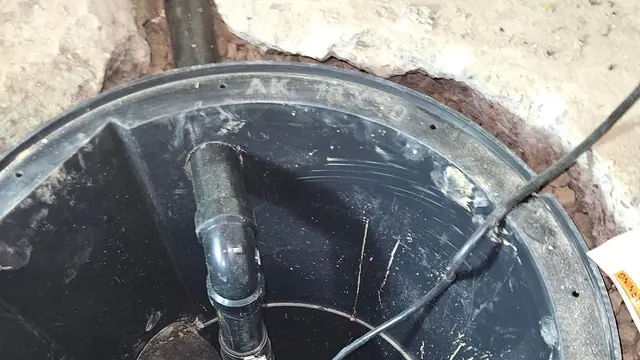
Installed sump pit with pump in place
This is the finished basin stage after the sump pit is set, the pump is placed, and the discharge connection is completed.

Sump basin and pump assembly ready to install
This shows the assembled basin and pump setup before it is lowered into place and tied into the discharge and power connections.
Read next in this topic
These related guides help you compare cost, scope, and next steps without starting over.
Best local service areas for this topic
Use one of these city pages when you want the same problem explained through local housing, flood risk, access, and neighbourhood-specific plumbing context.
Licensed, insured, reviewed Toronto plumbers
Serving Toronto & the GTA since 2016 — over 1,200 completed jobs.
Master plumber T95-4969603 · Plumbing contractor T94-4992639 · Drain contractor T87-4722944 · Building renovator T85-4728632 · Plumbing license FI6216638.
180+ five-star Google reviews. 400+ HomeStars reviews (Best of 2019–2025). BBB-accredited.
Same-day and after-hours dispatch across Toronto, Etobicoke, North York, Scarborough, York, Mississauga, and Burlington.
25-year workmanship warranty
Every job Tornado Plumbing & Drains completes in Toronto and the GTA — repair, install, replacement, drain work, sewer work, fixture work — is backed by a 25-year workmanship warranty. The written terms are provided with every quote. If our work fails within 25 years of the install date, we come back and make it right.
Quick answer
Run this checklist annually in March or April, before storm season starts: (1) test the sump pump by lifting the float; (2) test the battery backup with the manufacturer's self-test; (3) open the backwater valve and verify the flapper swings freely; (4) clear roof drains, downspouts, and yard drains; (5) check window-well covers; (6) schedule a sewer-lateral camera inspection every 3–5 years. Total time on a single-family home: about 30 minutes. Catches roughly 80% of preventable flood-causing failures we see during the season.
What's on a Toronto storm-season plumbing checklist (2026)?
Toronto's storm-season plumbing checklist takes about 30 minutes each March or April and catches roughly 80% of preventable flood failures: test the sump pump and battery backup, clean the backwater valve, clear roof drains, downspouts, and window wells, and book a sewer camera inspection ($250-$650) every 3-5 years. The average Toronto basement flood claim is about $43,000.
Why storm-season prep matters in Toronto specifically
Average Toronto basement flood claim in 2024: approximately $43,000 (Insurance Bureau of Canada). 30 minutes of annual maintenance is meaningful insurance against this.
Most common preventable failure modes (in our 1,200+ Toronto service jobs): stuck sump pump float (35%), debris-jammed impeller (22%), failed check valve (18%), dead backup battery (15%).
Battery backup self-test should run every 30 days; replace the AGM battery at 3–5 years, lithium at 8–10 years, even if the pump still runs.
Backwater valves should be inspected and cleaned annually — debris under the gate is the single most common reason for failure during a back-flow event.
Sewer lateral camera inspection every 3–5 years catches root intrusion before it causes a backup. Cost: $250–$650.
Climate trend: ~15% increase in heavy-rain frequency in southern Ontario since 2000 (Environment and Climate Change Canada). The maintenance window has tightened.
City of Toronto subsidy: up to $6,650 for the prevention equipment — work installed properly and inspected annually keeps the rebate-eligible install in good standing.
DIY vs professional inspection — when each makes sense
DIY checklist is enough when
Your prevention systems are less than 5 years old, you've done annual maintenance every year, and you've had no flooding events. The DIY 30-minute walkthrough catches most preventable failures.
Book the professional inspection when
Your sump pump is 5+ years old (cast iron) or 3+ years old (plastic). The battery backup is at the manufacturer's replacement interval. You've never opened the backwater valve. You've had a flood within the past 5 years. Your last camera inspection was 5+ years ago.
What our seasonal service includes
Tornado's annual storm-season inspection: full sump pump test under load, battery health diagnostic, backwater valve clean and gate test, discharge line clearance, photographic record of all components, recommended next-step scope if anything is approaching end-of-life. Cost: $220–$340 for a single-family home. Typically pays back through one prevented failure.
Three Toronto stories from the past storm season
Bloor West, missed the spring inspection — Customer's 5-year-old plastic sump pump had a stuck float; never tested before storm season. June heavy rain, pump didn't run, basement filled to ~4 inches. $28,000 insurance claim. Subsequent spring inspection takes 30 minutes and would have caught the float.
East York, did the inspection, caught the dead battery — Customer ran the self-test in April; backup battery showed degraded capacity. Replaced the battery for $280. Power outage during August storm; backup ran for 6 hours and kept the basement dry. Avoided claim: incalculable but probably ~$30,000 based on neighbours' losses that night.
Riverdale, scheduled camera inspection caught early root intrusion — Customer booked a camera inspection on the 5-year cadence. Camera showed roots starting through a clay joint at 32 ft, 70% open. Spot lining at $4,200 caught it before backup. The next storm: zero issues. Without the camera, this would have been a backup → emergency call → cleaning → recurrence → eventual lining anyway, plus insurance claim.
Why Toronto homes need the spring checklist more than most
Three Toronto-specific reasons the spring checklist is non-negotiable: (1) freeze-thaw winters stress every component — battery seals fail, pump floats stick, discharge lines develop ice plugs that don't show up until they thaw; (2) the combined-sewer system in older neighbourhoods means a property-level prevention failure has higher consequence than in suburbs with separated sewers; (3) climate trends mean storm-season events are more intense and more frequent than the systems were designed for. The 30-minute annual checklist isn't optional for high-risk-neighbourhood homes — it's the working assumption for staying dry through the next season.
What to have ready when you book the seasonal inspection
If your own test turned up a stuck float, dead backup battery, or a backwater valve flapper that won't seal, say so when you call — that moves you from routine maintenance to a same-day repair before the next storm.
The date of your last sump pump, backwater valve, or sewer camera service — and whether anything was replaced, so we know where you are in the maintenance cycle.
Make and model of your sump pump and battery backup (read it off the pump body or backup controller), plus the battery's install date if it's printed on the case.
What you found during your own spring test: did the pump cycle and stop cleanly, did the backup self-test pass, did the backwater valve flapper swing freely?
Photos of the sump pit, the backwater valve access cap, and any standing water, rust lines, or efflorescence on the basement floor or walls.
Whether the backwater valve access cap is exposed or buried under a finished floor, and where the sump discharge line exits — so we bring the right tools and allow the right time.
Your neighbourhood and approximate age of the home (central Toronto laterals over 30 years old change our camera-inspection recommendation).
Your sewer-backup insurance endorsement status and any prevention equipment your insurer has on file, in case you want documentation after the visit.
Where to go next
Annual inspection and maintenance scope. 30 minutes that pays back through one prevented failure.
Annual inspection and cleaning of an existing backwater valve. Required for the valve to actually work when called on.
The 3–5 year camera-on-the-lateral that catches root intrusion before it causes a backup.
The whole-home seasonal inspection — supply, drain, fixture, water heater, prevention.
Detailed sump-specific maintenance walkthrough.
The big-picture prevention scope including backwater valve, sump, disconnect, and grading.
Sources cited in this guide
Book the seasonal inspection
Sump Pump Repair & Maintenance, Backwater Valve Repair & Maintenance, or full Plumbing Inspection & Maintenance — book the seasonal scope before the next storm. Calls go through 647-784-8448 with same-day and after-hours dispatch.
Common questions about Toronto storm-season prep
When should I run the spring checklist?
March or April — after the freeze-thaw cycle is mostly done but before storm season ramps up. June is too late; February is too early. Setting a recurring reminder for early April covers most Toronto homes.
How long does the sump pump actually last?
Cast-iron pumps (Zoeller M53/M267, Liberty 257, Hydromatic): 8–12 years with annual maintenance. Builder-grade plastic: 3–5 years. Even if a plastic pump still tests fine at 5 years, it's at end-of-life and prone to sudden failure during a heavy-use event. Replace before failure rather than after.
Do I really need a camera inspection every 3–5 years?
If your home has a sewer lateral older than 30 years (most central Toronto homes), yes. Roots and bellies don't announce themselves until the backup happens; camera footage gives you 1–3 years of warning to plan repair. The cost ($250–$650) is meaningfully cheaper than an emergency call plus restoration.
What's the most common failure mode you see?
Sump pump stuck float — 35% of preventable flood failures we see. Float gets caught on the basin wall, the pump stops cycling, and the next storm fills the pit. Prevention: lift the float manually during the spring test and confirm clean travel.
Should I replace my prevention equipment proactively or wait for failure?
Proactively for any home with a finished basement. The cost of one finished-basement flood ($43,000 Toronto average) exceeds the cost of every prevention equipment replacement you'd ever do over the life of the home. Waiting for failure is the expensive path; proactive replacement at end-of-life is the cheap path.
Explore more