Hot Water Tank Replacement Cost in Toronto (2026): By Size, Fuel, and Venting
By Serhiy Marunchuk, Master Plumber · Licence T95-4969603 · Updated August 17, 2026
40-gal gas atmospheric: $2,200–$3,200. 60-gal power-vent gas: $2,800–$4,200. Electric: $1,800–$2,800. Tankless conversion: $4,500–$6,500. Code upgrades and TSSA gas-fitter included.
Published March 23, 2026 · Last updated August 17, 2026
Introduction
A hot water tank replacement in Toronto isn't just swapping the tank — it's the venting, the code upgrades, the gas-fitter requirement on gas units, and the choice between three vent types that all carry different price tags. This guide gives you the real 2026 numbers for every common scenario, explains why Toronto's hard water shortens tank life, and walks through the code-upgrade items modern installs almost always include. If your tank is actively leaking, treat it as an emergency — our emergency plumbing service can shut it down and swap it same-day.
Related services for this guide
If this article matches what you are dealing with, use one of these links to move into the service or broader category that makes the most sense.
Project photos related to this guide
These real project photos help show what this kind of work looks like in the field, not just on the page.
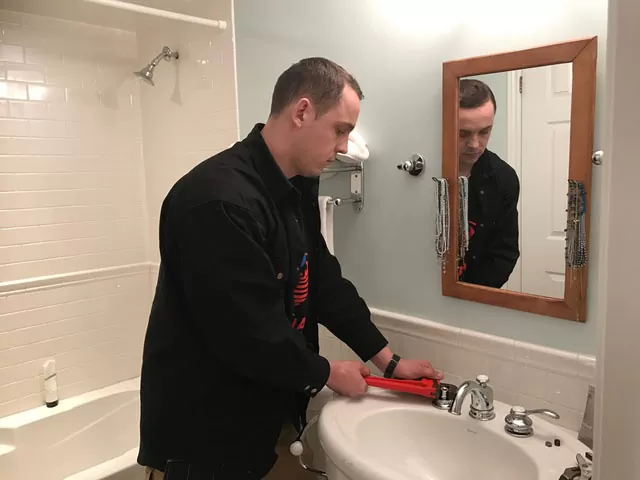
Technician handling a residential interior plumbing service call
This is a useful general indoor-service photo for interior plumbing pages where homeowners want to see a real technician on site instead of generic brand graphics.
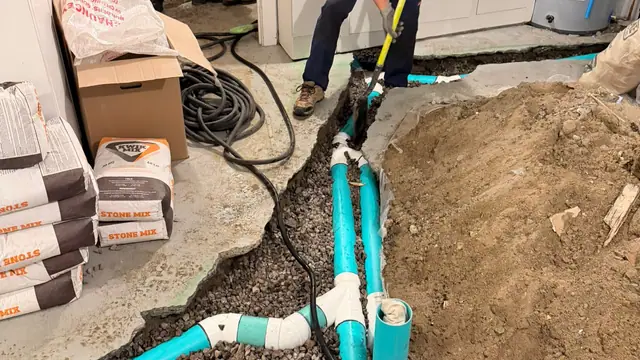
Basement floor opened to replace the under-slab drain lines
Interior drain re-piping, August 2026. The slab was cut along the drain route, the old lines removed, and new PVC drain connections laid on gravel with stub-ups for the fixtures above.
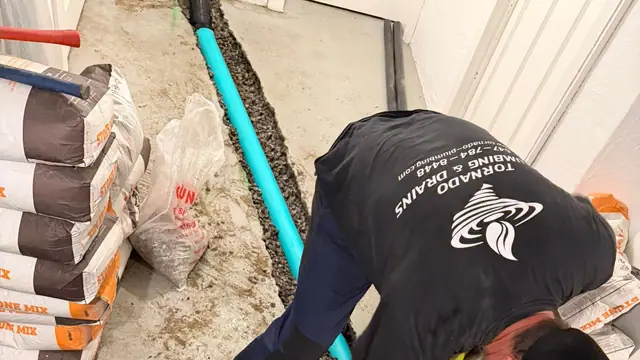
Bedding the new basement drain run in gravel
Same August 2026 basement drain project: each fitting is supported and the run is bedded in clear gravel before restoration, so the slope set during installation does not move.
Customer stories related to this topic
These customer stories pair real review quotes with the service pages most closely related to this guide.

“Sergei and his team did an amazing job dealing with replacing old and damaged sewage pipes. It was a complicated job that required deeper than normal digging and the pipes ran underneath the neighbours’ property. Inspite of these challenges the Tornado team kept the work area contained and completed the job in 2 days. They left the property clean and communicated along way. Highly recommend.”
Most relevant to Sewer Line Replacement in Toronto & the GTA.
Google place photo: Tornado Plumbing & DrainsKevin
October 2019“I called a couple of plumbers to help investigate a water leak in our main water line. Sergey at Tornado Plumbing was the most attentive and the only contractor that actually came to our place to look at the issue. All other contractors simply recommended replacing the water main and provided a quote using Google Maps and did not show up at the house at all. Sergey provided me with the option to fix the leak which was located just below the slab in the basement, but his recommendation was to replace our side of the water main as it was old lead pipe. Once our side was completed I could notify the city and they would schedule a time to replace the city side using a city contractor. We had some water damage in our basement because of the leak so Sergey scheduled a team to arrive within 24 hours after signing the project estimate. The team that arrived were excellent. They needed to do a little discovery to find the main water line in our front property as the location marking wasn't exact. They didn't get discouraged and found the old lead pipe and completed the work by torpedoing a new ¾" copper line from inside the house. The leak had created a lot of water under the basement slab which made the work a little difficult but the team worked in to the evening to make sure everything was complete, holes filled back in, new concrete poured, and to be sure the water in the house was working as expected. Everything was cleaned up perfectly and Sergey followed up on the work within a couple of days when he was back in the area to provide another estimate. Overall the experience with Tornado Plumbing was excellent. We need to install a sump pump (Sergey's recommendation) and replace our basement slab in the future – I'll definitely be calling Sergey at Tornado Plumbing.”
Most relevant to Main Water Line Repair & Replacement in Toronto & the GTA.
Google place photo: Tornado Plumbing & DrainsMimi Lam
June 2020“I can’t recommend Tornado plumbing enough. Sergei and his team are literally the best. Sergei always provides the best recommendations and gives you his honest opinion. He doesn’t over sell and gives you the best advice. I had to have my main valve change which was something we had discussed a while ago from another service I had hired him for. The shut off valve was old and had lead component. I knew from past experience that anytime I needed to turn it on or off, it would start leaking. There was also a lead pipe leading underground. I made the decision to change all the lead pipe as opposed to just changing the shut off valve because it would eventually need to be changed regardless. Sergei dug from the front of my house to the water valve in my basement with minimal interruptions to my tenants, and minimal mess. This speaks to his attention to detail. He goes over and beyond my expectations. Thank you Sergei and Tornado Plumbing.”
Most relevant to Plumbing Repairs & Installations in Toronto & the GTA.
Google place photo: Tornado Plumbing & DrainsRead next in this topic
These related guides help you compare cost, scope, and next steps without starting over.
Best local service areas for this topic
Use one of these city pages when you want the same problem explained through local housing, flood risk, access, and neighbourhood-specific plumbing context.
Licensed, insured, reviewed Toronto plumbers
Serving Toronto & the GTA since 2015 — over 1,200 completed jobs.
Master plumber T95-4969603 · Plumbing contractor T94-4992639 · Drain contractor T87-4722944 · Building renovator T85-4728632 · Plumbing license FI6216638.
4.9-star Google rating from 320+ reviews. 400+ HomeStars reviews (Best of 2019–2025). BBB-accredited.
Same-day and after-hours dispatch across Toronto, Etobicoke, North York, Scarborough, York, Mississauga, and Burlington.
25-year workmanship warranty
Every job Tornado Plumbing & Drains completes in Toronto and the GTA — repair, install, replacement, drain work, sewer work, fixture work — is backed by a 25-year workmanship warranty. The written terms are provided with every quote. If our work fails within 25 years of the install date, we come back and make it right.
Quick answer
Hot water tank replacement in Toronto in 2026 typically runs $2,200–$3,200 for a 40-gal atmospheric-vent gas tank, $2,800–$4,200 for a 50–60-gal power-vent gas tank, $1,800–$2,800 for an electric tank, and $4,500–$6,500 for a tankless conversion including venting and gas-line upgrade where required. Gas work requires a TSSA-licensed gas-fitter (or master plumber with G2 endorsement); modern installs include an expansion tank, drip pan, and full-port shutoffs as code-required upgrades.
How much does it cost to replace a hot water tank in Toronto in 2026?
A hot water tank replacement in Toronto in 2026 typically costs $2,200-$3,200 for a 40-gal atmospheric-vent gas tank, $2,800-$4,200 for a 60-gal power-vent, $1,800-$2,800 for electric, and $4,500-$6,500 for a tankless conversion. Code upgrades and old-tank removal are usually included; gas work requires a TSSA-licensed gas-fitter.
What you should know before booking
Atmospheric-vent gas tanks reuse the existing chimney/flue. Power-vent and direct-vent units need new sidewall venting.
Toronto's hard water (~120–140 mg/L CaCO₃, moderately hard) shortens tank life — sediment build-up reduces efficiency and shortens typical 12–15 year service life to 6–8 years if not flushed annually.
Modern Toronto installs require: expansion tank on the cold inlet (closed system code), drip pan if above finished space, full-port shutoffs on hot and cold. Often new on older swaps.
Gas work requires a TSSA-licensed gas-fitter (G2 minimum). Electric installs require ESA inspection.
Direct-vent gas units cost $700–$1,200 more than atmospheric but eliminate back-drafting risk in modern tightly-sealed homes — recommended for newer-construction installs.
Permit required for gas tank replacement when the existing vent is being modified or the gas line is being modified. Most direct same-size atmospheric swaps don't require permits.
Average Toronto household hot-water demand: 200–300 L/day for 4 people (NRCan reference data). 40-gal (151 L) tank with appropriate recovery rate handles this comfortably.
Real Toronto hot water tank prices (2026)
Reuses existing chimney/flue. Code-upgrades (expansion tank, drip pan if needed, shutoffs) included. Most common Toronto install. Same-day swap typical.
40-gal gas, atmospheric vent (standard swap)
$2,200 – $3,200
Reuses existing chimney/flue. Code-upgrades (expansion tank, drip pan if needed, shutoffs) included. Most common Toronto install. Same-day swap typical.
50-gal gas, atmospheric vent
$2,500 – $3,500
Slightly larger tank, same install scope as 40-gal. Better recovery for households with simultaneous demand.
60-gal gas, power-vent
$2,800 – $4,200
Power-vent unit with new sidewall venting. Required when chimney is unsafe for atmospheric or when basement ceiling routing favours sidewall. Larger capacity for high-demand households.
Direct-vent gas (sealed combustion)
$3,200 – $4,800
Sealed-combustion intake and exhaust through sidewall. Best for tight modern homes — eliminates back-draft risk.
40-gal electric
$1,800 – $2,800
No gas, no venting. Higher operating cost than gas but cheaper install. Common in condos and homes without gas service.
Tankless conversion
$4,500 – $6,500
Removal of tank, gas-line upsize where required, sidewall venting, tankless install. See dedicated tankless guide for details.
Code upgrades (when needed)
+$200 – $500
Expansion tank, drip pan, full-port shutoffs, dielectric unions. Often included in install pricing but called out separately on some quotes.
Removal of old tank
Included
Tornado removes and disposes of the old tank as part of every replacement.
The three venting types and when each applies
Atmospheric vent (cheapest): tank uses natural draft up the existing chimney. Works only when the chimney is correctly sized, lined, and free of back-draft issues. Most pre-1990 Toronto homes were built for this. Reused on most direct same-size swaps.
Power-vent (mid-range): tank has a fan that pushes exhaust horizontally through a sidewall. Required when chimney isn't safe for atmospheric, or when home is too tight for natural draft. New sidewall vent run usually 5–15 ft of PVC. Adds $400–$800 to the base install.
Direct-vent (sealed combustion) (premium): tank pulls combustion air from outside and exhausts to outside through a sealed intake/exhaust pair. Eliminates indoor air quality risk in tight modern homes. Adds $700–$1,200 over atmospheric. Best for new construction and renovations where envelope is tight.
Which one your home needs is determined on the diagnostic visit by inspecting the chimney, the home's air-tightness, and the basement layout.
Three Toronto tank replacements from the past 90 days
Etobicoke, 1968 bungalow, atmospheric swap — 14-year-old 40-gal tank failed (rust at the base). Direct same-size atmospheric swap, reused chimney, added expansion tank. Total: $2,650. 3-hour visit, customer had hot water restored same afternoon.
Forest Hill, 2018 build, power-vent for high demand — 4-bath family home, builder-grade 50-gal not keeping up with morning demand. Upgraded to 60-gal power-vent. Total: $3,750. Morning showers fixed.
Yorkville condo, electric replacement — Closet-installed 30-gal electric tank, 18 years old. Direct swap with code-required pan and shutoffs. Total: $2,150. Building required Tornado's WSIB and insurance certificates before scheduling — standard for condos.
Repair vs replace your hot water tank
Repair when
Tank is under 8 years old. Failure is a part (T&P valve, dip tube, drain valve, thermocouple, gas valve) — under $400 typically. No visible rust or moisture at the tank base. Anode rod replacement extends life if done before failure.
Replace when
Tank is 10+ years old. Visible rust, leaks, or moisture at the base (tank is failing structurally — repair won't hold). Recovery has slowed noticeably (sediment build-up reducing efficiency). Hot-water capacity is undersized for household demand.
What we recommend on the visit
Diagnostic confirms whether part-replacement or full replacement is the right call. We don't push replacement on a tank that has years left. We do recommend it when the math is clear — the cost of a replacement now is meaningfully less than the cost of an emergency replacement in 6 months when the tank fails on a Sunday.
Why Toronto's hard water shortens tank life
Toronto water hardness averages 120–140 mg/L as calcium carbonate — moderately hard. Sediment (calcium and magnesium) settles to the bottom of the tank during heating cycles and forms an insulating layer between the burner (gas) or element (electric) and the water. Without annual flushing, the layer thickens, the tank works harder, the metal at the base corrodes faster, and the typical 12–15 year service life shortens to 6–8 years. Annual flushing is part of standard maintenance — easy to do during the spring storm-season checklist. We offer it as a $140–$220 service or include it in the install warranty if you book annual maintenance contracts.
What to have ready before you call for a tank-replacement quote
A couple of clear phone photos of the tank top, the vent, and the connections let us quote firm pricing and often book a same-day or next-day swap.
The capacity printed on the tank's rating plate (e.g. 40, 50, or 60 gal) and the fuel type — gas or electric.
The age of the current tank and the failure symptoms — no hot water, leaking from the base, rust-coloured water, or pilot/burner faults.
A photo of the tank's top showing how it vents — a metal flue rising into a chimney (atmospheric), a fan and white PVC pipe out a sidewall (power-vent), or a paired intake/exhaust (direct-vent).
A photo of the surrounding area: the cold-water shutoff, gas line or electrical connection, and whether the tank sits above finished living space (decides if a drip pan is needed).
Your household size and peak demand — number of bathrooms and whether two showers ever run at once — so we size recovery, not just capacity.
Whether you want a like-for-like swap or are considering a venting change, a larger tank, or a tankless conversion.
For condos: confirm the building requires WSIB and insurance certificates before scheduling, and have the management contact ready.
Where to go next
Service page with full scope, brand options (Bradford White, Rheem, John Wood), and the install warranty.
If your tank is under 10 years old and you're hoping for a repair instead of replacement.
If you're considering switching to tankless during this replacement.
All water heater services including tankless, repair, descaling.
If you're cross-shopping the two technologies before deciding.
Sources cited in this guide
Ready to book the swap
Book at Hot Water Tank Installation & Replacement — most replacements happen same-day or next-day. For under-10-year tanks, Water Heater Repair & Maintenance handles the diagnostic. Calls go through 647-784-8448.
Common questions about Toronto hot water tank replacement
How much does it cost to replace a hot water tank in Toronto in 2026?
$2,200–$3,200 for a 40-gal atmospheric gas (most common). $2,800–$4,200 for 60-gal power-vent. $1,800–$2,800 for electric. $4,500–$6,500 for tankless conversion. Code upgrades (expansion tank, drip pan, shutoffs) typically included. Old-tank removal included.
Why is my power-vent tank more expensive than my neighbour's atmospheric?
Power-vent units are about $300–$500 more in equipment and require new sidewall PVC venting (usually 5–15 ft). The premium is real but unavoidable when the existing chimney isn't safe for atmospheric, or when the home is too tight for natural draft. Direct-vent (sealed combustion) is even more — $700–$1,200 over atmospheric — but worth it on tight modern homes.
Do I need a permit to replace my hot water tank?
For a direct same-size, same-vent-type, same-fuel atmospheric swap: usually no permit required. For a vent-type change (atmospheric to power-vent), gas-line modification, or fuel-type change: yes, permit required. Tornado pulls every required permit as part of the install scope.
What size tank do I actually need?
Rule of thumb: 40-gal for 1–3 person household, 50-gal for 4-person, 60-gal for 5+ or homes with 2+ simultaneous showers. Recovery rate (BTU/hr for gas, kW for electric) matters too — a tank that's the right size with poor recovery still runs out during peak use. We size on site.
How long should my tank last?
Modern tanks: 12–15 years with annual sediment flushing. Toronto's moderately hard water reduces this to 6–8 years if never flushed. Tank life is mostly about water quality and maintenance, not brand.
Is the work warrantied?
Yes — Tornado's 25-year workmanship warranty applies to install: connections, venting, code upgrades. The tank itself carries the manufacturer warranty (typically 6, 8, or 12 years on the tank, 1–6 on parts). The combined warranty is what gives you coverage for both install issues and equipment failures.
Explore more