Burst Pipe Repair: Immediate Steps, Repair Options, and Prevention
What to do in the first 10 minutes, how repairs work, and how to prevent the next burst • Call 647-784-8448
Published February 25, 2026 · Last updated February 26, 2026
On this page
Primary service paths
Get a free estimate
Introduction
Burst Pipe Repair: Immediate Steps, Repair Options, and Prevention matters because the wrong first move can turn a manageable plumbing problem into water damage, cleanup, and a much bigger repair. This guide is written for homeowners and property managers who want calm, specific guidance instead of vague emergency advice, with practical signs to watch for, steps you can take first, and a clearer sense of when it makes sense to call. If the problem already clearly matches Burst Pipe Repair, start there. If you are still comparing a few likely causes or solutions, start with Emergency Plumbing first. If what you are seeing sounds closer to Emergency Plumbing Service, review that page too. When you are ready to book, call 647-784-8448, email [email protected], or book online with a short description of the symptom, the property type, and any access details that might matter.
Related service paths for this guide
If this article matches what you are dealing with, use one of these paths for the exact service or category next step.
Project photos related to this guide
These real project photos are linked to this topic through service, blog, and location metadata, which helps turn the guide into visible first-hand proof instead of a text wall.
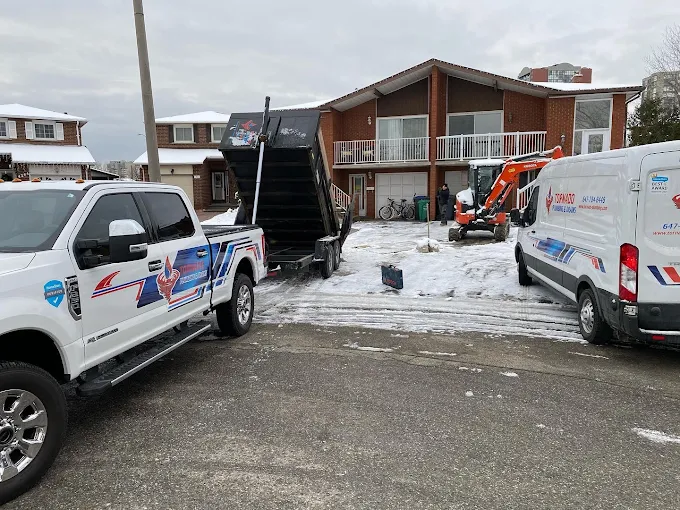
Winter emergency plumbing jobsite with trucks and excavation equipment
This winter jobsite photo helps emergency-service pages show what a real response looks like when the problem cannot wait and outdoor access, weather, and urgency all affect scope.
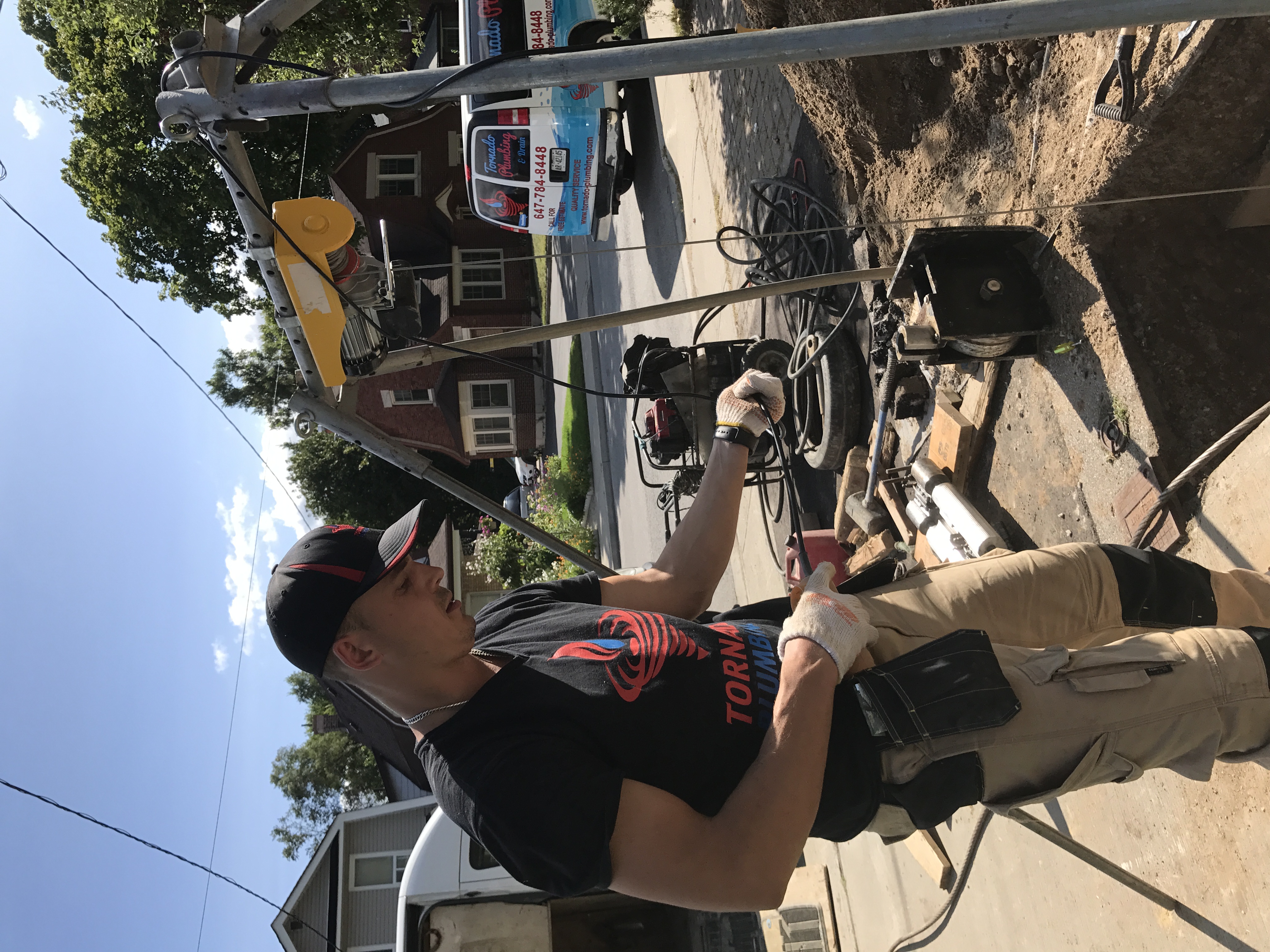
Serhiy on an active plumbing job site
This owner-led job-site photo reinforces that the company is showing real field work, not stock construction imagery.
Technician working under a kitchen sink
This is a straightforward interior-service photo that supports fixture repair, leak investigation, and small-space plumbing work.
Customer proof for this topic
These proof cards use real review text and route you into the most relevant service path for this guide.
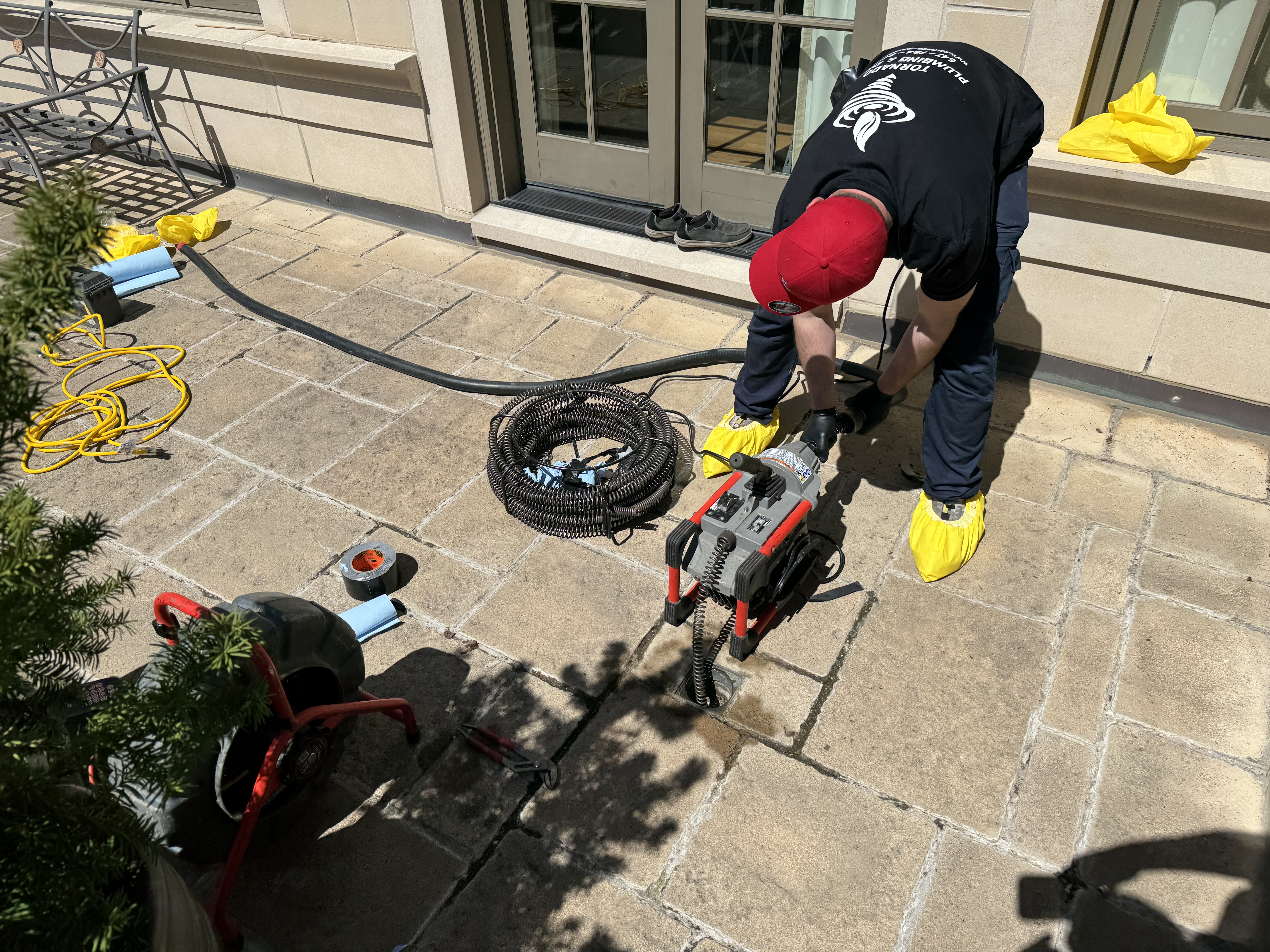 Close-up of the drain access point and service equipment during the job.
“Highly recommend Tornado Plumbing & Drains for sewer line replacement and drain repair. They replaced about 40 ft of sewer drain lines, replaced my main floor drain, and did a drain camera inspection to confirm proper sloping. They also installed a new washing machine drain connection and even did a courtesy follow-up visit afterward to make sure we were satisfied. Great experience with a trustworthy plumber in Toronto.”
Most relevant to Drain Camera Inspection.
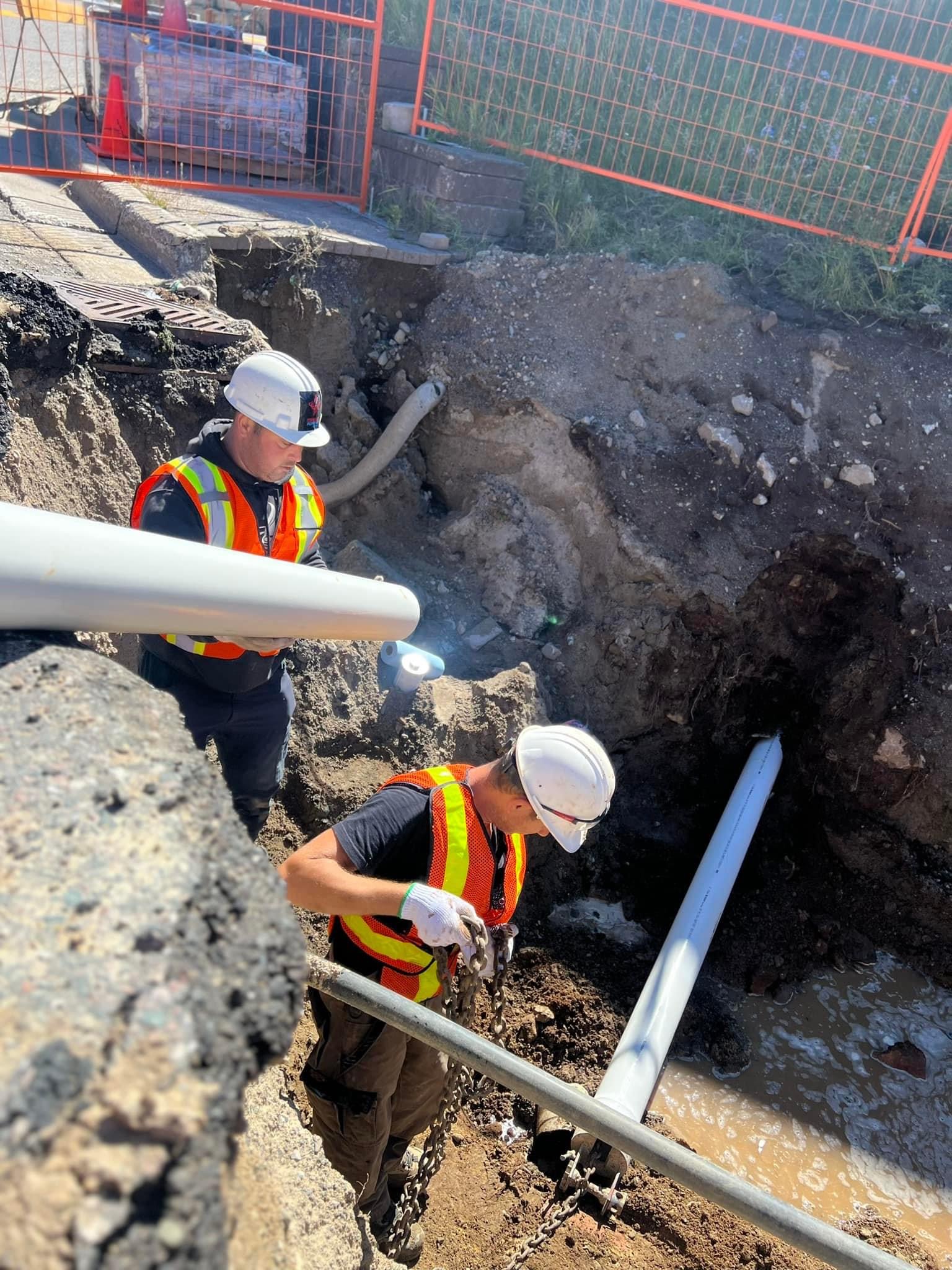 Crew working in a deep excavation during a sewer-line replacement project.
“Serhiy and his team done an excellent job and completed the following, - The whole main sewer line was replaced to the city line - Removal of the cast-iron stack - Rough-in for laundry standpipe, sink, and floor drain - Reconnect basement toilet, shower, and sink to new sewer line - Install backwater valve There was also a shift in the old clay pipe outside of the house which would had reduced the diameter of the pipe if we used a liner. Serhiy wanted to ensure the job was done right so they tunnelled a new pvc pipe and dug 9ft in the front to connect to the city sewer line. I am extremely grateful they gone the extra mile. Serhiy and his team are trusted professionals and I will be recommending them to my family and friends.”
Most relevant to Sewer Line Repair.
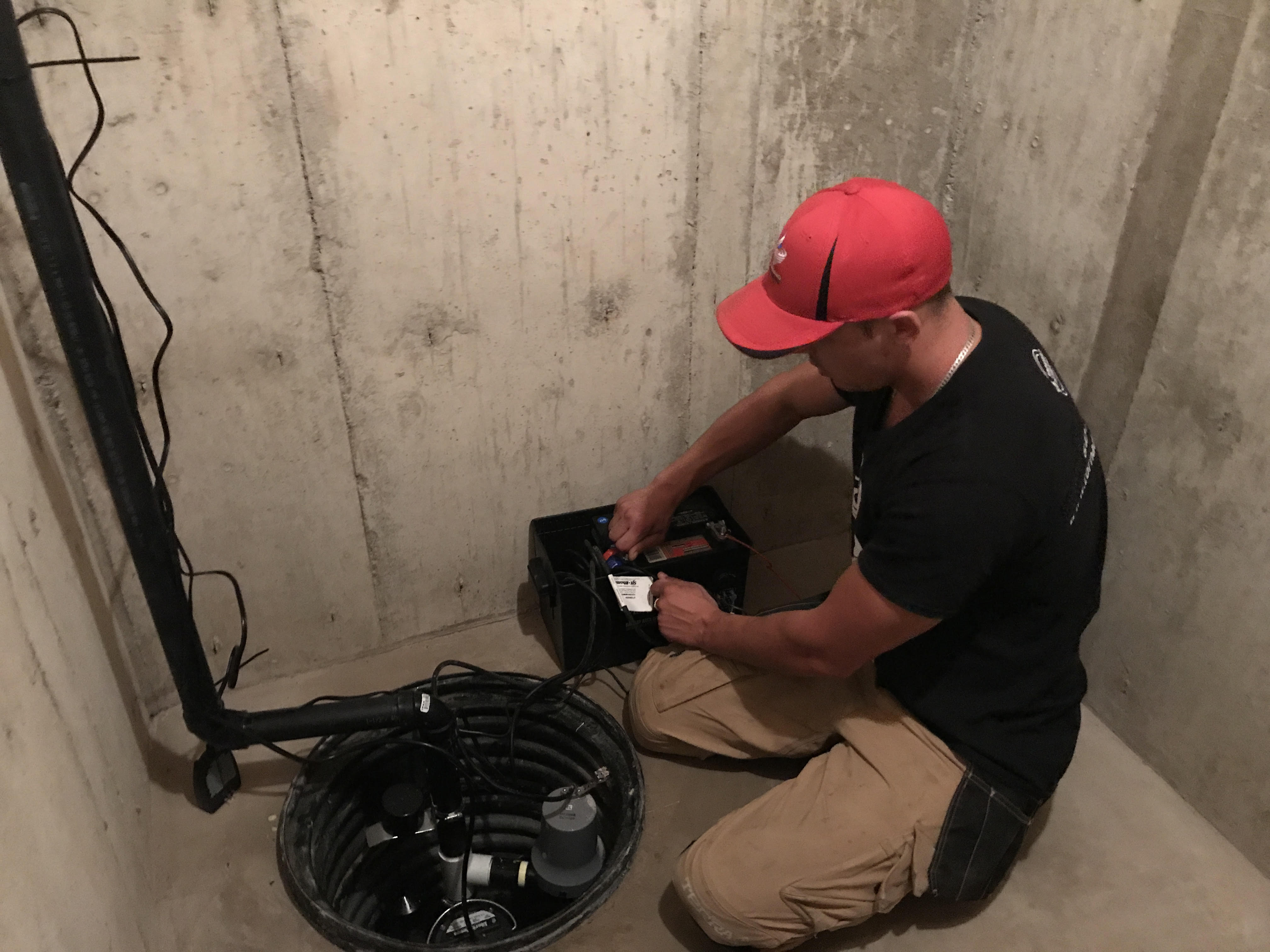
Battery backup sump pump system being wired and tested after installation.
“My driveway has a negative slope towards the house, which lacked proper drainage and caused minor flooding in my garage during heavy rainfalls. I hired Serjiy and his team to install a trench drain and I could not be happier with their work. His team showed up early everyday, they always explained everything they we're doing and left the area clean and tidy when they we're finished. Serjiy was also excellent communicating with me, letting me know well in advanced of any weather delays (not their fault) I would highly recommend Tornado plumbing for any plumbing needs!”
Most relevant to Sump Pump Installation.
Read next in this topic
These related guides stay inside the same service cluster, so you can compare cost, scope, and next-step decisions without starting over.
Best local service areas for this topic
Use one of these city pages when you want the same problem explained through local housing, flood risk, access, and neighbourhood-specific plumbing context.
Quick answer
People usually book Burst Pipe Repair when they’re dealing with a pipe that has split, a fitting that has blown, or a frozen section that thawed into an active leak. Shut the water down, stop the damage, and repair the pipe properly—then help prevent it from happening again. We isolate the failed section, assess how far the damage has spread, and complete the repair with materials that match the existing system. If the burst exposed other wear, we'll explain that before leaving. When there’s more than one way to handle the job, we walk you through the trade-offs so you can pick the option that fits your budget, timeline, and risk tolerance. Our priority is to stabilize the situation first, then make a durable repair and explain the next best steps.
Key takeaways
Take a quick photo/video for insurance or landlord records
Avoid using fixtures connected to the affected line until assessed
If water is near electrical, turn off power to the area and call right away
Make a note of when it started and what was running (dishwasher, laundry, shower)
Clear a path to the problem area (under sink, basement mechanical room, etc.)
If you’re in a condo, notify building management per your rules
If safe, locate your main water shut-off so you can act quickly
Move valuables away from the affected area and place towels/buckets as needed
Common reasons people call for Burst Pipe Repair
You want the cause confirmed—not just a temporary patch
Water is actively leaking and you need help shutting it down safely
A pipe has burst or cracked and you’re seeing sudden flooding or staining
You smell sewage or see wastewater coming up from a drain
You have no water, extremely low pressure, or a sudden drop in flow
A ceiling/wall has a wet spot that’s growing or feels soft to the touch
A toilet is overflowing or the main drain is backing up repeatedly
A leak is near electrical outlets, your panel, or finished spaces (call right away)
You’ve already tried basic steps and the problem is getting worse, not better
What’s included with Burst Pipe Repair
We start by helping you stabilize the situation. That can mean shutting off water safely, isolating the affected area, and protecting finishes while we diagnose the source. Next we confirm the failure point—what exactly is leaking or blocked, and why it happened. In emergencies, speed matters, but accuracy matters too because the wrong “quick fix” can create a second problem. Once we know the cause, we explain repair options and move forward with the safest, most reliable solution that fits the moment. When possible, we’ll also point out any related weak spots so you’re not surprised later. After repairs, we test. That includes pressurizing lines where appropriate, running fixtures, and checking for hidden seepage. We finish with a clean work area and clear notes on what was done. For Burst Pipe Repair, we scope the work around your specific property — pipe material, access conditions, and the state of the existing system. If we find something unexpected during the job, we’ll explain it before changing the plan.
Options and methods for Burst Pipe Repair
Emergency work is about making the situation safe and stable first. In some cases that’s a permanent repair right away; in other cases it’s a solid temporary stabilization followed by a planned repair when access is better. We’ll explain what we can do immediately, what might require a return visit (for example, opening finished ceilings), and how to reduce risk in the meantime. If an emergency is caused by an underlying issue (old valves, corrosion, excessive pressure, freezing risk), we’ll point it out so you can address it proactively. You might hear different terms for similar work—like burst pipe repair or pipe leak emergency. The right method depends on your pipe material, access, and what we find during diagnosis. We’ll explain the option that makes the most sense and why.
Cost, timing, and what affects the estimate
Emergency pricing is usually driven by urgency, access, and the type of failure. An exposed pipe repair is very different from a leak hidden behind finished ceilings. We aim to explain cost drivers clearly: what needs to be opened, what parts are required, and whether stabilization vs. full restoration is happening in one visit or staged. Timeline can range from a quick same-day repair to a multi-step plan if drying, restoration, or follow-up work is required. For Burst Pipe Repair, the most common variables are access, the condition of existing materials, and whether the problem is isolated or part of a larger system issue. We’ll talk through options and help you choose the best value approach—especially if there’s a repair vs. replacement decision to make. To book service, call 647-784-8448 or email [email protected]. If it’s urgent, calling is the fastest way to get help.
Maintenance and prevention tips
Once the immediate emergency is resolved, the right next step is prevention. Many emergencies have warning signs—small drips, slow shut-offs, or pressure issues—that can be addressed before they become urgent. We recommend doing a quick seasonal check: look under sinks, around toilets, and in the basement mechanical area for staining, corrosion, or moisture. Catching issues early is almost always cheaper. If freezing was involved, focus on insulation, air sealing, and keeping vulnerable lines warm during deep cold snaps. If you’d like, we can recommend a simple prevention plan specifically for Burst Pipe Repair based on what we saw on site. That might be a change in usage habits, a small hardware upgrade, or periodic checkups—whatever actually reduces the chance of repeat problems.
Local considerations for Burst Pipe Repair in Toronto & the GTA
In Toronto and the GTA, many emergencies come from a predictable set of conditions: older shut‑off valves that don’t close fully, aging pipes in older homes, and winter temperature swings that expose weak spots. Even condos can have urgent issues—leaks from supply lines, failed cartridges, or problems that affect units below. If you’re dealing with an emergency, the highest‑value steps are usually: stop the water, protect electrical areas, and get a clear diagnosis. A calm triage prevents common mistakes like forcing a drain, leaving a slow leak running, or patching the wrong spot. After the immediate repair, it’s worth doing a quick “weak spot” review. We often look at main shut‑off function, pressure stability, and any visible corrosion or previous repairs. Preventing the next emergency is frequently cheaper than repairing the damage from it—especially when the failure point is easy to improve while everything is already accessible. Tornado Plumbing & Drains approaches emergency work with a methodical process: stabilize first, repair properly second, then explain next steps so you’re not left guessing.
Questions to ask before you hire a plumber
A few questions help you choose the right contractor (and avoid surprises): • What did you find, and what evidence supports that diagnosis? • What are the realistic options, and what are the trade‑offs (cost vs. longevity vs. disruption)? • What would you do if this were your own home or building? • What maintenance or usage changes would prevent the issue from returning? • What should I watch for after the work is complete? • If the same problem comes back, what’s the next escalation step? Clear answers should feel calm and specific—not vague. You should understand what will happen, why it matters, and what a good outcome looks like. If you want to talk through your situation first, call 647-784-8448 or email [email protected].
When Emergency Plumbing Service is usually the right service
People usually book Emergency Plumbing Service when they’re dealing with issues like active leaks, burst or cracked pipes, sewage backing up, no water. Rapid help for urgent plumbing problems—leaks, bursts, backups, and no-water situations. We isolate the failed section, assess how far the damage has spread, and complete the repair with materials that match the existing system. If the burst exposed other wear, we'll explain that before leaving. If the diagnosis points to multiple repair paths, we explain what each one costs, how disruptive it is, and how long the fix is likely to last. Our priority is to stabilize the situation first, then make a durable repair and explain the next best steps.
Common reasons people call for Emergency Plumbing Service
You’ve already tried basic steps and the problem is getting worse, not better
You’re dealing with a time-sensitive situation (tenants, business hours, renovations)
You want the cause confirmed—not just a temporary patch
Water is actively leaking and you need help shutting it down safely
A pipe has burst or cracked and you’re seeing sudden flooding or staining
You smell sewage or see wastewater coming up from a drain
You have no water, extremely low pressure, or a sudden drop in flow
A ceiling/wall has a wet spot that’s growing or feels soft to the touch
A toilet is overflowing or the main drain is backing up repeatedly
What’s included with Emergency Plumbing Service
We start by helping you stabilize the situation. That can mean shutting off water safely, isolating the affected area, and protecting finishes while we diagnose the source. Next we confirm the failure point—what exactly is leaking or blocked, and why it happened. In emergencies, speed matters, but accuracy matters too because the wrong “quick fix” can create a second problem. Once we know the cause, we explain repair options and move forward with the safest, most reliable solution that fits the moment. When possible, we’ll also point out any related weak spots so you’re not surprised later. After repairs, we test. That includes pressurizing lines where appropriate, running fixtures, and checking for hidden seepage. We finish with a clean work area and clear notes on what was done. For Emergency Plumbing Service, we adjust the approach based on what your property actually needs — age, layout, pipe condition, and access. If something comes up during the work that affects the scope, we tell you before proceeding.
When Frozen Pipe Thawing & Repair is usually the right service
People usually book Frozen Pipe Thawing & Repair when they’re dealing with issues like active leaks, burst or cracked pipes, sewage backing up, no water. Safe thawing, leak checks, and permanent repairs for frozen or cracked water lines during GTA winters. We isolate the failed section, assess how far the damage has spread, and complete the repair with materials that match the existing system. If the burst exposed other wear, we'll explain that before leaving. Where more than one approach makes sense, we lay out the differences — price, disruption, durability — so you’re choosing with full information. Our priority is to stabilize the situation first, then make a durable repair and explain the next best steps.
Common reasons people call for Frozen Pipe Thawing & Repair
You’re dealing with a time-sensitive situation (tenants, business hours, renovations)
You want the cause confirmed—not just a temporary patch
Water is actively leaking and you need help shutting it down safely
A pipe has burst or cracked and you’re seeing sudden flooding or staining
You smell sewage or see wastewater coming up from a drain
You have no water, extremely low pressure, or a sudden drop in flow
A ceiling/wall has a wet spot that’s growing or feels soft to the touch
A toilet is overflowing or the main drain is backing up repeatedly
A leak is near electrical outlets, your panel, or finished spaces (call right away)
What’s included with Frozen Pipe Thawing & Repair
We start by helping you stabilize the situation. That can mean shutting off water safely, isolating the affected area, and protecting finishes while we diagnose the source. Next we confirm the failure point—what exactly is leaking or blocked, and why it happened. In emergencies, speed matters, but accuracy matters too because the wrong “quick fix” can create a second problem. Once we know the cause, we explain repair options and move forward with the safest, most reliable solution that fits the moment. When possible, we’ll also point out any related weak spots so you’re not surprised later. After repairs, we test. That includes pressurizing lines where appropriate, running fixtures, and checking for hidden seepage. We finish with a clean work area and clear notes on what was done. For Frozen Pipe Thawing & Repair, we fit the job to your property’s real conditions: material type, access, and system age. If diagnosis uncovers a related issue, we explain it clearly before the scope changes.
When Pipe Repair & Repiping is usually the right service
People usually book Pipe Repair & Repiping when they’re dealing with issues like running toilets, dripping faucets, shower valve problems, leaky pipes. Repairs for leaking or corroded pipes and repiping options for older homes—done neatly and to code. We isolate the failed section, assess how far the damage has spread, and complete the repair with materials that match the existing system. If the burst exposed other wear, we'll explain that before leaving. When the situation allows for different repair strategies, we compare them honestly: what each one costs, how much work is involved, and which one is most likely to hold up. We aim for clean, code-aware work that’s easy to service in the future—no shortcuts hidden behind walls.
Common reasons people call for Pipe Repair & Repiping
Dripping faucets, running toilets, or fixtures that never feel “quite right”
Leaks under sinks or behind toilets (staining, swelling, odours)
Shower temperature swings, poor pressure, or a leaking valve
Renovation plans that require moving drains or water lines
Pipes that are corroded, noisy, or showing pinhole leaks
A toilet rocks, leaks at the base, or clogs more than it should
You want cleaner shut-offs and serviceable connections
You’d like fixtures installed neatly with proper sealing and testing
You need a plumber who can coordinate with your renovation timeline
What’s included with Pipe Repair & Repiping
Plumbing repairs and installations go best when the basics are done perfectly: solid connections, proper support, correct sealing, and valves that work when you need them. We start with a quick assessment of the fixture, piping, or rough-in area and confirm the true cause (for example, a failing cartridge vs. a loose supply line). From there, we complete the repair or installation with clean workmanship and a focus on future serviceability—so the next repair isn’t a nightmare behind a wall or cabinet. We finish by testing under real conditions (running water, draining, temperature checks) and leaving you with clear guidance on use and maintenance. For Pipe Repair & Repiping, we match the repair to your building — construction type, access points, and the condition of what’s already installed. Anything unexpected gets flagged and explained before we act on it.
When to call for help
Book Burst Pipe Repair when the problem is already clear. Start with Emergency Plumbing if you want to compare the most likely causes or solutions first. If Emergency Plumbing Service sounds closer to what you are dealing with, review that page too. When you are ready, call 647-784-8448, email [email protected], or book online with a short description of the symptom, the property type, and any access limits or timing concerns.
Burst Pipe Repair: Immediate Steps, Repair Options, and Prevention FAQ
What should I do immediately if a pipe bursts?
If you can do so safely, shut off the main water supply right away. Then open a nearby cold tap to relieve pressure and help drain remaining water from the line. Move valuables out of the area and use towels/buckets to control spread. If water is near electrical outlets, appliances, or your panel, turn off power to the affected area and keep people clear. Once things are stable, we can locate the break, repair the damaged section properly, and test the line so you’re not left with a hidden leak.
Do you repair a burst pipe or replace the whole line?
It depends on why it failed and what condition the surrounding pipe is in. A clean break in otherwise healthy piping is often repaired by replacing a short section and improving support. If the pipe is heavily corroded, has multiple weak spots, or the failure is linked to high pressure or freezing, a broader replacement or upgrade may be the better long‑term value. We’ll show you what we see, explain the trade‑offs, and help you choose a plan that prevents the next failure.
Can you help prevent this from happening again?
Yes. Prevention depends on the cause. If freezing played a role, we’ll look at insulation, drafts/air leaks, and vulnerable pipe routing. If high pressure or aging materials are the issue, upgrades like pressure regulation, new shut‑offs, or replacing corroded sections can reduce risk. We focus on the highest‑value changes first—small improvements that meaningfully lower the chance of another emergency.
Do you serve Toronto & the GTA?
Yes—Tornado Plumbing & Drains serves homes and businesses across Toronto & the GTA (including Etobicoke, North York, Scarborough, York, Mississauga, Brampton, Vaughan, Markham, Richmond Hill, Oakville, and Burlington). If you’re not sure whether your address is in our coverage area, send your postal code to [email protected] or call 647-784-8448 and we’ll confirm quickly. We’re used to working in a mix of building types (older Toronto homes, newer builds, condos, and small commercial spaces), so we’ll also ask a couple of quick questions to understand access and the right next step.
Can you quote this over the phone?
We can sometimes give a rough range, but an accurate quote usually requires seeing the setup—especially for Burst Pipe Repair. Access, condition of existing materials, and what we discover during diagnosis are the biggest variables. If you can share a photo/video of the affected area, we can often give better guidance before we arrive (and help you reduce damage). Once we’ve assessed the situation, we’ll explain the scope and options clearly so you can choose the best-value solution.
What affects the cost of Burst Pipe Repair?
Cost is mostly driven by urgency, where the failure is located, and whether the repair area is exposed or behind finished surfaces. The same symptom can have different causes, so the best value often comes from confirming the root issue first. After we assess your setup, we’ll outline options (including any “minimum viable repair” vs. “long-term fix” paths) and explain the trade-offs in plain language—cost, disruption, and how likely the issue is to return.
How long does Burst Pipe Repair usually take?
Many emergency stabilizations and repairs can happen the same day, but timelines depend on access and whether drying/restoration is required. We’ll confirm expectations after a quick assessment and let you know what to plan for—water shut-offs, which areas we need to access, and whether any follow-up visit is likely. If you have scheduling constraints, tell us up front and we’ll plan the most efficient sequence.
Will this be messy or disruptive?
We focus on protecting finishes while stopping the problem quickly. If opening drywall is required to access a leak, we’ll explain exactly why and keep the opening as small and tidy as possible. We’ll also explain what we’re doing as we go, so you’re not left guessing why a certain access point or tool is needed. When we leave, the system should be working properly and the space should still feel like your home or business.
Do you offer preventative maintenance or upgrades?
Yes. After an emergency, the best value is usually prevention: functioning shut-offs, stable pressure, and addressing weak spots before they fail. If you want a low-effort plan, we can recommend what’s worth doing yearly vs. what can be checked occasionally—based on what we see on site. The point is to catch wear early, reduce surprise failures, and make the next visit faster and more predictable.
How do I book Burst Pipe Repair?
You can book online, call 647-784-8448, or email [email protected]. If you’re dealing with an urgent situation (active leak, sewage backup, no water), calling is usually the fastest option. If you email, include your address, a brief description of the issue, and any photos/videos—this helps us prepare and reduce back-and-forth.
What problems does Emergency Plumbing Service solve?
Emergency Plumbing Service is usually the right service when the symptoms above match what you are seeing. We use the visit to confirm the root cause, restore proper function, and explain what will reduce the chance of a repeat. If you are not sure this is the right service, describe what you are seeing and we will guide you to the right next step.
Is Emergency Plumbing Service the right service for my issue?
If you’re unsure, that’s normal. Many plumbing problems look similar on the surface. A quick assessment prevents misdiagnosis and saves money. Call 647-784-8448 or email [email protected] with a brief description (and photos if possible) and we’ll help you confirm the right service.
What should I do while I wait for an appointment?
Avoid actions that could worsen damage—forcing a drain, using harsh chemicals, or leaving a leak running. If it’s urgent, call so we can advise immediate next steps. If you can safely shut off water to the affected fixture or main line, that often prevents additional damage while you wait.
Is it safe to thaw frozen pipes myself?
Sometimes, but it’s easy to accidentally cause damage. Open‑flame heat can be risky, and overheating a frozen section can lead to cracking or hidden leaks. If you’re unsure where the freeze is, the pipe is behind walls, or you suspect a split, it’s safer to have a professional assess the situation. A controlled thaw paired with leak testing helps avoid the common scenario where a “thawed” line turns into a flood once pressure returns.
How do you thaw a frozen pipe without damaging it?
We use controlled methods appropriate for the location and pipe type, focusing on gradual warming rather than sudden heat. As flow returns, we monitor for seepage and confirm the line holds pressure. If we find a cracked section, we’ll repair it before it becomes a bigger leak—then we’ll explain practical steps to reduce future freezing risk in that area.
Why do pipes freeze in some areas of a house and not others?
Freezing risk usually comes down to drafts, insulation gaps, and pipes located near exterior walls or unheated spaces (crawlspaces, garages, rim joists). Even a small opening where cold air enters can make the same section freeze repeatedly. When we’re on site, we can point out likely causes and recommend simple improvements that protect that vulnerable run of piping.
What are common reasons older homes need repiping?
Common reasons include corrosion, repeated pinhole leaks, restricted flow from buildup, and outdated materials that don’t age well. If you’re patching one leak after another, repiping can be a proactive way to reduce surprises. We’ll help you understand whether a targeted repair is enough or whether a broader replacement would be more cost‑effective long term.
What materials are used for repiping?
Material choice depends on your system and goals. Options may include copper or modern plastic piping designed for potable water. We’ll recommend what fits your home, local code considerations, and long‑term serviceability. The right choice balances durability, clean installation, and ease of future repairs.
Explore more