Backwater Valve Installation Cost in Toronto (2026): With and Without the City Rebate
A mainline backwater valve install in Toronto runs $2,800–$4,800 in 2026. The City of Toronto subsidy covers $1,250 of that — net $1,550–$3,550 out of pocket. Permit and inspection are mandatory.
Published March 27, 2026 · Last updated April 26, 2026
Introduction
A backwater valve is the single most effective property-level defence against the kind of basement flood that costs Toronto homeowners an average of $43,000 in restoration. It's a one-way valve installed on the sanitary lateral that closes during a sewer back-flow event and prevents the City sewer from pushing waste into your basement. The good news: Toronto's expanded subsidy now covers $1,250 of the install. The better news: prevention is meaningfully cheaper than the next claim. This guide gives you the actual 2026 numbers, what changes the price, and how to actually file the rebate so it gets paid.
Related services for this guide
If this article matches what you are dealing with, use one of these links to move into the service or broader category that makes the most sense.
Project photos related to this guide
These real project photos help show what this kind of work looks like in the field, not just on the page.
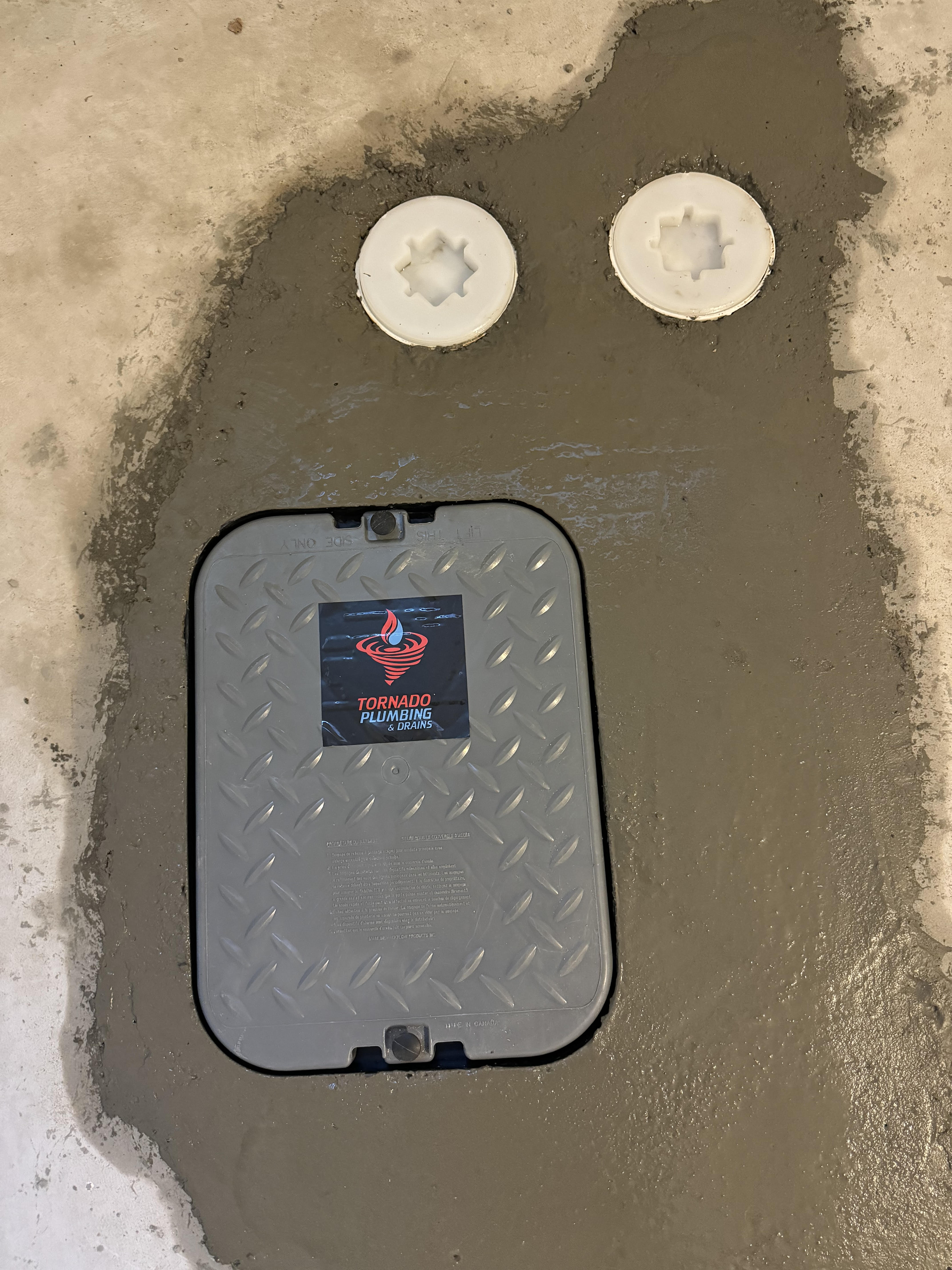
Backwater-valve access finished after concrete patch
This result photo shows the finished access point after basement flood-protection plumbing was installed and the floor was restored.
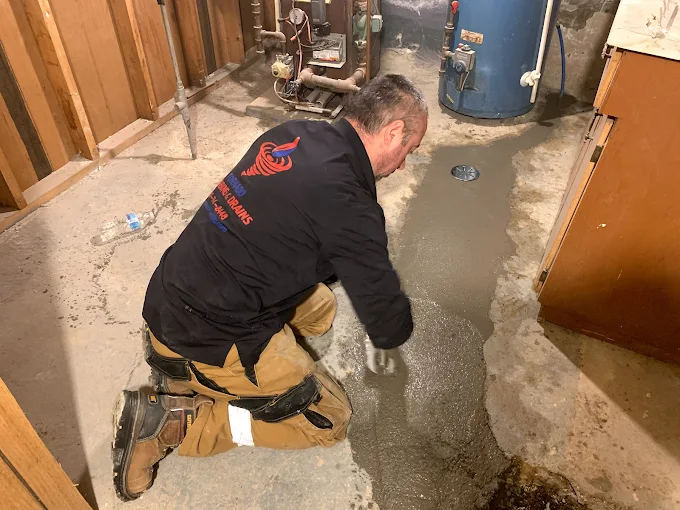
Basement floor patched back after flood-prevention plumbing work
Finished concrete patch after below-floor flood-prevention work, showing the restored surface homeowners see after the plumbing is installed.
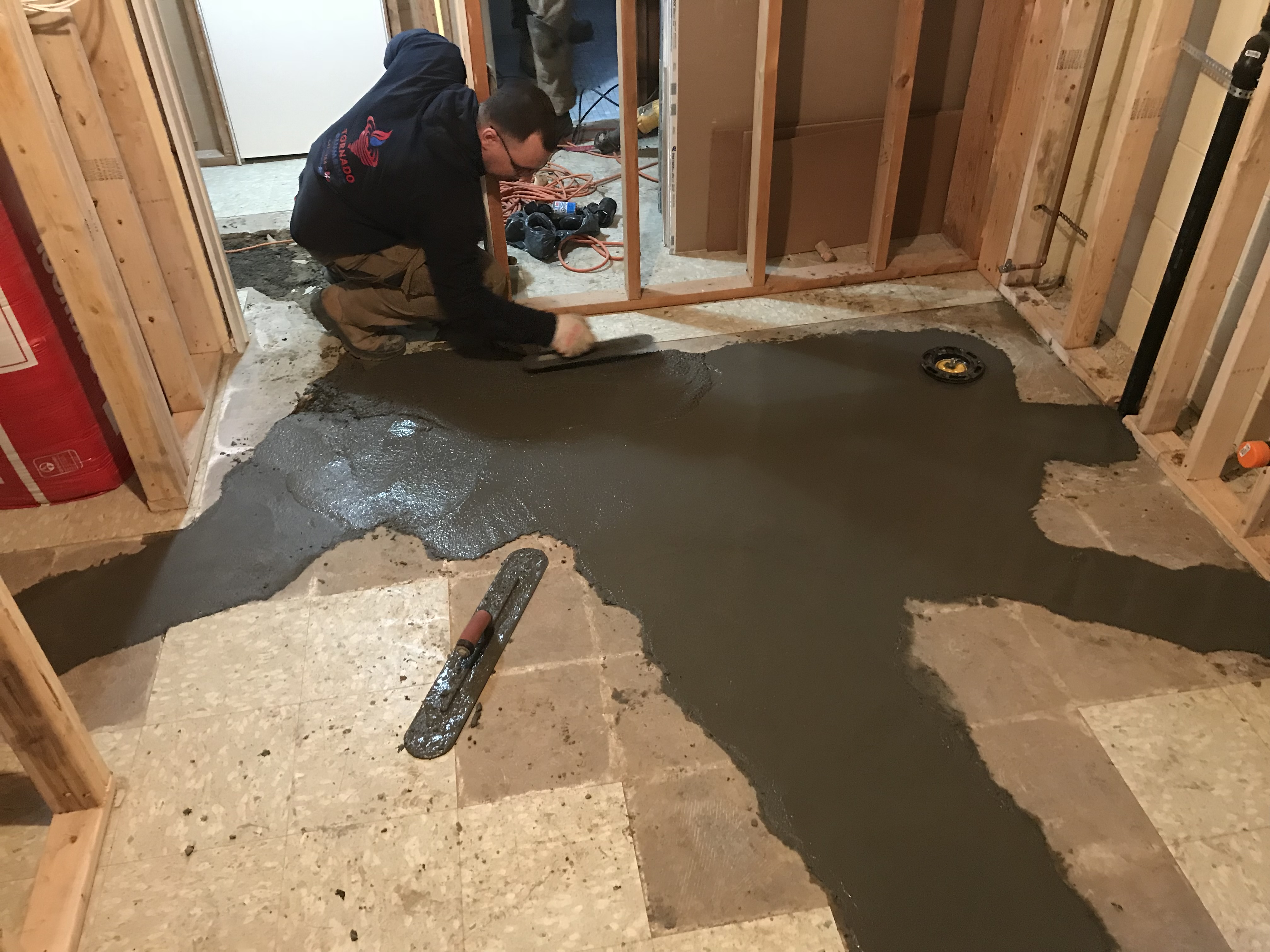
Basement floor drain area patched after protection work
This result photo shows the floor area restored after underground basement flood-prevention plumbing work and tie-ins were completed.
Read next in this topic
These related guides help you compare cost, scope, and next steps without starting over.
Best local service areas for this topic
Use one of these city pages when you want the same problem explained through local housing, flood risk, access, and neighbourhood-specific plumbing context.
Licensed, insured, reviewed Toronto plumbers
Serving Toronto & the GTA since 2016 — over 1,200 completed jobs.
Master plumber T95-4969603 · Plumbing contractor T94-4992639 · Drain contractor T87-4722944 · Building renovator T85-4728632 · Plumbing license FI6216638.
180+ five-star Google reviews. 400+ HomeStars reviews (Best of 2019–2025). BBB-accredited.
Same-day and after-hours dispatch across Toronto, Etobicoke, North York, Scarborough, York, Mississauga, and Burlington.
25-year workmanship warranty
Every job Tornado Plumbing & Drains completes in Toronto and the GTA — repair, install, replacement, drain work, sewer work, fixture work — is backed by a 25-year workmanship warranty. The written terms are provided with every quote. If our work fails within 25 years of the install date, we come back and make it right.
Quick answer
A mainline normally-open backwater valve installed in a Toronto basement in 2026 typically runs $2,800–$4,800 gross — concrete saw-cut, dig, valve install, restore the slab, permit, and inspection. The City of Toronto Basement Flooding Protection Subsidy covers $1,250 of that, bringing typical net out-of-pocket to $1,550–$3,550. Saw-cut and patch labour is 60–70% of the bill on a finished-basement retrofit; in homes with an unfinished slab or existing pit it's meaningfully cheaper.
What you should know before booking
City of Toronto subsidy covers up to $1,250 of installation cost when performed by a licensed contractor with permit and inspection.
Mainline (full-port) normally-open valves protect every drain in the home — the standard for whole-home protection. Single-fixture branch valves are cheaper but only protect one drain.
Concrete cut and patch labour is typically 60–70% of total cost on a finished-basement retrofit.
Plumbing permit and post-install inspection are mandatory in Toronto. Permit fees: $190–$340 typical.
City of Toronto data shows installed backwater valves prevent approximately 95% of sanitary back-flow events during combined-sewer surcharge.
Most insurers reduce the water-damage portion of the home insurance premium when a documented backwater valve is on file — typically $80–$200/yr savings.
Permit application is for the licensed contractor; rebate application is for the homeowner after install. Tornado provides the documentation package for both.
Real Toronto backwater valve install prices (2026)
Easiest case. Existing access pit or unfinished concrete makes saw-cut unnecessary. Net after $1,250 rebate: $550–$1,550.
Existing pit / unfinished slab
$1,800 – $2,800
Easiest case. Existing access pit or unfinished concrete makes saw-cut unnecessary. Net after $1,250 rebate: $550–$1,550.
Finished basement, standard retrofit
$2,800 – $4,200
The typical Toronto job. Saw-cut concrete, dig down to the lateral, install valve, backfill, restore slab. Permit and inspection included. Net after rebate: $1,550–$2,950.
Finished basement, complex access
$4,200 – $6,500
Lateral runs under a load-bearing wall, mechanical equipment in the way, or unusually deep service. More excavation, more time. Net after rebate: $2,950–$5,250.
Single-fixture branch valve
$650 – $1,400
Branch-only valve protecting one drain (e.g., basement floor drain). Cheaper but doesn't protect the other drains in the home. Not eligible for the full $1,250 subsidy in some cases — check the City rules.
Permit + inspection
$190 – $340
Toronto plumbing permit fee plus inspection coordination. Tornado pulls the permit on your behalf as part of the install scope.
Annual inspection / cleaning (optional)
$140 – $220
Open the access cap, verify the flapper swings freely, clear any debris. Recommended once a year — debris under the gate is the single most common reason for failure during a back-flow event.
What a backwater valve actually does (and what it doesn't)
What it does: during a sewer back-flow event — usually triggered by combined-sewer surcharge during heavy rain — the valve's gate closes against the back-flowing water and prevents the City sewer from pushing waste into your basement through floor drains, basement toilets, laundry standpipes, or any drain below grade. It's normally open during normal flow (your drains work as usual) and only closes when flow reverses.
What it doesn't do: it doesn't stop water that enters the basement from outside the foundation (groundwater seepage, weeping-tile failure, surface water through a window well). For those, you need sump pump and waterproofing scope, not just a backwater valve. Most comprehensive flood protection is all three: backwater valve + sump pump + weeping-tile disconnect — exactly what the City's $6,650 subsidy covers.
Three Toronto backwater valve installs from the past 90 days
Davenport, finished basement, prior flooding — Customer flooded twice in 4 years from sewer surcharge. Mainline normally-open valve installed via saw-cut, full restore. Total: $3,600. City rebate approved: $1,250. Net: $2,350. Subsequent storm a month later — valve closed, basement stayed dry. Customer reports the City sent a confirmation email of subsidy approval ~7 weeks after submission.
East York, unfinished slab corner — Older bungalow with the lateral exposed in the mechanical room. Easy install, no saw-cut. Total: $2,200. Rebate: $1,250. Net: $950. Insurance discount on the next renewal: $130/yr. Effective payback ~7 years just on insurance discount.
Roncesvalles, century home, complex access — Lateral ran under a structural footing, required engineering review and a longer dig. Total: $5,800. Rebate: $1,250 (capped). Net: $4,550. Customer combined with sump pump install ($2,400, additional $1,750 rebate) and weeping-tile disconnect ($8,200, additional $3,400 rebate). Total rebates across the project: $6,400 — close to the $6,650 program cap.
When a backwater valve is the right call
Install a backwater valve when
You've had a sewer-backup event (now or in the past). Your home is on a combined sewer system — common in older central, east, and west Toronto neighbourhoods. Floor drains or basement toilets back up during heavy rain. Your insurer requires it for the sewer-backup endorsement. You're proactively flood-proofing as part of a basement renovation.
Look at other scope when
Water enters the basement from outside the foundation (seepage through walls, floor cracks, window wells) — that's a waterproofing question, not a backwater valve question. Backups are coming from inside the home (failed fixture, blocked branch, broken pipe) — that's drain cleaning or sewer repair. The basement is on a separate municipal storm sewer and not at risk of sanitary back-flow.
What we recommend instead
Most homes that need a backwater valve also benefit from a sump pump and weeping-tile review. The City's $6,650 subsidy is structured around this combined scope. We assess all three on the dispatch visit and quote what's actually needed.
What to have ready when you call
These six answers determine the install scope, the access plan, and the rebate package — and tighten the on-site quote.
Have you had a sewer backup before? When, and what was the cause if known?
Is your basement finished or unfinished?
Where in the basement is the sewer cleanout — accessible, or buried in finishes?
Property age and neighbourhood (older central Toronto homes are usually combined sewer; suburban builds are typically separated).
Are you applying for the City rebate? (Yes is the default — the documentation is straightforward.)
Are you considering combining with sump pump or weeping-tile disconnect for the full subsidy?
Why backwater valves are a Toronto-specific story
Toronto's combined-sewer system is the structural reason backwater valves matter so much in this city. About 25% of the city — concentrated in the older central, east, and west neighbourhoods (Cabbagetown, Riverdale, Leslieville, the Beaches, Roncesvalles, Bloor West, the Annex, Forest Hill) — is on combined sewers where sanitary waste and stormwater share the same pipe. During a major rain event, the system surcharges and pushes back through the path of least resistance, which is your basement floor drain. The City has been working on infrastructure upgrades for decades, but the Basement Flooding Protection Subsidy exists because property-level prevention is faster and cheaper than re-building the sewer system. The May 2026 expansion to $6,650 reflects how serious the City takes this problem and how aggressive they're being about getting valves installed.
Where to go next
Service page with full scope, install warranty, and the documentation list for the City rebate.
If you have an existing valve that needs inspection, cleaning, or repair — this is the maintenance scope.
The companion install — sump pump covers groundwater that the backwater valve doesn't. $1,750 of separate subsidy applies.
The full category if you're doing comprehensive flood protection — including weeping-tile disconnect ($3,400 subsidy).
Step-by-step for the $6,650 City subsidy application — what's covered, eligibility, how to apply.
Sources cited in this guide
Ready to install — and apply for the rebate
Book a Backwater Valve Installation and we handle the permit, install, inspection, and the rebate documentation package. Combine with Sump Pump Installation for additional rebate; full waterproofing scope is at Basement Waterproofing & Flood Prevention. Calls go through 647-784-8448 with same-day and after-hours dispatch across Toronto.
Common questions about Toronto backwater valve cost
What does a backwater valve actually cost in Toronto in 2026?
Gross: $2,800–$4,800 for a mainline install in a typical finished basement. After the $1,250 City rebate: $1,550–$3,550 net. In homes with existing access (unfinished slab, accessible cleanout), the gross drops to $1,800–$2,800 ($550–$1,550 net). Complex access cases (lateral under a footing, deep service) can run $4,200–$6,500.
Do I really need a permit?
Yes. Toronto requires a plumbing permit for any backwater valve install on the sanitary lateral, and the post-install inspection is mandatory. The permit is not optional and skipping it disqualifies the rebate, voids most insurance discounts, and creates a resale problem when you sell the home. Tornado pulls every permit as part of the install scope.
How long does the install take?
Most finished-basement retrofits are a one-day job: arrival 8 AM, concrete out by 10, valve installed by 1, backfilled by 3, slab patched and clean by 5. Inspection happens 2–7 days later depending on the inspector's schedule. Final cleanup and reset is the same day as the install.
Will the install damage my basement?
There's a saw-cut and patch in the slab — that's unavoidable. The patch is typically 18–24 inches square, finished smooth, ready for whatever floor covering was there. Restoration of finished flooring (tile, vinyl, carpet, hardwood) on top of the patch is a separate scope, usually handled by a flooring specialist or the homeowner. We leave the slab clean, level, and patched.
Will the rebate definitely get approved?
If the install is done by a licensed contractor with permit and passed inspection, and the documentation package is complete, yes — the City processes them as a routine matter. The rejections we see are caused by missing documentation (no permit, no inspection card, missing model/serial), or by valves that don't meet the program spec (single-fixture branch valves on the wrong scope). We provide the complete package as standard, so the application goes through cleanly.
How long does the rebate take to come back?
Typically 6–12 weeks from a complete, error-free submission. The City confirms receipt within a week and pays out via cheque or direct deposit afterward. We've never had a Tornado-installed backwater valve denied for documentation reasons.
Is the install warrantied?
Yes — Tornado's 25-year workmanship warranty applies to the install: the connection to the lateral, the concrete patch, the access cap. The valve mechanism itself carries the manufacturer's warranty (usually 5–10 years on the major brands like Mainline, Liberty, or Bidirectional). If the valve mechanism fails under manufacturer warranty, we replace it under warranty terms; if our installation work fails, we fix it under our 25-year warranty.
Explore more